

At a glance
- Citizen science enhances coastal conservation by enabling large-scale, low-cost data collection and fostering community stewardship.
- It supports decision-making through long-term monitoring, rapid response to events, and integration of local and Indigenous knowledge.
- Well-designed projects with training and community involvement can produce data comparable to professional standards.
- Success depends on co-design, clear protocols, and volunteer recognition, ensuring both scientific value and community engagement.
Citizen science can help support coastal management
Australia’s vast coastline is home to diverse ecosystems and human communities, which makes them both ecologically rich and culturally important. However, coastal regions face growing threats such as climate change, erosion, pollution and habitat loss, impacting biodiversity health. Monitoring and protecting these coastal and marine ecosystems is increasingly important.
Citizen science can provide a powerful way to understand and respond to these challenges by engaging everyday people in collecting and sharing scientific data. It can help with collection of large-scale, cost effective data collection as well as foster stewardship and community resilience.
In coastal and marine contexts, citizen science can help to fill data gaps, increase awareness, and engage communities directly in the stewardship of places they value.
The Australian Citizen Science Association defines citizen science as: public participation and collaboration in scientific research with the aim to increase scientific knowledge.
Sea slug diver participating in one of Ocean Connect's monitoring activities, Gold Coast.
- © Roving MediaCitizen science
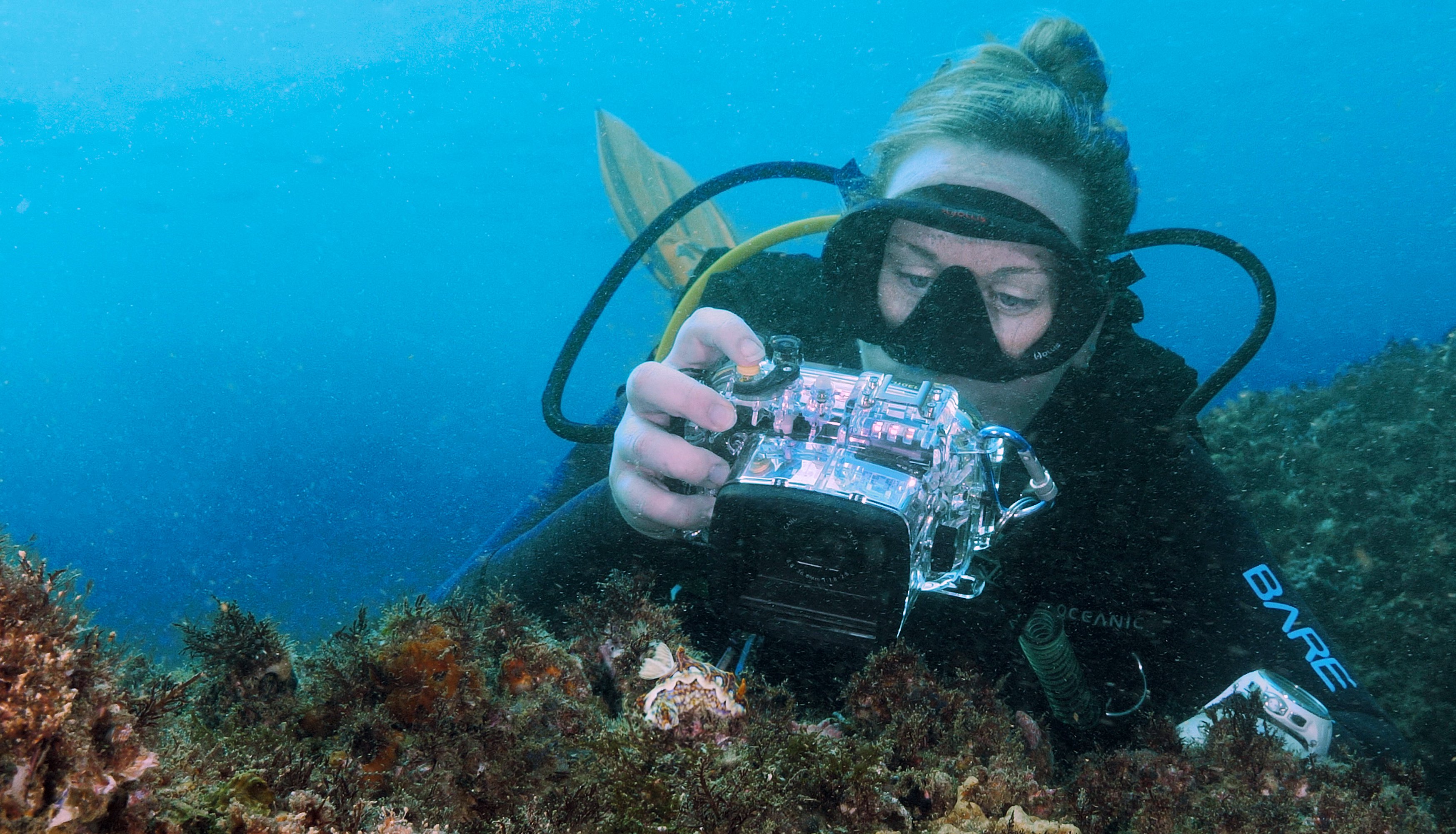
Sea slug diver participating in one of Ocean Connect's monitoring activities, Gold Coast.
© Roving Media
From collecting data to blending knowledges
By engaging community members in robust data collection methods, citizen science has become an increasingly popular way of contributing to scientific datasets. The practice of collecting data with the help of the public dates from at least the 1960s, and possibly as early as the 1900s.
Monitoring of coastal and marine ecosystems is constrained by time and funding that limits researchers’ capacity to spend extended periods in the field, which in turn limits data collection. Yet many hobbyist members of the public spend extended periods in the field and are knowledgeable in their areas of interest, making them an invaluable resource to researchers in their data collection endeavours. When researchers and enthusiasts unite, it creates an opportunity for impactful research, and empowers the community to make a difference. Due to the large scales of areas that need monitoring, including citizen scientists can mean larger scale monitoring both spatially and temporally, at a much lower cost.
Additionally, the growing opportunities to apply citizen science are also increasing the potential to integrate Indigenous and local knowledge, which can strengthen collaborations between different stakeholders, improve the output and foster even stronger ecological stewardship.
CAFNEC's Mangrove Watch is one example of how partnering citizen science with the expertise of Indigenous rangers has enhanced mangrove monitoring, leading to increased knowledge and improved protection of these vital ecosystems.
Benefits of citizen science
Helping to build the case for decision making
With repeated surveys that happen more regularly, citizen scientists can also improve baseline datasets, and help to build long-term datasets in local areas. The use of citizen science can increase the general understanding of climate risks and coastal dynamics, and empowers local action and planning. Involving communities in scientific efforts strengthens community and effective scientific output.
When extreme weather events hit, citizen scientists can provide an immediate response to collect the data required to infer better decision making in how to best respond and mitigate the risks for future extreme weather events.
Citizen science projects are already having real impacts and influencing decision-making.
On the spot: collecting local data after Tropical Cyclone Alfred
Ocean Connect’s sea slug surveys on the Gold Coast have laid the groundwork for baseline studies on coastal sea slug diversity and abundance, as well as leading into long term datasets to determine climate change effects on population and habitat.
When Cyclone Alfred impacted the Gold Coast, volunteers returned to the field as soon as it was safe, enabling effective data collection on the post-cyclone impacts to sea slug (nudibranch) diversity. The results showed a significant decline in diversity following the cyclone.
While conditions have since begun to stabilise, sea slug diversity in the area has yet to return to pre-cyclone levels.
On the spot: Influencing decision making
In the Victorian Coastal Monitoring Program, citizen scientists used drones to collect high-resolution data across broad spatial and temporal scales. This data was crucial for informing coastal management decisions, particularly around erosion.
Importantly, the citizen scientists were actively involved in co-creating these decisions. Their contributions led to practical outcomes such as implementing beach closures for public safety, designing protective structures to support beach nourishment, and developing new analytical tools.
Building stewardship and community
Citizen science initiatives in coastal areas often engage a diverse range of participants including divers, fishers, beachgoers, students, retirees, families, and local residents who share an interest in observing, measuring, and collecting local environmental data. These individuals and groups typically have a personal or community stake in coastal environments and contribute valuable insights that support scientific understanding and conservation efforts.
Involving citizen scientists connects people to local environments and helps to foster a sense of responsibility. It also has potential to increase the general understanding of climate risks and coastal dynamics, and empowers local action and planning.
Another positive and tangible effect is improved mental health benefits of participants through time in nature, active involvement and engagement.
Types of citizen science activities in coastal Australia
In Australian coastal and marine environments, citizen science is being applied in diverse ways, across many locations. For example:
- monitoring coastal erosion
- monitoring health of coastal ecosystems
- documenting biodiversity and identify invasive species
- building community awareness and understanding of coastal and marine biodiversity.
Citizen science projects can involve participants remotely or gather them together for events, which can be regular (e.g. annual) or episodic (irregular). Many of these focus on particular organisms (from birds to frogs to fungi) and take place at a specific time period.
Examples of annual events include biodiversity snapshot monitoring such as
- Aussie Bird Count, organised by BirdLife Australia, this nationwide event takes place each October. Participants spend 20 minutes counting birds in their local area, contributing to a national database on bird populations and trends.
- FrogID Week, run by the Australian Museum, this event encourages people to record frog calls using the FrogID app. It helps scientists monitor frog species and their habitats across Australia during a week in November.
Some projects can also use technology that range from capturing observations to more sophisticated initiatives using apps and drones.
Examples of citizen science projects using technology include:
- CoastSnap uses fixed smartphone stations at popular coastal spots to monitor shoreline changes such as beach shape, erosion, and sediment movement. Participants upload their snaps via social media or an app.
Who organises citizen science initiatives
Citizen science initiatives may be organised by a variety of scientific/research or conservation-orientated organisations, plus state and local governments.
Research organisations such as CSIRO, Australian Institute of Marine Science (AIMS), or universities, or management organisations such as the Great Barrier Reef Marine Park Authority (GBRMPA).
Examples of research organisations' citizen science programs:
CSIRO – Altas of Living Australia (ALA) is a national biodiversity database that aggregates records of species occurrence records from a range of sources including citizen scientists. By tracking shifts in biodiversity over time, ALA supports climate adaptation by providing open data for conservation planning, habitat management, and modelling future ecological scenarios. Citizen contributions enhance data coverage.
Redmap – University of Tasmania's Range Extension Database and Mapping Project is a long-running national citizen science initiative that collects sightings of marine species that are unusual for their location. By logging observations, especially of species that may be shifting due to ocean warming, Redmap helps scientists track changes in marine biodiversity and species distribution. The project’s findings have impact through informing discussions on marine management and climate adaptation strategies.
Not for profit (NFP) environmental organisations that undertake citizen science can be international, national or local.
National ‘conservation’ citizen science programs include:
- iNaturalist – an international citizen science platform where users capture and share biodiversity observations that help scientists track species distributions, monitor ecosystem changes, and detect climate-related shifts. By engaging the public in data collection, iNaturalist supports research and conservation, making it a valuable tool for climate adaptation and environmental awareness.
- GhostNets Australia – a northern Australia initiative that extends further north, this supports collaboration between Indigenous Ranger groups, scientists, and community volunteers to locate, remove, and collect data on abandoned fishing gear (ghostnets) that pose a threat to marine life. The program gathers data on ghostnets washing up across northern Australia, that mostly originates from overseas and so requires transboundary cooperation to reduce discarded nets at their source.
- OzFish Unlimited – a national organisation that engages recreational fishers and community volunteers in monitoring, restoring, and protecting aquatic ecosystems. Their initiatives include habitat restoration, species monitoring through a range of projects including: Trees for Fish, Seagrass for Snapper, Great Shellfish Hunt.
Not for profit (NFP) organisations can also be place-based, offering citizen science projects across a region, or a more local area or entity such as a beach or stretch of coast.
- Ocean Connect, Gold Coast. Supported through Citizen Science and Catchment grants from the City of Gold Coast, Ocean Connect’s seagrass surveys measure seagrass cover, condition, and distribution with standardised procedures to generate useful data for local governments and researchers. Through participation, volunteers gain hands-on experience of marine monitoring and feel a greater sense of ownership over the marine environment, promoting stewardship and local action.
- Positive Change for Marine Life (PCFML) is a community-driven Australian non-profit focused on ocean conservation through education, restoration, and sustainable development. Based in Byron Shire, it runs localised projects like Rewilding Our Floodplains and Waste to Wealth, which include marine debris surveys, habitat restoration, and community engagement.
- DuneWatch, Gold Coast. This initiative aimed to address dune health and effective dune management along the Gold Coast foreshore. Launched in 2015 by Griffith University, this initiative invited volunteers to monitor the health of sand dunes along the Gold Coast at ten study sites, by collecting data on flora and fauna diversity, dune slope, human impacts and the effectiveness of revegetation efforts. DuneWatch helped evaluate and guide local dune restoration activities such as planting efforts, built an ongoing photographic and data record of dune profile changes over time, and raised awareness about the importance of these vulnerable coastal ecosystems. By partnering scientists with local volunteers, DuneWatch strengthened local stewardship and expanded data collection to support adaptive management of the coastline.
Challenges for citizen science
Despite the many benefits of citizen science, it does not come without criticism.
Perceptions of data quality
A persistent criticism of citizen science is concern over data quality. Critics argue that data collected by volunteers may lack the rigor and reliability of professionally gathered data. However, an international study found that almost all (94%) of citizen science projects surveyed used at least one method of quality assurance/quality control (QA/QC), and about half (56%) used five or more methods, which suggests that citizen science projects tend to take data quality seriously. However the same study also notes that data management and access could be improved.
With clear methods, training, and expert analysis, data collected through citizen science is shown to be valid and useful.
For example, citizen scientists that are appropriately trained can collect data of comparable quality to that of professionals. Accuracy tends to be improved with longer experience of participation, training, and when volunteers have a personal stake. Having professional oversight of volunteer contributions can also help improve accuracy.
However, it is worth noting that institutional concerns about data may limit its use: therefore even when citizen science produces high-quality data, it may not be translated into decision-making due to institutional barriers or lack of trust.
Volunteer engagement
Sustaining volunteer engagement is often cited as a challenge, whether that be due to volunteer fatigue, loss of interest or a lack of appropriate coordination and funding of these programs. These challenges can be mitigated through thorough training, evaluation of data by professionals, and proper recognition of citizen scientist efforts.
Some groups may be excluded from participating in citizen science projects by a lack of access to the tools (e.g., smartphones, drones, internet) needed for participation. This can limit inclusivity and data coverage.
Research on citizen science highlights the importance of ethical engagement and cautions against extractive practices, where volunteers contribute data but are excluded from shaping the research or accessing its outcomes. Treating communities merely as data sources raises ethical and practical concerns, and overlooks the valuable local knowledge and motivations that citizen scientists can offer.
What supports success in citizen science initiatives
The success of citizen science programs depends on several key factors. Ensuring data accuracy starts with clear methods, well-defined protocols, and thorough training for participants. Effective data management, from collection through collation to reporting is also crucial. Additionally, developing high-quality reference materials, or having experts review the data collected, supports volunteers in making accurate observations, further enhancing the reliability and usefulness of the data collected.
Supporting volunteers
Fostering a reciprocal relationship with volunteers that includes listening to volunteers, integrating their insights, and sharing outcomes of their contribution and its significance.
Recognition of volunteers and their efforts, and having tangible outputs so that volunteers can see what effect their efforts are creating. It can be noted that programs tend to succeed and thrive when they respond to community interests and local management needs.
The co-design of citizen science projects means involving local communities and indigenous groups from the beginning. Relationships can be fostered even in remote initiatives where participants may never meet. For example, REDMAP fosters a sense of community through profiling the contributor, validating sightings through expert review and fostering a shared sense of purpose.
The success of these programs can be measured through quantitative metrics such as volunteer counts, data collected and areas covered. Planning and management decisions as a result of citizen science efforts are another measure of success. Also, the increased community awareness, networks and application of indigenous knowledge can also be indicators of a successful citizen science program.
A growing role in coastal futures
Citizen science has assisted in data collection for many years and has become a powerful and proven tool that connects coastal communities and enhances environmental stewardship. It can combine scientific methods with local and Indigenous knowledge to have real, positive effects on environmental monitoring and management. In the face of a changing climate, supporting and expanding these programs will be key to building environmental resilience and a thriving community.
To cite:
Breistroff L. and Muurnams M. 2025: Citizen science for coastal conservation. CoastAdapt. National Climate Change Adaptation Research Facility, Griffith University, Gold Coast.