

At a glance
Arte has contributed to building communities, holding up values and driving change in many cultures throughout history. There are several ways in which creative approaches and art can enhance coastal climate adaptation.
Art can prompt new conversations
Adapting to climate change isn’t just about data and infrastructure – behind every map and model are communities, homes, histories, identities and dreams for the future.
Creative approaches can help to engage communities in different ways. These ways can support people to imagine alternative futures, process difficult emotions, and engage with complex decisions. In a landscape shaped as much by culture as by climate, creativity offers a way to bridge the gap between risk and resilience.
This page explores several approaches to art that can foster dialogue: from internal dialogue that gets people thinking to broader dialogue that gets people talking.
Broadly, these approaches encourage interdisciplinary thinking by blending science art and social theory; they highlight the cultural, emotional and personal dimensions of environmental change. Together these challenge thinking about engagement that helps communities to reflect on their place in a changing world
to an explanation of why climate change needs creativity
in a podcast from the Tydnall Talks series produced by UK's Tyndall Centre for Climate Change Research: Art, Climate Change and Community Engagement
"This episode is about art, climate change, and community engagement. In this episode we talk to a panel from the Sainsbury Centre and Norwich University of the Arts to share experiences and insights from their recent event, “Going to Meet the Sea”.
We talk about understanding the role of the arts in communicating the impacts of climate change, preparing for adaptation, and building resilience within communities.
Art, awareness and environmental (self-)education
Art can create aesthetic systems and experiences that offer radically different ways of thinking and blending of different ideas. And, unlike science, they are not bound to follow a particular process of experimentation or style.
Creative expression plays a vital role in raising awareness and fostering dialogue and environmental education. Through familiar formats like music, literature, film, art and theatre can help to bring climate change into everyday conversations.
Climate fiction, often referred to as cli-fi, has emerged as a distinct literary genre that explores the impacts of climate change through storytelling. By imagining possible futures or altered presents, cli-fi helps readers visualize how climate change could affect their own lives and communities.
These narratives can evoke strong emotional responses, which can range from increased concern and awareness to anxiety or even apathy. Such emotional engagement can deepen understanding, prompt critical reflection on previously overlooked issues, or reinforce the perceived urgency of climate action.
Cli-fi now encompasses a variety of subgenres and themes, including speculative futurism, climate dystopias (-topias like dystopias, utopias, and heterotopias), and environmental offshoots of punk genres such as solarpunk, cyberpunk, and ecopunk.
Climate-related book clubs are also emerging: some established informally, some set up by council libraries.
many 'novel' types of climate fiction
find your new favourite climate genre using the climate fiction glossary produced by GRIST.
Walking the Clouds small

An example of the genre of Indigenous Futurism is Walking the Clouds, edited by Grace Dillon, an anthology of global Indigenous stories.
Published by Powell's Books
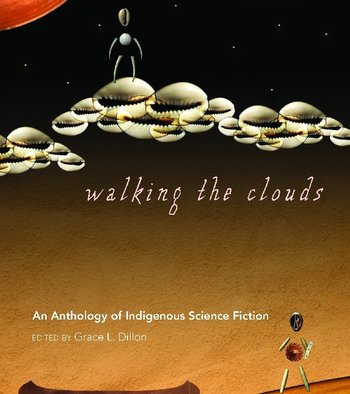
An example of the genre of Indigenous Futurism is Walking the Clouds, edited by Grace Dillon, an anthology of global Indigenous stories.
- Published by Powell's BooksWalking the Clouds small
An example of the genre of Indigenous Futurism is Walking the Clouds, edited by Grace Dillon, an anthology of global Indigenous stories.
Published by Powell's Books
a climate-related bookclub
with the Reading Climate project, which brings into dialogue Indigenous authors, scholars, English teachers and students through book clubs and public events. It is funded by the Australian Research Council, Melbourne Climate Futures and Stella.
theatre bring issues to life for all ages
- in the Kimberley's production of The Shorebird Quest, a community puppet performance that brings together children, Elders, and residents to collectively explore the effects of climate change on migratory shorebirds.
- Also WATCH the making of the Shorebird Quest, which outlines the rationale and the process for the production; the making of the giant puppets; and the importance of the mudflats and Indigenous knowledge and shorebird education.
Art, science and creative responses
Climate change adaptation can seem an abstract concept that belongs in the future. Yet it is also part of the wicked problem of climate change, which is hard to define or resolve and has many competing and conflicting interests.
Art and creative approaches can support science communication by simplifying complex data visually, reaching people emotionally, challenging them to think differently and so enhancing transformative change.
Creative engagement can help to bridge the gap between experts and the public to strengthen understanding and appreciation of scientific knowledge.
creative catalysis
CLIMARTE is an initiator, educator and catalyst for artists, scientists, academics and civil society to engage in Climate Emergency-focussed, public facing exhibitions, events and projects.
CLIMARTE collaborates with artists, art professionals, and scientists to produce compelling programs for change. Through festivals, events and interventions, they invite those who live, work and play in the arts to join us and champion the health and wellbeing of all inhabitants on Earth.
eg from Climarte_ Goldfields
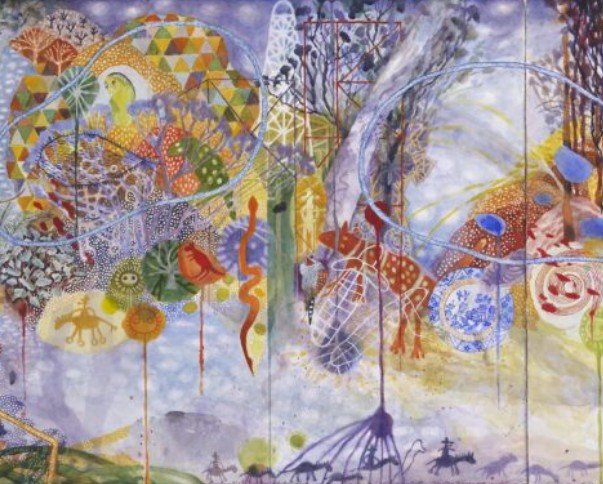
Goldfields II by Judy Holding. An segment of work from a Climarte 'Creative Constellations' exhibition in 2023.
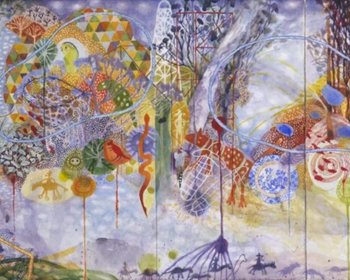
Goldfields II by Judy Holding. An segment of work from a Climarte 'Creative Constellations' exhibition in 2023.
eg from Climarte_ Goldfields
Goldfields II by Judy Holding. An segment of work from a Climarte 'Creative Constellations' exhibition in 2023.
creative challenges
Climate Creatives Challenge is a global initiative serving as a catalyst for innovation in climate communication. This international design competition, supports new and novel approaches for communicating the impacts of climate change and the benefits of mitigation, adaptation and resilience.
Here we present the winning and commended entries for Climate Creatives Challenge#4 Coastal Change, which asked How can we communicate the impacts of climate change on coastal zones, and the benefits of adaptation / resilience?
There are new topics for each new challenge.
Does this inspire you to think laterally about communicating coastal change?
Eco-grief and climate Anxiety - Art as a tool for hope, self-care and action
For people to be able to continuously care for the environment and coastlines, they first need to care for themselves. Volunteer burnout has been witnessed across Australia. Therefore, when we think of adaptation, we also need to think of people.
Engaging with climate discourse requires self-care skills and the ability to deal with and sit with our understanding of biodiversity loss and expected climate impacts. Some groups, including young people are vulnerable to eco-grief and climate anxiety that impacts on their mental health.
Art can help address eco-grief and climate anxiety as it can be a tool for expression and connection. In the face of environmental challenges, art becomes a channel for individuals to process complex emotions through various artistic mediums, communicating their grief, fears, and hopes, creating a shared language that transcends traditional discourse.
Activist art can support people experiencely climate anxiety by providing them with a tool for action counteracting the feeling of despair and powerlessness. It can also serve as a catalyst for safe climate discussions and hope by envisioning a desirable future and the pathways to achieve it.
more CoastAdapt resources:
- about climate anxiety
- about volunteers
creative resources for hope and action
through the works of Centre for Climate Safety including articles and in-depth reports, images and photos and songs, radio shows and podcasts (including the Sustainable Hour podcast).
The sustainable hour
The sustainable hour
'Arte Util' for social change
Arte Útil (Spanish for 'useful art') is a tool for social and political change. This approach reimagines art as a practical and purposeful tool, highlighting its ability to foster awareness, utility, and meaningful change for social and environmental challenges.
Developed by Tania Bruguera and colleagues, Arte Útil fits within the following criteria.
- Proposes new uses for art within society
- Uses artistic thinking to challenge the field within which it operates
- Responds to current urgencies
- Operates on a 1:1 scale
- Replaces authors with ‘initiators’ and spectators with ‘users’
- Has practical, beneficial outcomes for its users
- Pursues sustainability
- Re-establishes aesthetics as a system of transformation.
about a range of creative tools
through an archive of Arte Útil case studies from around the world that imagine, create and implement art as a tool for social and political change.
Underwater sculptures that create artificial reefs and tourist attractions offers a tool for environmental stewardship. Such underwater art installations are examples of Arte Útil due to their environmental 'service' as artificial reefs that contribute to creating habitats for marine life and contributing to diversity.
This blend of art and ecological restoration can support a deeper connection between people and their environment. The interpretive material can foster awareness, public interaction and education, about marine ecosystems.
beneath the waves
- The CoastAdapt case study about the Dell Eco reef, artificial reef comprised of sculptural wave units.
11 Dell Eco Reef Ginia and Indi underwater 1

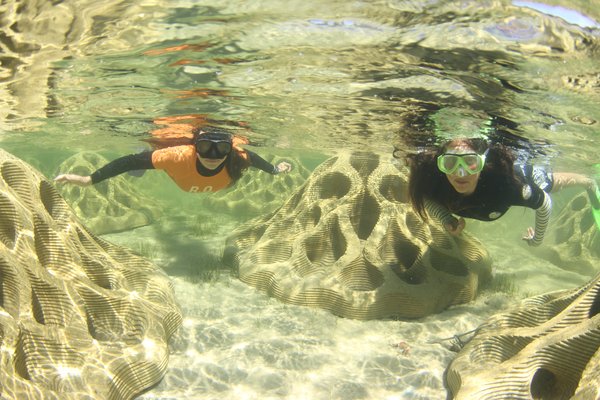
11 Dell Eco Reef Ginia and Indi underwater 1
Underwater sculpture parks on opposite sides of Australia
- The Busselton Jetty in Western Australia, which has an underwater sculpture park and an observatory and an interpretive centre.
- The Museum of Underwater Art at a reef off the coast of Townville, Queensland, which is an immersive underwater experience for snorkelers and divers. It's goal is “touching hearts, igniting passions, and inspiring change through art”. As well as showcasing the beauty of the reef, it shows change in sculptures over time as they are colonised by reef organisms.
Ocean Siren, Townsville Queensland
The Ocean Siren is a 4m high illuminated sculpture by artist Jason deCaires Taylor and inspired by Takoda Johnson, a young indigenous girl from the Wulgurukaba tribe. An interactive sculpture, its changing colours represent the water temperature measured that day and so serves as a warning signal about the warming seas' threat to the Great Barrier Reef.
Art, community and resilience
Art plays a crucial role in coastal adaptation, particularly through its contribution to community engagement, resilience-building, and safe climate discussions. Through visual mediums and creative expression, art can help to communicate the urgency and intricacies of coastal challenges to foster a deeper understanding within communities.
Local artists are often also communicators and translators of climate issues and adaptation options from local to global languages and context and vice-versa.
Collaborative art projects have the potential to strengthen community bonds, creating a sense of shared purpose and resilience in the face of environmental threats.
Drawing on opportunities to involve community
in a CoastAdapt case study of a creative community project to 'draw the coast' when the opportunity arose to relocate a road in Slovenia.
retreating road_banner
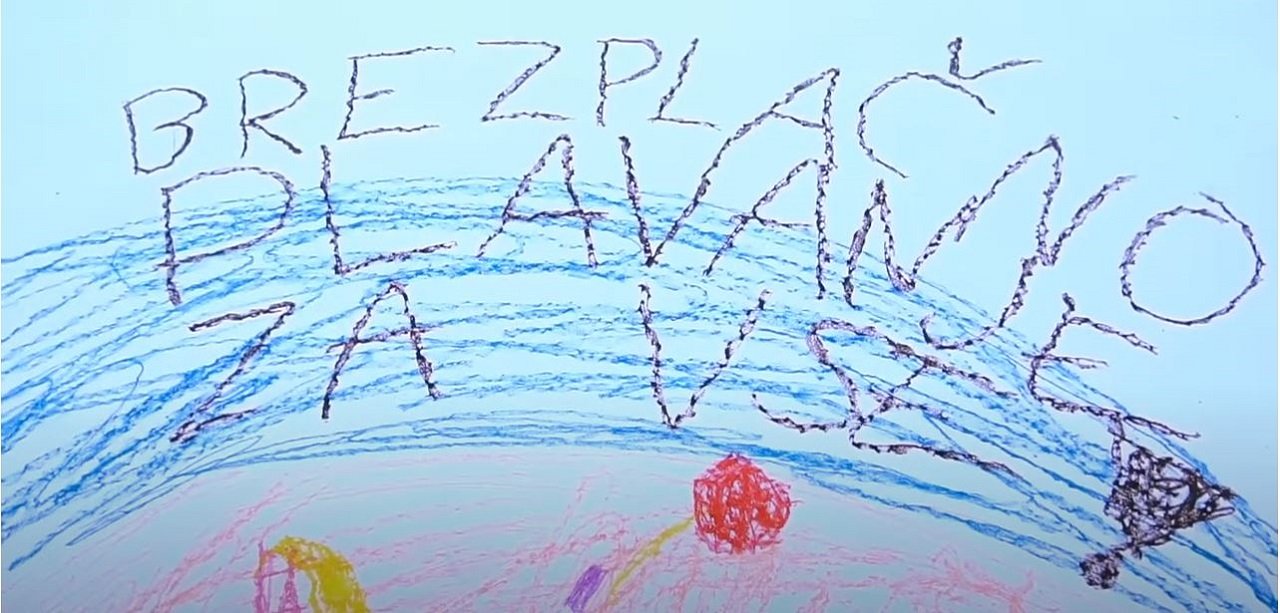
retreating road_banner
Flagging important community values: community art in the UK
through the Beach of dreams, in 2025, was a community art project that invited residents of Findhorn Beach in the UK to connect with their coasts and design the pennants to celebrate that connection.
The final event was a six mile promenade on the Moray coast with their pennants, celebrating with conversation, reflection, song and story sharing.
Beach of dreams
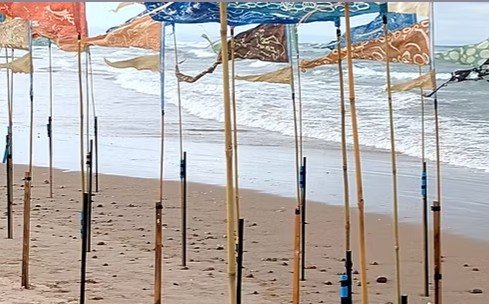
Beach of dreams
The creative behind this project Eve Mosher also shares this guide to developing a similar event for your beach.
Art that amplifies significance of Caring for Sea Country
Integration of Aboriginal Traditional Ecological Knowledge and art is central to Sea Country conservation and climate adaptation. By elevating cultural knowledge, these practices promote sustainable land and sea management while deepening the connection between communities and Country.
The Karrkad Kanjdji Trust in the Northern Territory supports collaboration between bininj (Indigenous people) and balanda (non-Indigenous people), bringing together present and future generations to uphold cultural heritage and environmental sustainability across West and Central Arnhem Land. This work reinforces Indigenous self-determination and strengthens long-term stewardship of land and sea.
examples?
In northeast Arnhem Land, the Buku-Larrŋgay Mulka Centre and Mulka Project have enabled traditional landowners to create the Saltwater Collection—a powerful series of Yirrkala bark paintings that depict Sea Country and express Yolŋu law. These works assert custodial rights and responsibilities over specific coastal and marine areas, serving as both cultural testimony and a form of resistance against external threats and exploitation.
Geopoetry: at the intersection of art and geography
Geopoetry is a creative field that sits at the crossroads of geography and poetry. This approach combines the detailed observation and emotional depth of poetry with the analytical lens of geography, which offers fresh ways to explore the complex relationships between humans, society, and the natural world.
This field emerged from the idea that poetry can be a powerful tool for exploring our connections with the world around us. Emerging from the idea that poetry can deepen our connection to place, geopoetry encourages close observation and reflection.
The term 'geopeotry' was coined by geologist Harry Hess in 1962 to describe his speculative and imaginative approach to understanding Earth science, particularly in developing plate tectonic theory.Since then, geographers who also write poetry have used it to offer new perspectives on geographical, environmental and social issues, especially in the context of the Anthropocene and how the current era is being shaped by human activities.
Poetry is being increasingly used as a research method in geography, adding a personal and emotional layer to the study of change in society and environment. Geopoetry also brings in diverse perspectives - especially lived experience from those directly affected
Complementary to geopoetry is 'geosocial formation', which stresses the importance of thinking of society as not separate from nature, but as co-formed with it. It emphasises that resource distribution, environmental justice, and political agency are influenced by both human actions and Earth’s material conditions - like climate systems, landforms, and ecological processes.
researchers work with stakeholders
in El Paso and Juarez
on heat preparedness plans, and poets
consider citizenship and plant gardens
in unabashed gratitude, and island nations
ponder the existential question
of whether a nation
can exist without land,
and geochemists propose a new geologic epoch
called the Anthropocene
but, wait, others say, it’s not
all humans, it’s the political economy, stupid,
it would be better to call it Capitalocene,
or it’s patriarchy, or it’s industrial agriculture
so how about Manthropocene or Plantationocene
An extract from Climate Geopoetrics (Magrane, 2021).
Guides
Guide from the UK:How to engage creatives in Coastal Adaptation
| Organisation, Link | Description |
|---|---|
| Creative Climate https://www.creativeclimate.org.au/ | National peak body for arts and climate, providing leadership, advocacy, tools and networks to support artists and cultural organisations to decarbonise, adapt and lead cultural change. |
| A Climate for Art (ACFA) https://www.aclimateforart.com.au/ | A national alliance of arts workers and organisations committed to climate action, with a strong focus on fossil-fuel divestment, ethical finance and collective organising in the arts. |
| Green Music Australia https://www.greenmusic.org.au/ | The national peak body for music and the environment, working with artists, venues and festivals to reduce emissions and advocate for climate action. |
| The Picturing Climate Network https://www.picturingclimate.org/ | An Australia-based, globally connected network linking artists, scientists and researchers to improve climate communication through creative collaboration. |
| Ocean Film Festival Australia https://www.oceanfilmfestival.com.au/ | An annual international film festival using ocean-themed storytelling to inspire environmental awareness and conservation, touring nationally. |
| The Transitions Film Festival https://transitionsfilmfestival.com/ | A film festival showcasing inspiring stories about climate solutions and regenerative futures. |
| Creative Climate https://www.creativeclimate.org.au/ | National peak body for arts and climate, providing leadership, advocacy, tools and networks to support artists and cultural organisations to decarbonise, adapt and lead cultural change. |
| A Climate for Art (ACFA) https://www.aclimateforart.com.au/ | A national alliance of arts workers and organisations committed to climate action, with a strong focus on fossil-fuel divestment, ethical finance and collective organising in the arts. |
| Green Music Australia https://www.greenmusic.org.au/ | The national peak body for music and the environment, working with artists, venues and festivals to reduce emissions and advocate for climate action. |
| The Picturing Climate Network https://www.picturingclimate.org/ | An Australia-based, globally connected network linking artists, scientists and researchers to improve climate communication through creative collaboration. |
| Ocean Film Festival Australia https://www.oceanfilmfestival.com.au/ | An annual international film festival using ocean-themed storytelling to inspire environmental awareness and conservation, touring nationally. |
| The Transitions Film Festival https://transitionsfilmfestival.com/ | A film festival showcasing inspiring stories about climate solutions and regenerative futures. |
| Creative Recovery Network https://creativerecovery.net.au/ | National organisation connecting the creative sector, disaster management and communities – advocating for and developing the specialist skills to support and strengthen communities through the disaster experience |
| WAMA Foundation / National Centre for Environmental Art https://wama.au/ | Australia’s first dedicated environmental art precinct integrating art, science and ecology. |
| Environmental Film Festival Australia https://effa.org.au/ | Australia’s leading environmental film festival focusing on climate, conservation and social justice. |
| CLIMARTE https://climarte.org/ | An arts-and-climate organisation producing exhibitions, festivals and public programs that mobilise communities for evidence-based climate action. |
| Carbon Arts https://carbonarts.org/ | Supports artists and communities to respond creatively to climate change through residencies, research and engagement. |
| ClimActs https://www.climacts.com/ | A community initiative combining storytelling, creativity and climate education through events and workshops. |
| Artists for Sustainability Network WA https://www.artistsforsustainability.com/ | A practitioner-led network supporting environmentally sustainable and climate-aware creative practice. |
| Australian Network for Art and Technology (ANAT) https://www.anat.org.au/ | Supports artists working with science, technology and environmental innovation through residencies and research partnerships. |
· Australian Network for Art and Technology (anat) (South Australia)
· Artists for Sustainability Network WA (Western Australia)
· ClimArte (Victoria)
Cultural Gardeners (Australia)
· Carbon Arts (Victoria)
· Creative Climate Leadership Cohort (Australia)
· ClimActs (Victoria)
· Creative Recovery NetworkSymbioticA (Western Australia)
· Environmental Film Festival Australia (Victoria and National Touring)
· Green Music Australia (Australia)
· Karrkad Kanjdji Trust (Northern Territory)
· Ocean Film Festival Australia
· TippingPoint Australia (Victoria)
· The Transitions Film Festival (Victoria and National Touring)
· The Australian Forum for Acoustic Ecology (Victoria)
· The Cad Factory (Australia)
· Sculptures by the Sea (Australia)
· Waterhouse Natural Science Art Prize (Australia)