


At a glance
- Coastal data – how it is collected, managed, and applied – must be designed to benefit all communities it represents. This includes ensuring that Indigenous communities are actively involved in shaping data practices that reflect their knowledge systems, cultural values, and priorities.
- Indigenous Data Sovereignty (IDS) affirms the rights of Indigenous peoples to control data related to them, ensuring it supports self-determination and reflects cultural values, protocols, and worldviews.
- CARE Principles (Collective benefit, Authority to control, Responsibility, Ethics) guide ethical and respectful data governance, ensuring Indigenous communities benefit from and control their data.
- Australia has a National Framework for Indigenous Data Governance promotes co-designed, inclusive data systems that empower Aboriginal and Torres Strait Islander peoples through transparency, capability building, and alignment with Indigenous priorities.

Ensuring Indigenous data suits Indigenous needs
Until recently, First Nations’ organisations and communities were not considered to be legitimate end-users of data. This exclusion meant that data collection and use often failed to reflect Indigenous priorities, values, or knowledge systems. Consequently, the data generated did not support Indigenous-led decision-making or the stewardship of Country, undermining efforts toward self-determination and sustainable land management.
Indigenous Data Sovereignty (IDS) affirms the rights of Indigenous peoples to control data that relates to them. A global movement, IDS ensures that data supports Indigenous self-determination. It outlines the right of Indigenous peoples to own and govern their data, from its creation and collection to its analysis, sharing, and reuse. This means Indigenous communities must be involved in every stage of the data lifecycle.
IDS is supported by Indigenous data governance, which is the authority of Indigenous peoples to determine how and why data is collected, accessed, and used. It ensures that data practices reflect Indigenous values, cultural protocols, and diverse worldviews, to support community priorities and stewardship of Country.

Indigenous knowledge has often been recorded, mapped, or shared without free, prior, and informed consent: taken out of its cultural context and used in ways that overlook Indigenous rights, governance, and ongoing connections to Country.
- © NCCARFIndigenous_library books

Indigenous knowledge has often been recorded, mapped, or shared without free, prior, and informed consent: taken out of its cultural context and used in ways that overlook Indigenous rights, governance, and ongoing connections to Country.
© NCCARF
Principles of Free Prior Informed Consent (FPIC)
Underpinning data sovereignty is the principle of Free, Prior, and Informed Consent (FPIC), which is fundamental to respecting the rights and sovereignty of Aboriginal and Torres Strait Islander peoples. An internationally recognised concept, FPIC sits within the United Nations Declaration on the Rights of Indigenous Peoples (UNDRIP).
FPIC aims to ensure that Indigenous communities are meaningfully engaged in decisions that affect their lands, waters, and cultural knowledge: this should be without coercion, with adequate time for consideration, and with full access to relevant information.
Embedding FPIC throughout the data lifecycle strengthens trust, accountability, and the shared stewardship of Country.
Guidelines on FPIC developed for use by DCCEEW.
FPIC
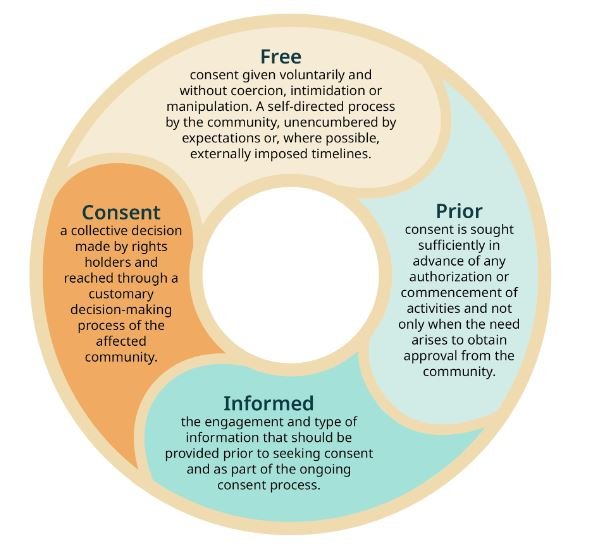
Figure 1: FPIC definitions adapted from the Food and Agriculture Organization of the United Nations
DCCEEW 2025
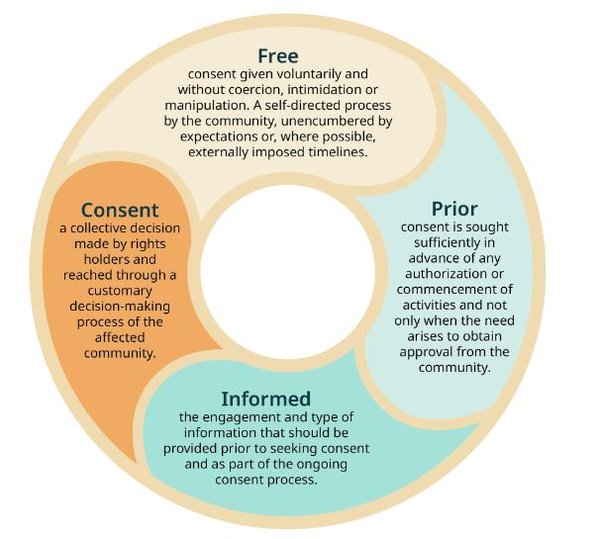
Figure 1: FPIC definitions adapted from the Food and Agriculture Organization of the United Nations
- DCCEEW 2025FPIC
Figure 1: FPIC definitions adapted from the Food and Agriculture Organization of the United Nations
DCCEEW 2025
Resources for Indigenous data
- Australian Research Data Commons - has several resources on using and managing Indigenous data sets
- Indigenous Data Network - supports and coordinates the governance of Indigenous data for Aboriginal and Torres Strait Islander peoples and empower these communities to decide their own local data priorities. It has a primary focus on health
- Global Indigenous Data Alliance - is an international network of Indigenous researchers, data practitioners, and policy activists advocating for Indigenous Data Sovereignty within their nation-states and at an international level.
Doing better not BADDR
Indigenous data collected has often been used to reinforce negative stereotypes. This is described through the BADDR framework as data that is Blaming, Aggregate, Decontextualised, Deficit, and Restricted (Walker 2018). These data perpetuate deficit narratives of disparity, deprivation, disadvantage, dysfunction, and difference (Walter 2016).
Using data in this way obscures the richness and diversity of Indigenous knowledge systems and experiences, and they fail to support meaningful engagement or self-determination.
| Dominant BADDR data | Indigenous data needs |
|---|---|
| Blaming data | Lifeworld data |
| Data contrast Indigenous/non-Indigenous data, rating the problematic Indigene against the normed Australian as the ubiquitous pejorative standard | We need data to inform a comprehensive,nuanced narrative of who we are as peoples, of our culture, our communities, our resilience, our goals and our successes |
| Aggregate data | Disaggregated dta |
| Data are aggregated at the national and/or state level, implying Indigenous cultural and geographic homogeneity | We need data that recognises our cultural and geographical diversity to provide evidence for community-level planning and service delivery |
| Decontextualised data | Contextualised data |
| Data are simplistic and decontextualised focusing on individuals and families outside of their social/cultural context | We need data inclusive of the wider social structural context/complexities in which Indigenous disadvantage occurs |
| Deficit, government-priority data | Indigenous-priority data |
| Data reprises deficit-linked concepts that service the priorities of government | We need data that measure more than problems and address our priorities and agendas |
| Restricted access data | Available and amenable data |
| Data are barricaded by official statistical agencies and institutions | We need data that are both accessible and amenable to our requirements |
CARE principles for Indigenous data governance
The concept of Indigenous Data Sovereignty (IDS) aligns closely with the CARE Principles for Indigenous Data Governance, which were developed in 2018 by the Global Indigenous Data Alliance to complement the more technical FAIR Principles by centering Indigenous rights and interests in data practices.
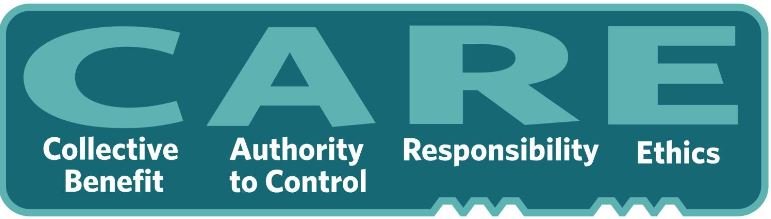
The four CARE Principles – Collective benefit, Authority to control, Responsibility and Ethics – are used for data that involves Aboriginal and/or Torres Strait Islander Australians or other First Nations peoples.

CARE
Data ecosystems shall be designed and function in ways that enable Indigenous Peoples to derive benefit from the data.
C1: For inclusive development and innovation
Governments and institutions must actively support the use and reuse of data by Indigenous nations and communities by facilitating the establishment of the foundations for Indigenous innovation, value generation, and the promotion of local self-determined development processes.
C2: For improved governance and citizen engagement
Data enrich the planning, implementation, and evaluation processes that support the service and policy needs of Indigenous communities. Data also enable better engagement between citizens, institutions, and governments to improve decision-making. Ethical use of open data has the capacity to improve transparency and decision-making by providing Indigenous nations and communities with a better understanding of their peoples, territories, and resources. It similarly can provide greater insight into third-party policies and programs affecting Indigenous Peoples.
C3: For equitable outcomes
Indigenous data are grounded in community values, which extend to society at large. Any value created from Indigenous data should benefit Indigenous communities in an equitable manner and contribute to Indigenous aspirations for wellbeing.
Indigenous Peoples’ rights and interests in Indigenous data must be recognised and their authority to control such data be empowered. Indigenous data governance enables Indigenous Peoples and governing bodies to determine how Indigenous Peoples, as well as Indigenous lands, territories, resources, knowledges and geographical indicators, are represented and identified within data.
A1: Recognising rights and interests
Indigenous Peoples have rights and interests in both Indigenous Knowledge and Indigenous data. Indigenous Peoples have collective and individual rights to free, prior,and informed consent in the collection and use of such data, including the development of data policies and protocols for collection.
A2: Data for governance
Indigenous Peoples have the right to data that are relevant to their world views and empower self-determination and effective self-governance. Indigenous data must be made available and accessible to Indigenous nations and communities in order to support Indigenous governance.
A3: Governance of data
Indigenous Peoples have the right to develop cultural governance protocols for Indigenous data and be active leaders in the stewardship of, and access to, Indigenous data especially in the context of Indigenous Knowledge.
Those working with Indigenous data have a responsibility to share how those data are used to support Indigenous Peoples’ self-determination and collective benefit.Accountability requires meaningful and openly available evidence of these efforts and the benefits accruing to Indigenous Peoples.
R1: For positive relationships
Indigenous data use is unviable unless linked to relationships built on respect, reciprocity,trust, and mutual understanding, as defined by the Indigenous Peoples to whom those data relate. Those working with Indigenous data are responsible for ensuring that the creation, interpretation, and use of those data uphold, or are respectful of, the dignity of Indigenous nations and communities.
R2: For expanding capability and capacity
Use of Indigenous data invokes a reciprocal responsibility to enhance data literacy within Indigenous communities and to support the development of an Indigenous data workforce and digital infrastructure to enable the creation, collection, management,security, governance, and application of data.
R3: For Indigenous languages and worldviews
Resources must be provided to generate data grounded in the languages, worldviews, and lived experiences (including values and principles) of Indigenous Peoples.

Indigenous Peoples’ rights and wellbeing should be the primary concern at all stages of the data life cycle and across the data ecosystem.
E1: For minimising harm and maximising benefit
Ethical data are data that do not stigmatize or portray Indigenous Peoples, cultures, or knowledges in terms of deficit. Ethical data are collected and used in ways that align with Indigenous ethical frameworks and with rights affirmed in UNDRIP. Assessing ethical benefits and harms should be done from the perspective of the Indigenous Peoples,nations, or communities to whom the data relate.
E2: For justice
Ethical processes address imbalances in power, resources, and how these affect the expression of Indigenous rights and human rights. Ethical processes must include representation from relevant Indigenous communities.
E3: For future use
Data governance should take into account the potential future use and future harm based on ethical frameworks grounded in the values and principles of the relevant Indigenous community. Metadata should acknowledge the provenance and purpose and any limitations or obligations in secondary use inclusive of issues of consent.
There are currently few examples of use CARE principles in practice in Australia.
Here are some from CSIRO.
- project reflections on how CARE principles were incorporated into the project
- an academic paper that describes caring for Indigenous data
- an academic paper that describes a research project in Kakadu and use of CARE principles.
National Framework for Governance of Indigenous Data
The Australian Government’s Framework for Governance of Indigenous Data, developed by the National Indigenous Australians Agency (NIAA), aims to give Aboriginal and Torres Strait Islander peoples greater control over data that affects them.
Co-designed with Indigenous and non-government partners, the framework promotes Indigenous Data Sovereignty by guiding government departments and agencies to partner with Indigenous communities throughout the data lifecycle.
The framework emphasises building data capabilities, improving transparency of data holdings, and fostering inclusive systems that reflect Indigenous priorities, values, and aspirations. This aims to ensure data governance supports self-determination and better outcomes for Indigenous peoples.
the Australian Government's NIAA Framework for Governance of Indigenous Data
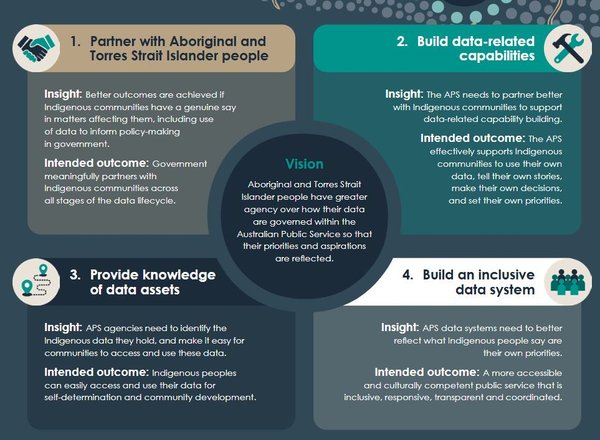
Governance of Indigenous Data: Framework on a page
- © Commonwealth of Australiagov framework
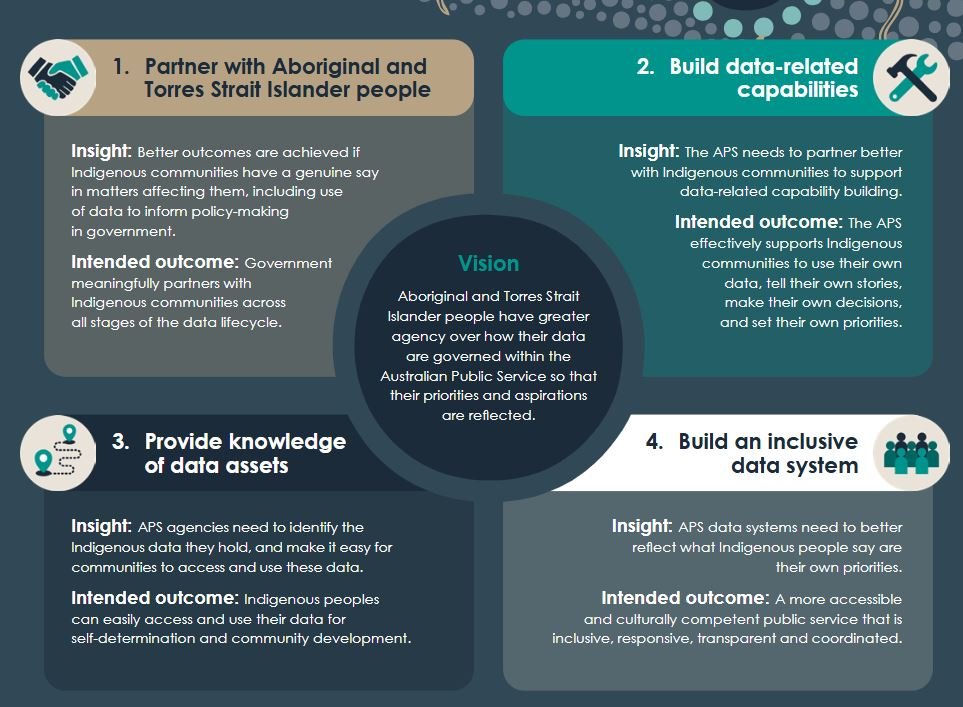
Governance of Indigenous Data: Framework on a page
© Commonwealth of Australia