


At a glance
- Quick, high‑level screening of an organisation’s exposure to climate change risks.
- Uses readily available data and professional judgement (no detailed modelling required) to identify priority risks, assets and uncertainties to focus further assessment.
- It is limited in that it relies on qualitative inputs and broad data, so results are indicative only and not suitable for final adaptation or investment decisions.
What is a first pass risk assessment (screening)
A first‑pass climate change risk screening is a practical, qualitative exercise that can be completed without detailed site‑specific data to gain an early view of potential climate risks to an organisation. It is cost‑effective and designed to support high‑level decision‑making by drawing on readily available national, state or local datasets alongside professional judgement and existing expertise.
What can a first pass risk screening achieve?
A first‑pass risk screening can help practitioners to:
- rapidly establish a baseline understanding of the organisation’s exposure to broad climate change risks
- recognise key uncertainties, including limitations around the precise timing, location and magnitude of future climate impacts
- sreen climate‑related hazards that may disrupt business operations and identify priority risks that warrant further, more detailed analysis
- pinpoint priority parts of the organisation (such as assets, services, locations or sectors) that require a second‑pass, detailed risk assessment to support effective adaptation planning
- identify relevant stakeholders who should be involved in the next stage of investigation and decision‑making
- povide a clear evidence base to engage decision‑makers, secure resources, and build leadership support for progressing climate risk management actions.
What are the limitations of a first pass screening?
Moving into technical detail too early in the planning process can be costly and inefficient. A staged approach that begins with a first‑pass screening, can help you to focus effort where it will deliver the greatest value. However, it is important to understand their limitations.
A first‑pass risk screenings are valuable for building an initial, high‑level understanding of an organisation’s exposure to climate change risks. However, they rely largely on qualitative information and limited data inputs, which can be a constraint for practitioners seeking more precise or defensible results.
As a result, first‑pass screenings should be used to identify and frame broad risks, inform priorities, and guide the appropriate scope of subsequent adaptation planning and risk assessments, rather than to support final adaptation decisions.
By clarifying where adaptation planning effort is most needed, first‑pass screening helps organisations avoid committing unnecessary time and resources to detailed second‑ or third‑pass assessments in low‑priority areas. It highlights where risk is likely to be material and where more in‑depth analysis should be targeted.
your understanding of:
- the three types of risk assessments
- how this fits within a decision support framework (C-CADS)
Tools to support a first pass risk screening

CoastAdapt guidance and tools for a first pass risk assessment.
- First pass risk assessment - guidance
- First pass risk assessment - checklist for first round
- First pass risk assessment - template for second round
CoastAdapt provides a simple spreadsheet or risk assessment template, that can be used alongside the attached guidance to document inputs and clearly present the outcomes of a first‑pass risk screening
It also offers a range of national and regional datasets that can support first‑pass screenings. These data products are outlined in the sections below.
Overview of how to do a first pass climate change risk screening
A first pass risk screening is a four step process that involves you to:
- Establish the context
- Identify your existing climate risks (past and current)
- Identify your future climate risks and opportunities
- Analyse and evaluate risks.
See box below to access the guidance document, risk assessment tool and the risk assessment checklist.
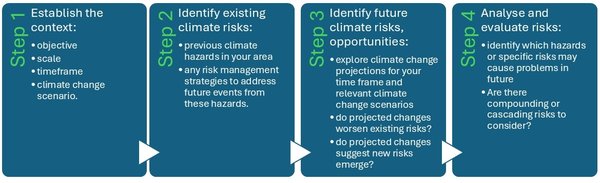
Figure1: An overview of the four step process of the first pass risk assessment (screening).
first pass assessment overview

Figure1: An overview of the four step process of the first pass risk assessment (screening).