


At a glance
- 'Sparking Conversations, Igniting Action' is a two-year pilot project working across Greater Hobart to provide communities with the ‘kitchen table’ support they need to better prepare for and build resilience to bushfire.
- The same approach could also be used to prepare communities for other natural disasters such as flood.
A 'kitchen table' approach to disaster preparedness
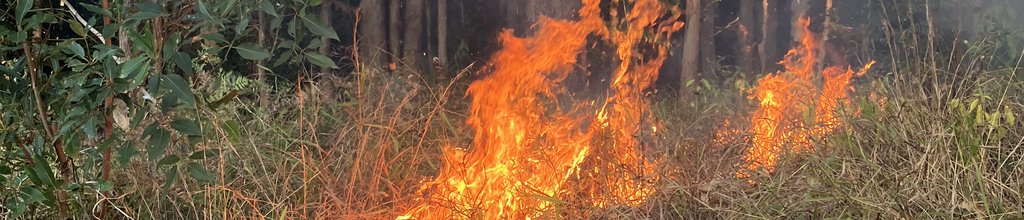
Sparking Conversations, Igniting Action is a pilot project focused on community resilience and bushfire preparedness. Working with households in bushfire-prone areas across Greater Hobart, the two-year pilot, which began in August 2022, is helping people become more aware of bushfire risks and prepare for them.
The project, which is a joint initiative of Clarence, Glenorchy, Hobart and Kingborough councils, has the following key objectives:
- To increase individual and household planning and preparation for bushfire, including physical preparation of properties and the development of bushfire survival plans
- To build community resilience to bushfires by strengthening social connections, developing local leaders, and empowering communities to plan and prepare together.
The project will reach about 150–200 households in each of the 12 target areas. Each of the neighbourhoods is characterised by different bushfire risk profiles and demographics, such as renters and homeowners.
The project was developed in response to a University of Tasmania study on people’s preparedness for bushfires, which showed that most people didn’t know where to start.
The two-pronged approach involves free risk and readiness assessments where community fire officers inspect the property and recommend actions to improve bushfire preparedness and develop a bushfire plan, as well as several community events, such as an annual information forum and workshops to create and strengthen community connections.
WATCH: videos about how to prevent fire on your property,
Working with individual households
Project manager, Bree Hunter, says the unique aspect of the project is that it uses a friendly approach to work with individuals to assess where they are up to— plus it tailors recommendations to suit each household rather than simply providing a lot of information and blanket recommendations.
The project team begins by door knocking every property to introduce the project and staff. This is followed by letterbox drops and mailouts with information about the project and any upcoming events.
“Ideally, when we talk to people, we get them to sign up for our newsletter and emails,” says Bree. “We hope people will spark up conversations with friends, family and neighbours that will help ensure they are all safer and better prepared for the threat of bushfire.”
The team includes Bree, who works part-time, plus four full-time staff – two community fire officers, who carry out the risk and readiness assessments, and two community resilience officers who focus on engagement, organising community events and bringing people together.
Bree believes the project is proving successful in addressing a gap by connecting with so many people one-on-one. “Although the Tasmanian Fire Service does some community engagement, they are restricted in how much they can do,” she says.
She believes local councils are well placed to do this type of work, as they have so many different networks to draw on.
As the project proceeds, the team is monitoring the process intending to produce a document at the end of the pilot for other councils to follow. This includes surveys after each event and follow-up surveys six months after the risk and readiness assessments to see how well the recommendations have been adopted. The University of Tasmania will also conduct a large survey at the end of the project to evaluate the project’s success.
The results will inform councils and other government agencies about what they can do to help people and communities overcome the obstacles that prevent them from preparing for bushfire. The same approach could also be used to prepare communities for other natural disasters, e.g. in flood-prone areas.
Sparking Conversations, Igniting Action is funded by the federal government, through the National Emergency Management Agency (NEMA) and is supported by the Tasmania Fire Service, Australian Red Cross and the University of Tasmania.
Connecting and learning
Bree believes the project is proving successful in addressing a gap by connecting with so many people one-on-one. “Although the Tasmanian Fire Service does some community engagement, they are restricted in how much they can do,” she says.
She believes local councils are well placed to do this type of work, as they have so many different networks to draw on.
As the project proceeds, the team is monitoring the process intending to produce a document at the end of the pilot for other councils to follow. This includes surveys after each event and follow-up surveys six months after the risk and readiness assessments to see how well the recommendations have been adopted. The University of Tasmania will also conduct a large survey at the end of the project to evaluate the project’s success.
The results will inform councils and other government agencies about what they can do to help people and communities overcome the obstacles that prevent them from preparing for bushfire. The same approach could also be used to prepare communities for other natural disasters, e.g. in flood-prone areas.
Funding
Sparking Conversations, Igniting Action is funded by the federal government, through the National Emergency Management Agency (NEMA) and is supported by the Tasmania Fire Service, Australian Red Cross and the University of Tasmania.
To cite
This case study was prepared by Bree Hunter, Sparking Conversations, Igniting Action. Please cite as: Hunter, B., 2024: Sparking conversations – preparing communities for bushfire threat. Snapshot for CoastAdapt, National Climate Change Adaptation Research Facility, Griffith University, Gold Coast.