



At a glance
- Researchers used Minecraft workshops in Ireland to engage young people (ages 10–12) in envisioning climate adaptation and sustainability solutions for their local coastal area, Rogerstown Estuary in the UK.
- Participants designed virtual landscapes incorporating nature-based solutions and community spaces, addressing issues like coastal erosion and biodiversity loss.
- The initiative aimed to reduce eco-anxiety and include youth perspectives in adaptation planning, with outputs showcased through videos and a gallery exhibition to promote positive climate narratives.
- The project demonstrated that creative digital tools can foster optimistic, progressive ideas for coastal adaptation and strengthen community engagement.

Play helps to imagine the future
The popular computer game Minecraft offers young people a powerful creative visual interface to share their ideas about climate adaptation in their local coastal environment.
Minecraft allows players to imagine and create new worlds by building with virtual coloured blocks, assembled brick-by-brick in a process similar to online Lego construction. In 2016, an education edition of the game was released. Within the game, digital replicas of real-world places can be created, where participants can virtually gather to build.
Listening to young people
In a series of weekend workshops held in Ireland in 2021, researchers trialled Minecraft as a tool for young people to explore sustainability and climate change in their coastal community. Young people aged 10-12 years old and their families from the Rogerstown Estuary area of north Dublin, which is projected to be impacted by coastal erosion and flooding due to climate change, were invited to take part in the project.
Although rising levels of eco-anxiety among young people in light of environmental degradation and climate change have been documented, their views on climate change adaptation and sustainability are rarely included in community consultation. The Minecraft workshops were envisioned as a way to bring young people in the local community climate adaptation conversation.
The workshops were part of the Coastal Communities Adapting Together (CCAT) project based at University College Dublin, Ireland. Before their workshop, participants were invited to view age-appropriate learning material about coastal climate change produced by CCAT. They also completed a survey exploring their ideas about improving their local area.
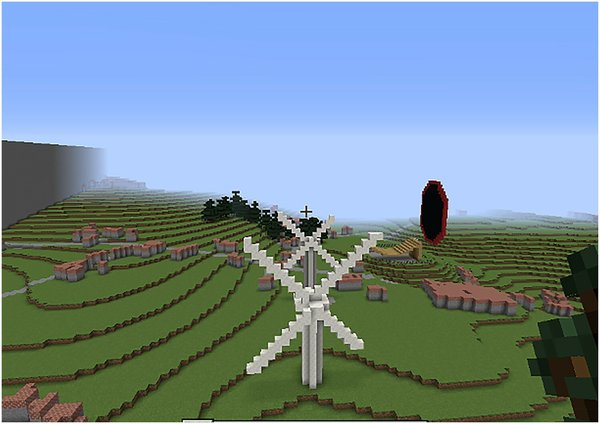
Repair and care through new forms of land use: windmill farm with a skate park.
- © CCAT ProjectFigure 1.
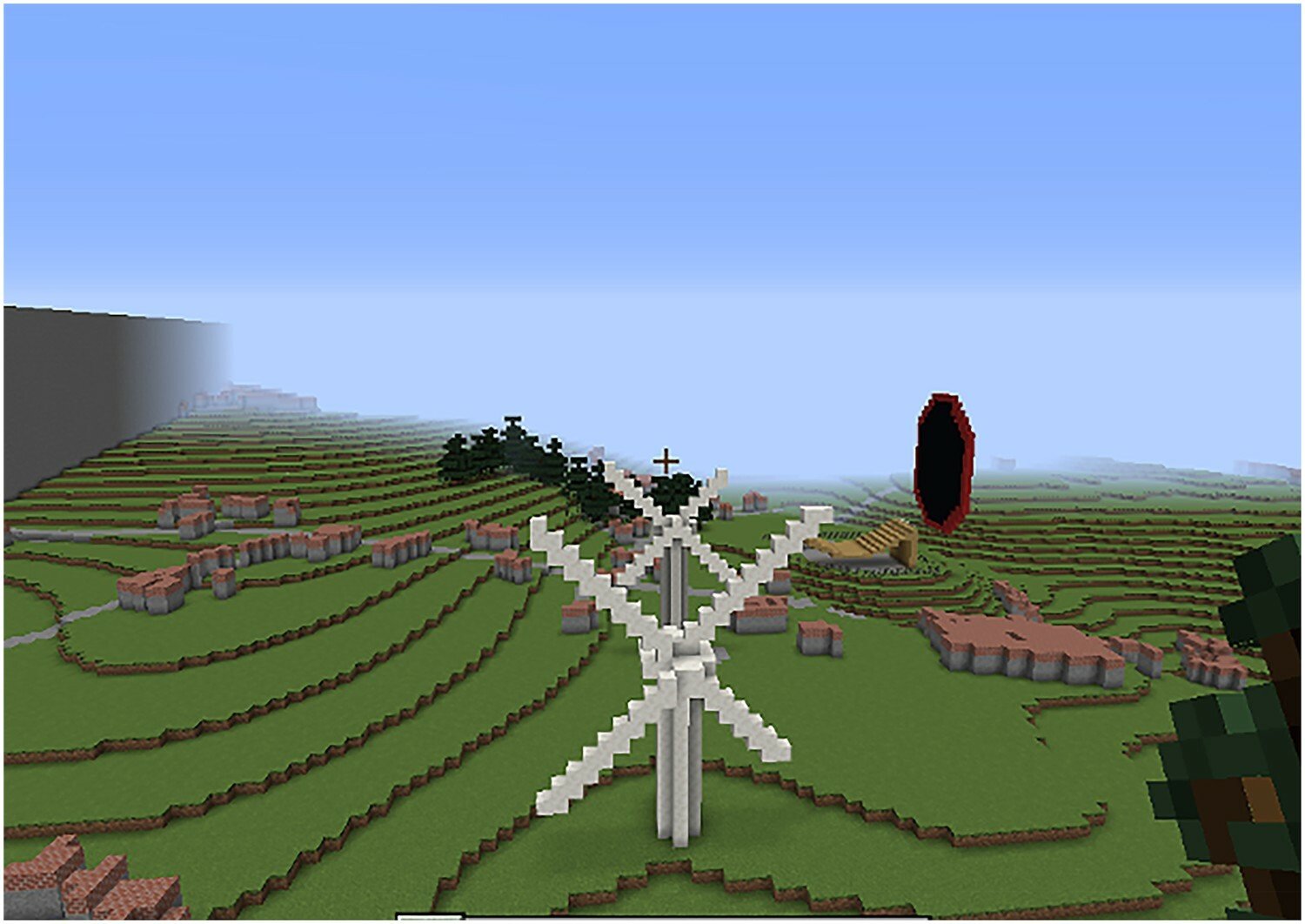
Repair and care through new forms of land use: windmill farm with a skate park.
© CCAT Project
During the workshop, the young people were tasked with creating their environmental design for the Rogerstown Estuary Park, which had been digitally recreated in Minecraft using publicly available real-world spatial data. At the end of the exercise, each participant generated a 3–5-minute video to showcase their design.
An optimistic outlook
The progressive solutions created by the young participants displayed an optimistic outlook to addressing climate change and environmental sustainability, the CCAT researchers found. The most common themes explored by the young participants included nature-based solutions to coastal adaptation, and the creation of shared spaces for community engagement within nature.
The positive framing continued after the workshop, with a selection of still images of the designs displayed in a gallery exhibition, with the aim of exploring ways to shift the visual narrative on climate change away from the negative dystopian imagery typically seen in the media.
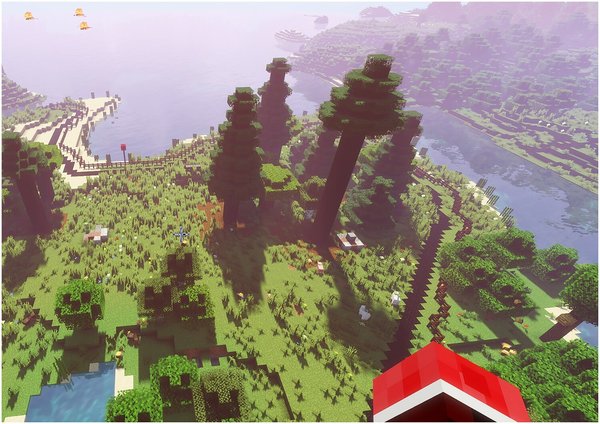
Repair with nature-based solutions: coastal wall defences for coastal adaptation.
- © CCAT Project (McNally & de Andrade 2022).Minecraft
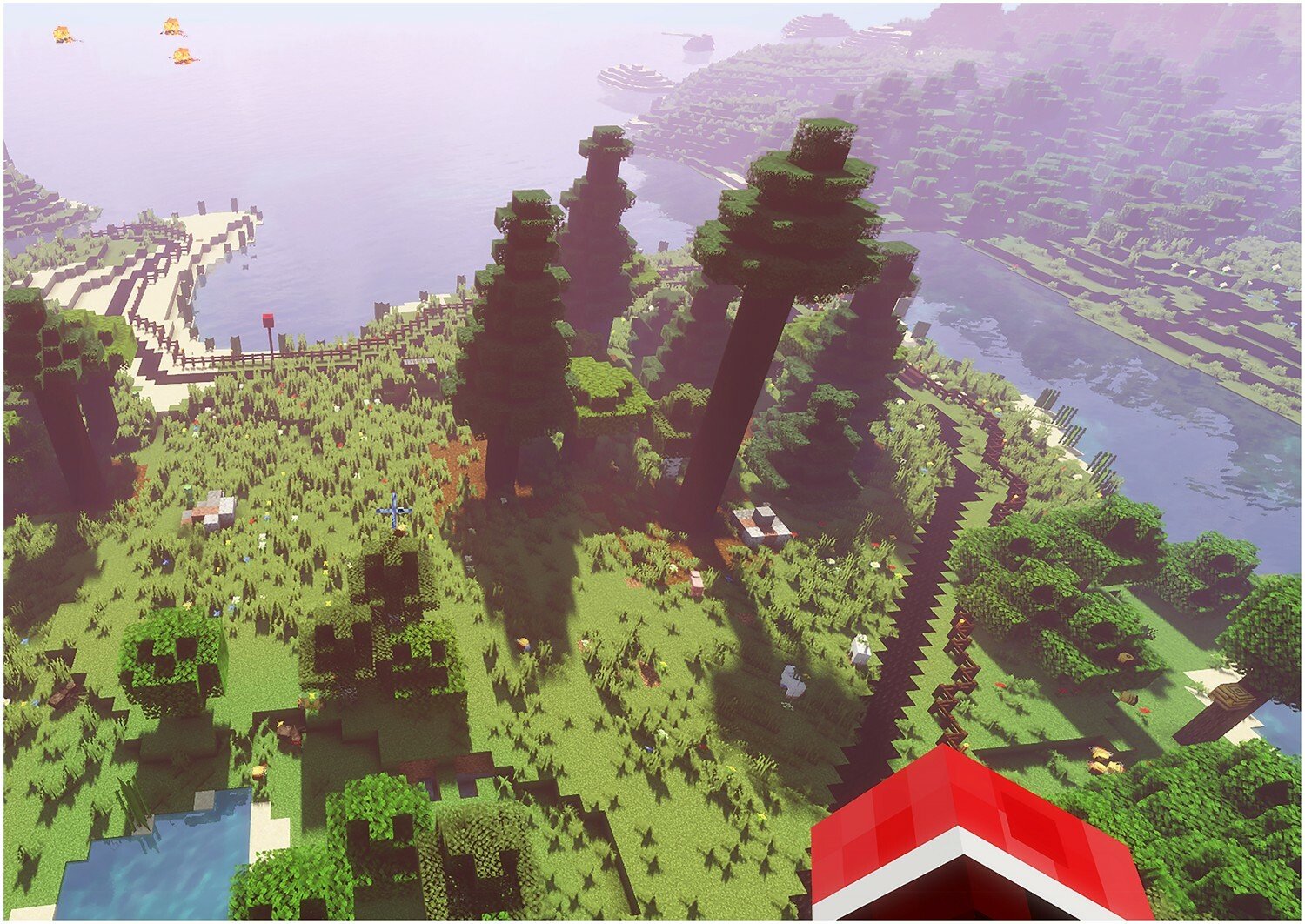
Repair with nature-based solutions: coastal wall defences for coastal adaptation.
© CCAT Project (McNally & de Andrade 2022).
To cite:
This case study was prepared by NCCARF. Please cite as: NCCARF 2024: Sandbox gaming empowers youth to explore future coasts through Minecraft. Case study for CoastAdapt, National Climate Change Adaptation Research Facility, Griffith University, Gold Coast.