


Background and context
An assessment of the community capacity was commissioned by Perth NRM, the approved supplier of NRM services to the federal government in the Perth and Swan River area of Western Australia.
The area covered by Perth NRM includes approximately 120km of mainland Western Australia coastline, and Rottnest and Garden Islands.
Within this region, more than 100 community environmental volunteer organisations, including ‘Friends of’ groups and native wildlife care associations, play a significant role in caring for green spaces in and around Perth.
The Community Capacity Assessment
A community capacity assessment was conducted in 2021 to capture the contribution of volunteer groups to environmental outcomes in the area, and to identify challenges and barriers that these groups face. Previously, from 2014 until 2017, Perth NRM had conducted an annual online survey of environmental volunteers. The findings from these surveys had informed the funding, design, and delivery of Perth NRM capacity building workshops.
In 2021, a broader community capacity assessment project was planned and conducted, which included participatory workshops, a modified survey, a series of stakeholder interviews, and community events to present and share the findings and outcomes of the project.
Perth NRM Community Capacity Assessment – the approach
The 2021 survey was designed to build upon the work conducted and data collected in the Perth NRM surveys conducted in 2014, 2015, 2016 and 2017. Many questions included in the 2021 survey were carried over from the previous surveys, to enable the analysis of data trends over time.
The key point of difference between the 2021 NRM community capacity assessment and the previous surveys was the inclusion of direct community consultation components, including stakeholder workshops and interviews. The project budget included funding to employ a staff member to consult with the local environmental volunteer community and facilitate community consultation elements of the work, as well as to prepare the report.
At the project outset, two co-design workshops were held to guide the 2021 online survey design, with the aim of ensuring it would effectively capture the ideas and concerns of NRM volunteers, representatives and other stakeholders.
Based on an evaluation of the previous surveys, the 2021 survey was divided into two to improve usability and data accuracy. One survey was designed to be completed by individual environmental volunteers. A second survey was designed to be completed by representatives of environment volunteer groups. The survey for individual environmental volunteers ran from 30 July until 21 September 2021. The survey for group representatives ran a little later, open from 13 August until 27 September 2021.
In addition to the survey, a series of stakeholder interviews were carried out, to place the quantitative survey data into qualitative context.
Survey key results and insights
The survey for individuals received 200 responses, and the survey for group representatives received 52 responses.
Overall, responses were received from members of 112 volunteer environmental organisations, 44 more than the 2017 survey.
READ: more about volunteers in the report, PerthNRM, 2021: Working for Nature. 2021 Community Capacity Assessment.
Individual volunteers
- Of the respondents to the survey for individuals, 68.5% were aged 55 years and older. Compared to previous surveys, a rise in the number of volunteers aged 75 years and older was recorded, from 6.8% in 2012 to 13.9% in 2021.
- Most respondents reported their cultural background as Australian. Two respondents identified as Aboriginal or Torres Strait Islander. No respondents identified as Noongar, the traditional owners of the south-west of Western Australia.
- Since the first survey was conducted in 2014, attachment to a local natural area has remained a key motivation to engage in volunteer NRM activities, survey data shows. In 2021, 73.2% and 17.6% of respondents were motivated by attachment to place to a great extent or slightly, respectively.
- Other significant motivating factors reported were to: protect and conserve the environment; leave a legacy for future generations; makes me a part of something; gives me a purpose.
- Most people found out about the volunteer group through a friend or neighbour, followed by the internet.
- The main activities conducted by the volunteer groups surveyed were revegetation and weed control, wildlife rehabilitation, and rubbish removal. The youngest group of survey respondents, aged 15-19, were primarily engaged in wildlife rescue and rehabilitation.
- Respondents listed the three areas they consider they require further training are attracting new volunteers, social media skills, and engagement with Aboriginal community. Compared to the previous survey, effective connection with the Aboriginal community was the area of most significant decline in volunteer social capital skills.
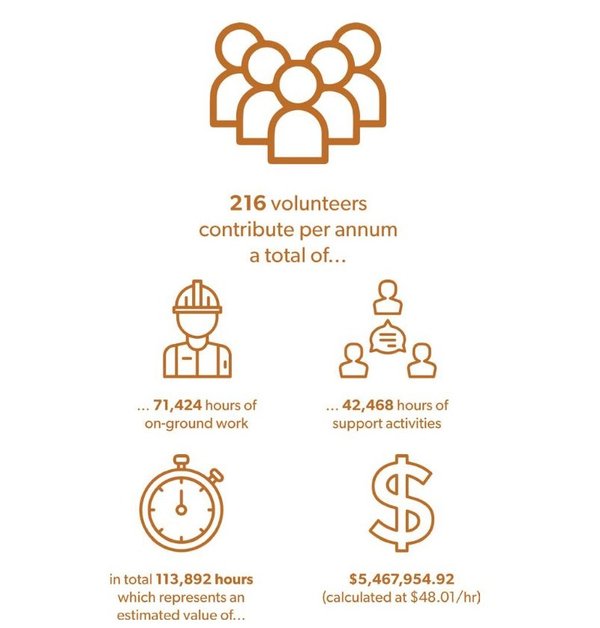
infographic
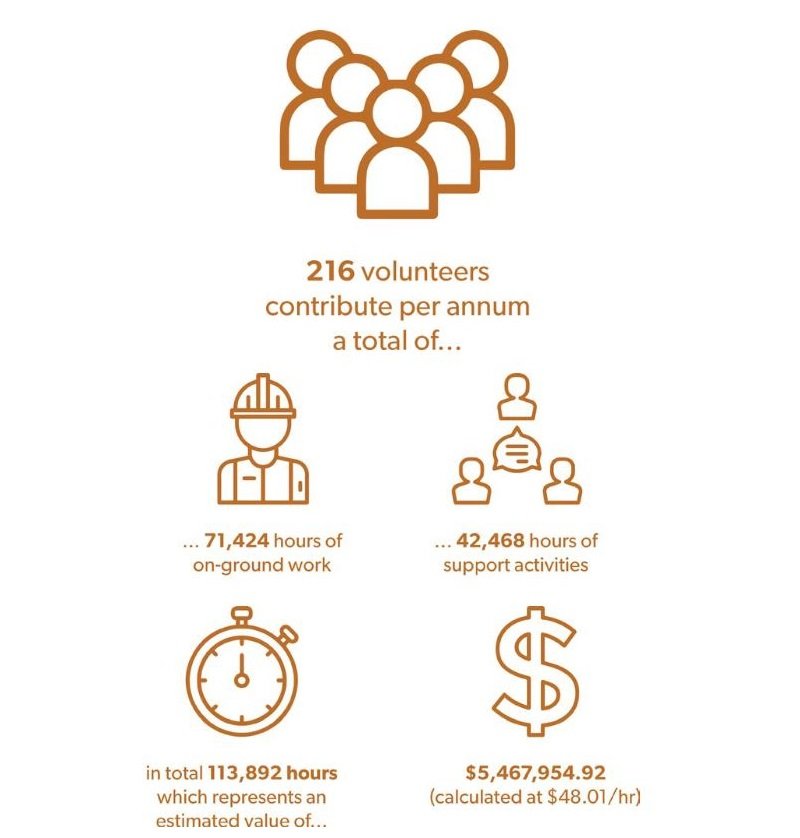
Aggregate contribution of the 216 volunteers that participated in the capacity assessment in 2021
@PerthNRM
Group representatives
- Groups with 11 to 20 members was the most common group size, followed by groups with 6-11 members. Only seven groups had over 100 members.
- Half of the groups surveyed had established partnerships or affiliations with other groups.
- The long-term financial viability of surveyed groups has fallen from 46.7% in 2017 to 37.7% in 2021. Grant funding remains the most frequent source of funding at 71.7%, a decrease of 8.3% since 2017. Corporate sponsorship and in-kind donations fell from 51.6% in 2017 to 35.9% in 2021. In 30.1% of groups, access to funding has decreased or remarkably decreased over recent years.
- Facebook, events, word of mouth and a website were the main reported sources of volunteer recruitment.
- Interaction with local government authorities (LGAs) was valued. Of the surveyed groups, 65.4% reported regular meetings with their LGA, and 61.5% undertook shared on-ground work. This is a significant 25.6% decrease in shared on-ground work since the 2017 survey, when 87.1% of volunteer organisations reported undertaking joint on-ground work with an LGA.
Community consultation key insights
Through a series of stakeholder interviews run alongside the survey, the project team developed a series of insights and ‘bright spot’ case studies highlighting potential solutions to some key challenges raised in the survey.
Recruitment
Many groups reported challenges with recruiting new members. Websites and social media were commonly used tools for new member recruitment.
Only a small number of respondents named the installation of signs and use of signage as a method of recruitment, but these groups found this method to be a valuable member recruitment tool.
Several groups also reported that activities such as putting up signs and wearing group T-shirts during regular bush care events was their most successful strategy for new member recruitment, as it encouraged passers-by to come and engage with the group.
Engaging young people
In stakeholder interviews, key differences were identified between the motivations of young people to engage in environmental volunteering, and the motivations of people aged 55 years and older that make up the majority of volunteers and survey responders.
Young people were primarily motivated by an overall concern for the environment, rather than by an attachment to a specific local green space. They tended to travel further to volunteer their time in environmental activities, and were more strongly motivated by the social aspects of group volunteer work.
A ‘Bright Spot’ case study identified by the project team was the youth-focused Perth Intrepid Landcare, which aims to make environmental volunteering days more a more festival-like event, including live music, DJs and BBQs, to provide opportunities for young people to socialise while engaging in revegetation work.
Engaging with Aboriginal groups
Volunteer NRM groups and local indigenous communities often share a common goal of restoring and maintaining local native habitat. Despite these shared goals, a lack of interaction between the two sectors was highlighted in the survey.
The consultation highlighted strategies for improved Aboriginal group interaction. These included budgeting for indigenous business or environmental group interaction in grant proposals, and engaging with these groups at the start of the project. Investing time to build a relationship with a group or Elder after making contact is also valuable for developing connection and co-operation.
Outcomes and next steps
Following the completion of the survey and community consultation, a number of initiatives were undertaken with the aim of addressing issues raised.
A direct outcome of the CCA2021 was the establishment of the Environmental Umbrella Group Collective (EUGC). This forum was initiated as a way for groups to share experiences and concerns and seek collective or collaborative solutions to challenges the groups face.
The umbrella group may also serve as a platform for joint funding applications and direct on-ground collaboration between groups. This collective approach could potentially turn funding application from an onerous, secretive and competitive process to a more collaborative one.
To boost the visibility of volunteer organisations to the broader local community, the first Perth Week of Action to mark the United Nations International Day for Biodiversity was held on 22 May 2022. This initiative was created with the goal of promoting environmental volunteering and environmental events in the region. The week included radio interviews, community planting events, naturalist walks, and a documentary screening.
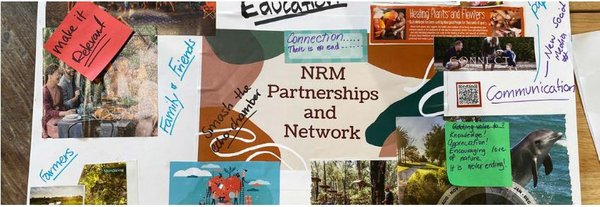
networking map
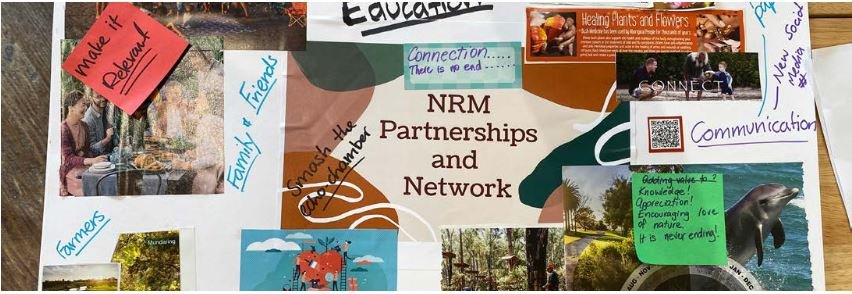
Co-Design Workshop: Cluster Mapping Exercise undertaken during a workshop at Cockburn Wetlands Centre July 2021
@PerthNRM
Lessons learnt
Volunteers in NRM benefit, and benefit from, environmental restoration and conservation work. The 2021 Perth NRM Community Capacity Assessment identified clear challenges faced by NRM community groups, particularly the aging demographic of many group members, and concerns over attracting new members.
As well as the survey, other community consultation activities provided significant insights and identified opportunities to address concerns similar to those faced by many environmental volunteer organisations.
The project highlighted several ‘Bright Spot’ examples of strategies to address identified challenges. Of the challenges highlighted by the survey, particularly around engaging younger community members, increasing new member recruitment, and boosting interaction with local aboriginal groups, a number of organisations had implemented innovative strategies that other groups may be able to learn from or adopt.
In addition to producing a report, the team initiated events, activities, and the establishment of the Environmental Umbrella Group collective, to address challenges the survey data highlighted. Through this work, the team not only gathered data about the role NRM volunteers play in the Perth NRM region and the challenges they face, but to begin to address some of these challenges.
To cite:
This case study was prepared by NCCARF. Please cite as: NCCARF, 2024: Better understanding volunteers: an assessment of NRM community capacity in Perth. Case study for CoastAdapt, National Climate Change Adaptation Research Facility, Griffith University, Gold Coast.