



Growing population and rising sea levels requires a new shoreline strategy
A burgeoning human population in the coastal zone, coupled with rising sea-levels, is increasing demand for shoreline stabilisation and protection. Seawalls, revetments and breakwaters historically have been the standard approach to shoreline stabilisation, but these hard structures can cause significant ecological damage, both at the site of their construction and beyond.
Since 1999, Lake Macquarie City Council (LMCC) has taken a ‘soft’ engineering approach when site conditions permit. This has involved utilising cobbles to stabilise and protect coastal lake shorelines, under the presumption that this strategy is ecologically less damaging than building seawalls.
In 2019, LMCC began a partnership with Macquarie University and NSW DPE research scientists — funded through the Australian Research Council Linkage program — to investigate the ecological effects of shoreline protection strategies and provide an evidence base for future soft engineering decisions in the Lake.
Climate risks to coastal lakes and lagoons
Lake Macquarie cs_seawalls
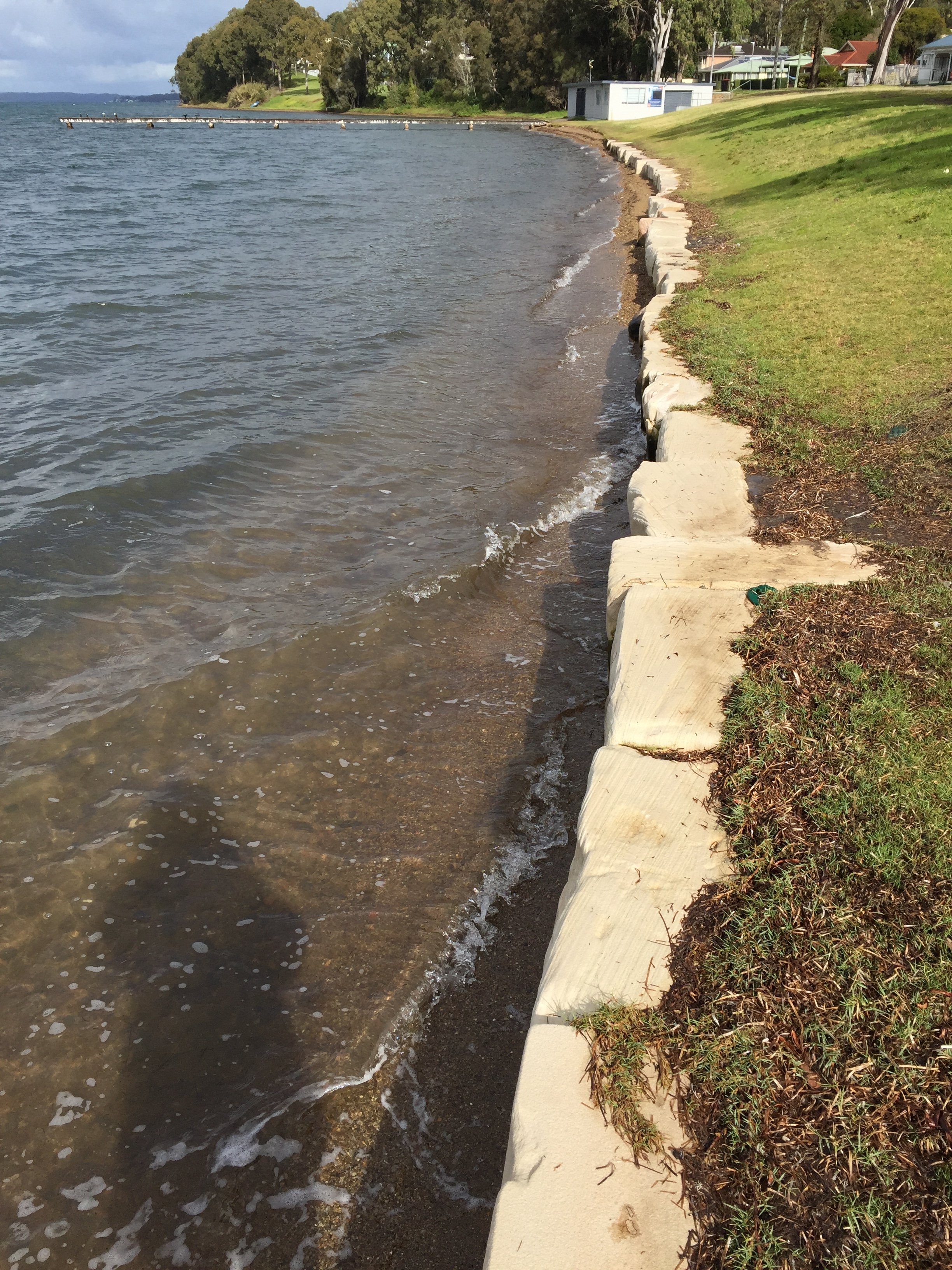
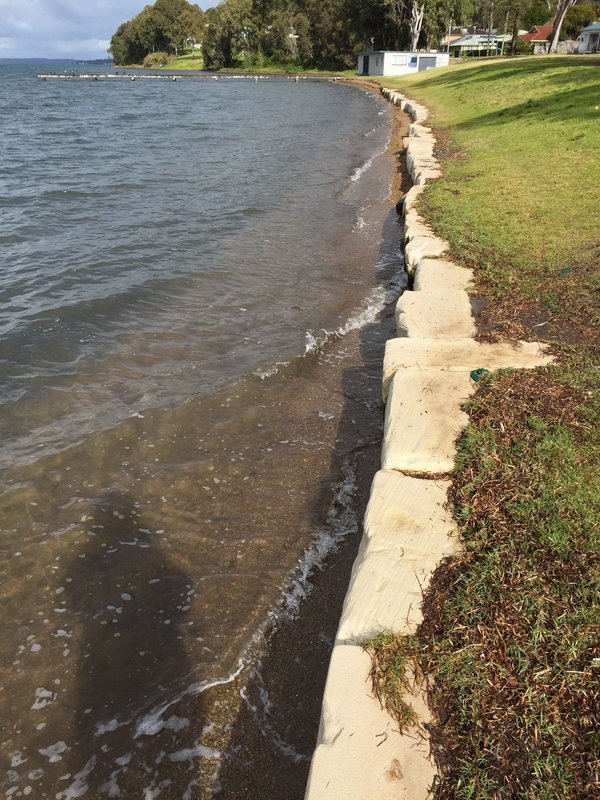
Seawalls have been the traditional approach to stabilise shorelines, but are detrimental to the lake ecology
© Lake Macquarie City Council
Coastal lakes and lagoons are among the world’s most productive environments. However, most are low-lying so are also at significant risk from inundation and erosion. Furthermore, coastal lakes are thought to be particularly exposed to the effects of sea level rise: Lake Macquarie was identified as the most exposed estuary in south east Australia and most exposed Local Government Area in the Australian National Coastal Risk Assessment.
Shoreline protection against erosion and flooding typically has relied on hard engineering approaches such as the construction of seawalls in the past, but nature-based strategies increasingly are needed to reduce or prevent ecological damage.
Adaptation actions
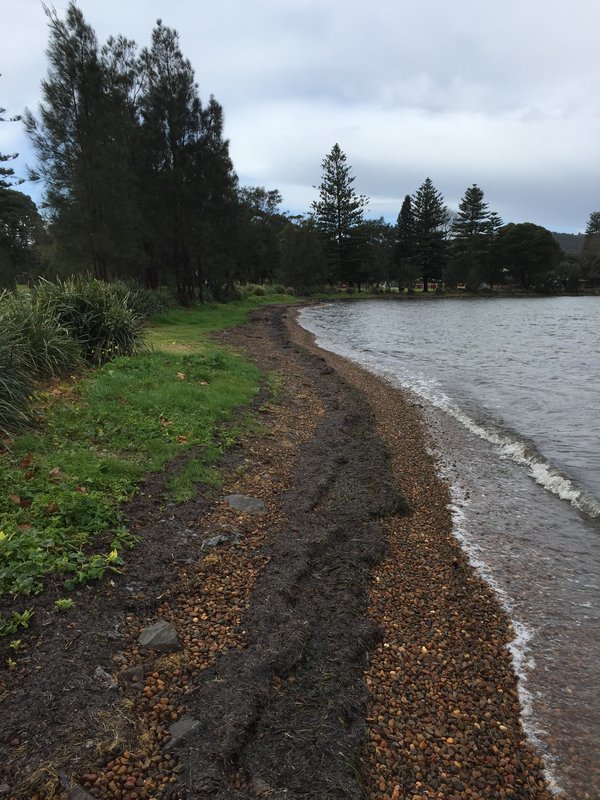
Cobbles are a natural component of some estuarine and coastal beaches. Since 1999, LMCC, wherever possible has used cobbles to stabilise shorelines around Lake Macquarie. This currently remains their preferred shoreline stabilisation strategy.
The sloping, permeable surface of cobble beaches disrupts and dissipates wave energy by adjusting its morphology in response to the prevailing wave conditions. Cobbles are also less readily resuspended by wave action than finer sands, silts and clays. Hence, they can help to maintain water clarity and quality.
Lake Macquarie cobble
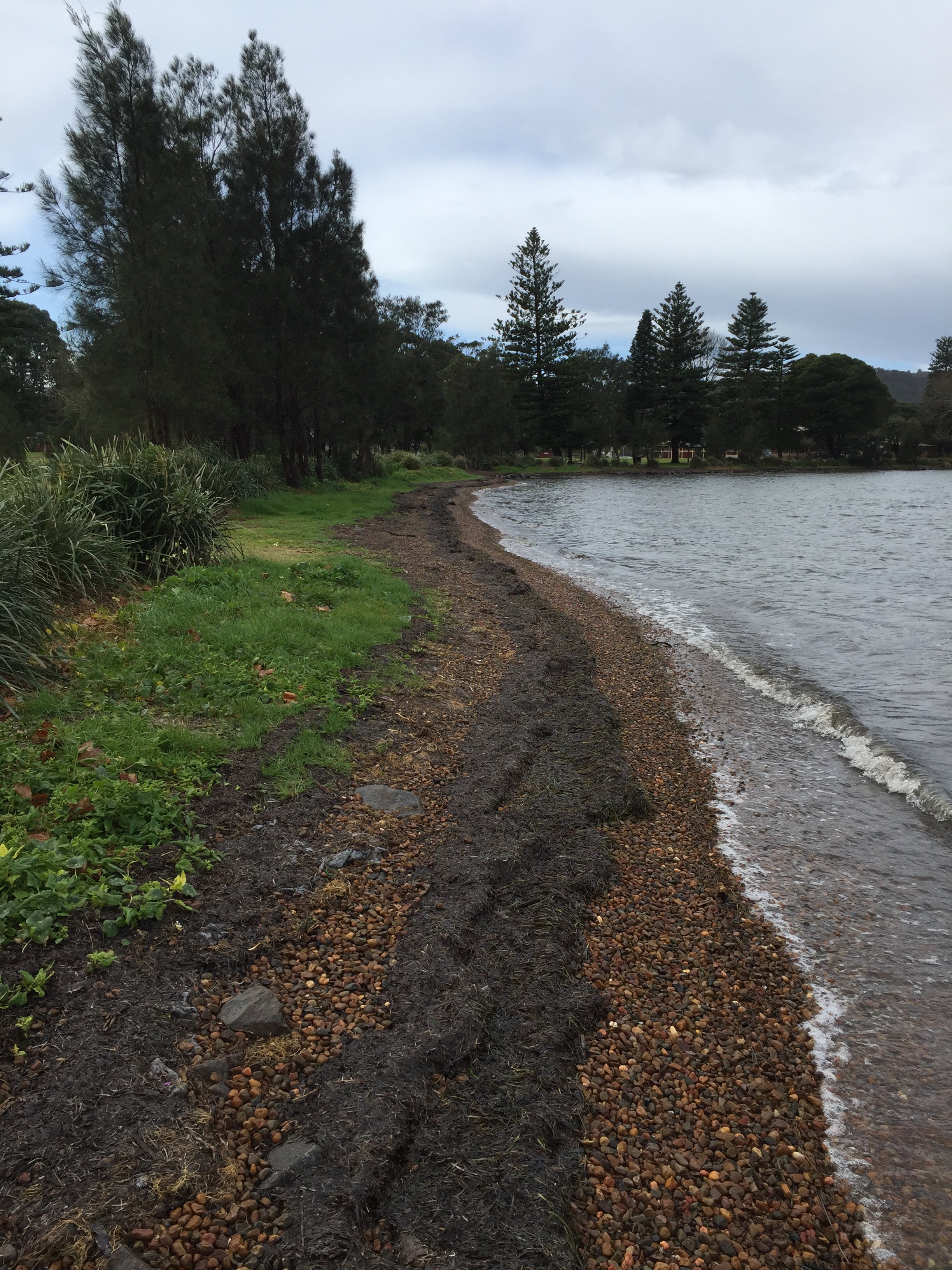
LMCC has a preferred strategy to use cobbles to stabilise shorelines around Lake Macquarie.
© Lake Macquarie City Council
Findings from invertebrate assessments
Between 2019-2022, council staff surveyed invertebrate biodiversity at 14 sites throughout Lake Macquarie that had seawalls, were stablised with cobbles or were unmodified (natural) twice a year for the three years.
Overall, the results suggest that seawalls are having the most significant impact on the ecology in intertidal and shallow subtidal systems of the Lake, supporting much lower biomass and invertebrate abundances in the intertidal zone and contributing to deposition of significant amounts of fine sediments in the subtidal zone. This is likely because the construction of seawalls reduces habitat area, through placement loss and the active (exacerbated by seawalls) and passive (prevention of natural migration) erosion of beaches.
Seawall construction below the high water mark also negatively influences beach-dwelling organisms by reducing accumulations of wrack (i.e. seaweed, driftwood and other natural materials that wash ashore), which provide food and habitat to invertebrate species.
Additionally, this project found that cobble-stabilised shorelines are similar to natural shorelines in terms of the biomass they support in the intertidal and subtidal, but invertebrate abundances are lower in the upper and lower intertidal on cobble-stabilised shorelines.
Lessons learned and next steps
The Lake Macquarie City Council (LMCC) planning controls state that new seawalls on private property are unlikely to be approved and this study provides evidence that hard engineering approaches such as seawalls are more ecologically damaging than nature-based solutions such as cobble stabilisation.
Further surveys are planned to investigate differences in nutrient cycling in the seagrass beds associated with the different shoreline types and experiments are planned to investigate optimal sizes and densities of cobbles for ecological benefits.
To cite:
The case study was prepared by Katherine Dafforn, Mariana Mayer-Pinto, Jaimie Potts, Symon Walpole, Melanie Bishop. Please cite as: Dafforn et al. 2024: A partnership to measure the ecological benefits of soft engineering in Lake Macquarie. Case study for CoastAdapt, National Climate Change Adaptation Research Facility, Griffith University, Gold Coast.