


Eco reef addresses intertidel erosion with design flair
With calm, shallow waters and protected parkland, The Dell at Clifton Springs is a popular picnic spot. However, strong currents and shifting sands are causing coastal erosion and the cliffs need stabilising.
A new eco-reef tackles these issues while providing a distinctive feature for the area. Installed in October 2022, the Dell eco reef combines cutting-edge technology and knowledge of intertidal processes with design flair.
The artificial reef consists of 46 sculptural wave units (technically known as erosion mitigation units), which provide a textured structure that becomes a rich habitat to attract oysters, mussels and other native marine species. It forms a permeable barrier designed to reduce the height and energy of waves, which protects against coastal erosion during storm surges and helps in sand accretion. The pods are designed to reflect the shape and form of the holdfast (base) of a kelp plant and are made from recyclable or eco-friendly materials.
Led by City of Greater Geelong council in partnership with Reef Design Lab and the National Centre for Coasts and Climate (University of Melbourne), the modular structure can be constructed on land, quickly installed and modified if required.
Beachgoers and local school groups can wade around the reef when it sits above the water line at low tide or snorkel among the marine life at high tide.
READ: an interview with creative Alex Goad of the Reef Design Lab— about bringing joy into good design—prepared by the 2023 Good Design Award for Sustainability
LISTEN: to a segment on ABC Radio National about the Dell Eco Reef with interviews with Ralph Roob from Geelong City Council, marine scientist, Becki Morris from the University of Melbourne and 13 year-old snorkelling enthusiast, Virginia Lee Roob
WATCH: a video prepared by the Reef Design Lab to showcase the design of the eco reef modules or EMUs
Planning the reef
Environmental planner at the City of Greater Geelong (CoGG), Ralph Roob has been tackling the issue of coastal erosion for several years, using multiple ‘soft’ or ecological engineering techniques.
In recent years, the Victorian government has encouraged a nature-based coastal protection approach before implementing hard-engineered structures such as seawalls. “Although there was a risk of failure with a non-conventional approach such as this, CoGG is a big advocate of trialling innovative initiatives to identify better ways of doing things,” says Roob.
In 2018, the CoGG, in collaboration with the Victorian Department of Environment, Land, Water and Planning, the University of Melbourne and Parks Victoria installed an eco-reef at Portarlington on the Bellarine Peninsula to address beach erosion. The Ramblers reef is constructed of steel cages, filled with rock and shell, with no sculptural element to their shape. It was very effective in preventing further erosion, stabilising the beach and accumulating sand, broadening the beach by about 40 metres.

10 Drone w paddleboard and seagull
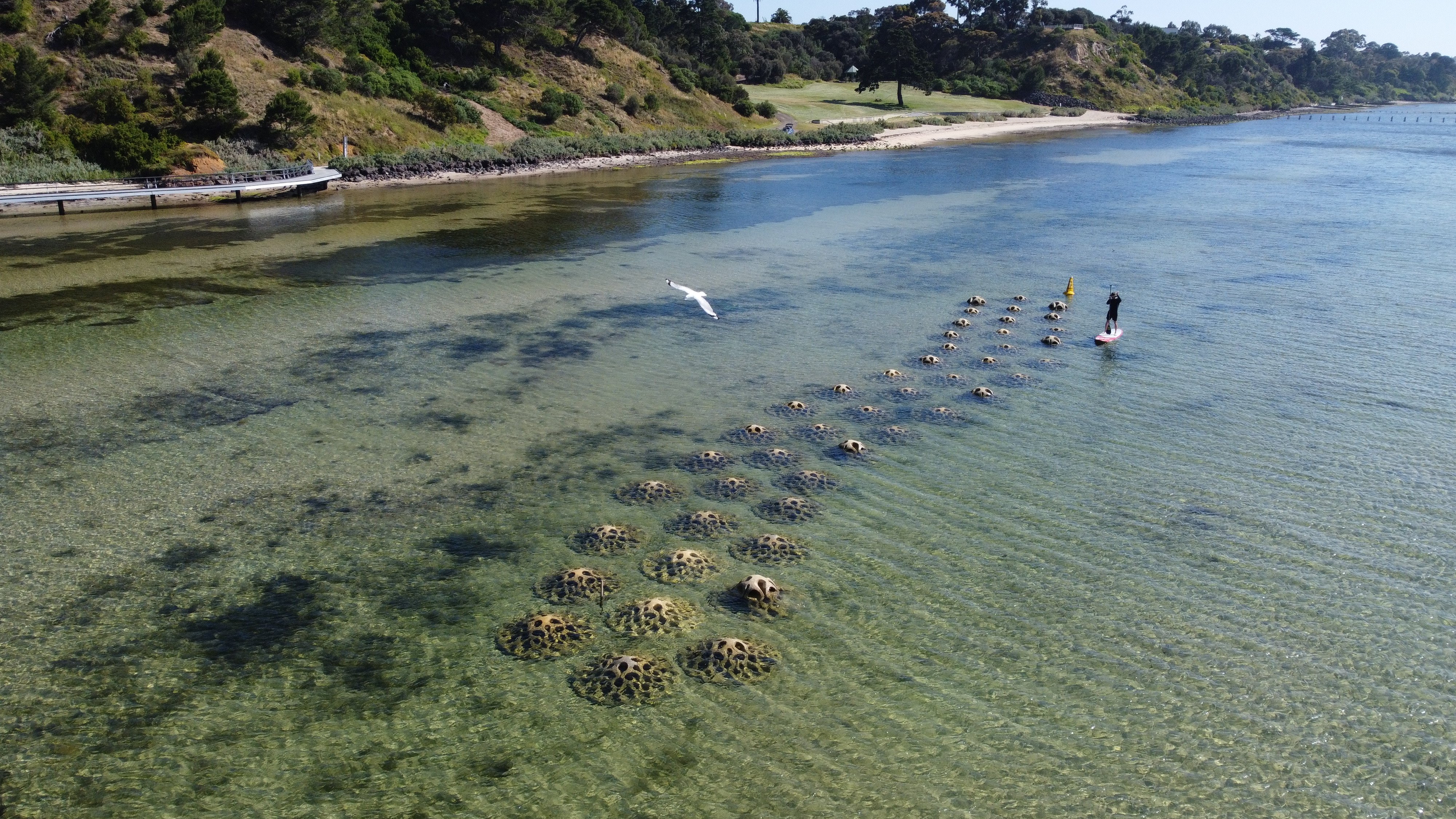
The team wanted a solution that attracted more visitors to the beach while addressing the environmental impacts
© City of Greater Geelong
This experience gave Roob and his team some confidence when it came to addressing the erosion and long-term decline of foreshore land at the Dell. “Given the success of the Ramblers Reef, the Dell eco reef was also constructed with the aim to stabilise the beach, preventing further erosion and accumulating sand by reducing wave energy,” says Roob.
“We wanted a solution that attracted more visitors to this stunning beach while addressing the environmental impacts. So, we set about creating a sculptural reef that inspired people’s imagination.”
CoGG commissioned and partnered with Alex Goad from the Reef Design Lab to create a shape that met the environmental needs of the project and was also sympathetic to the natural surroundings. Goad devised an inspirational shape based on the holdfast of a kelp plant.
The fabrication of the Dell eco reef modules focused on minimising the carbon footprint and use recycled materials. Small shells, a by-product from shell grit processing, were used as the aggregate instead of crushed rock. Fly ash, a fine powder left over from the process of burning coal, was used in place of cement.
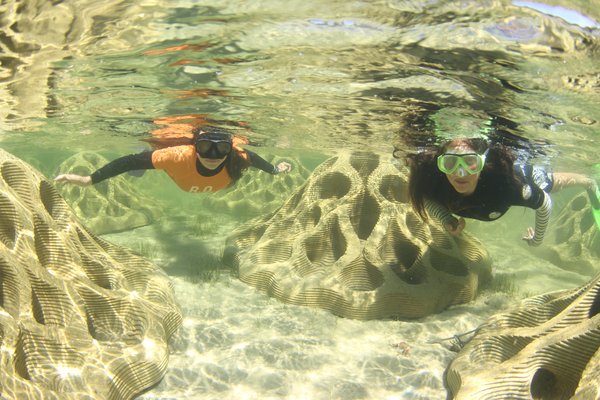
11 Dell Eco Reef Ginia and Indi underwater 1
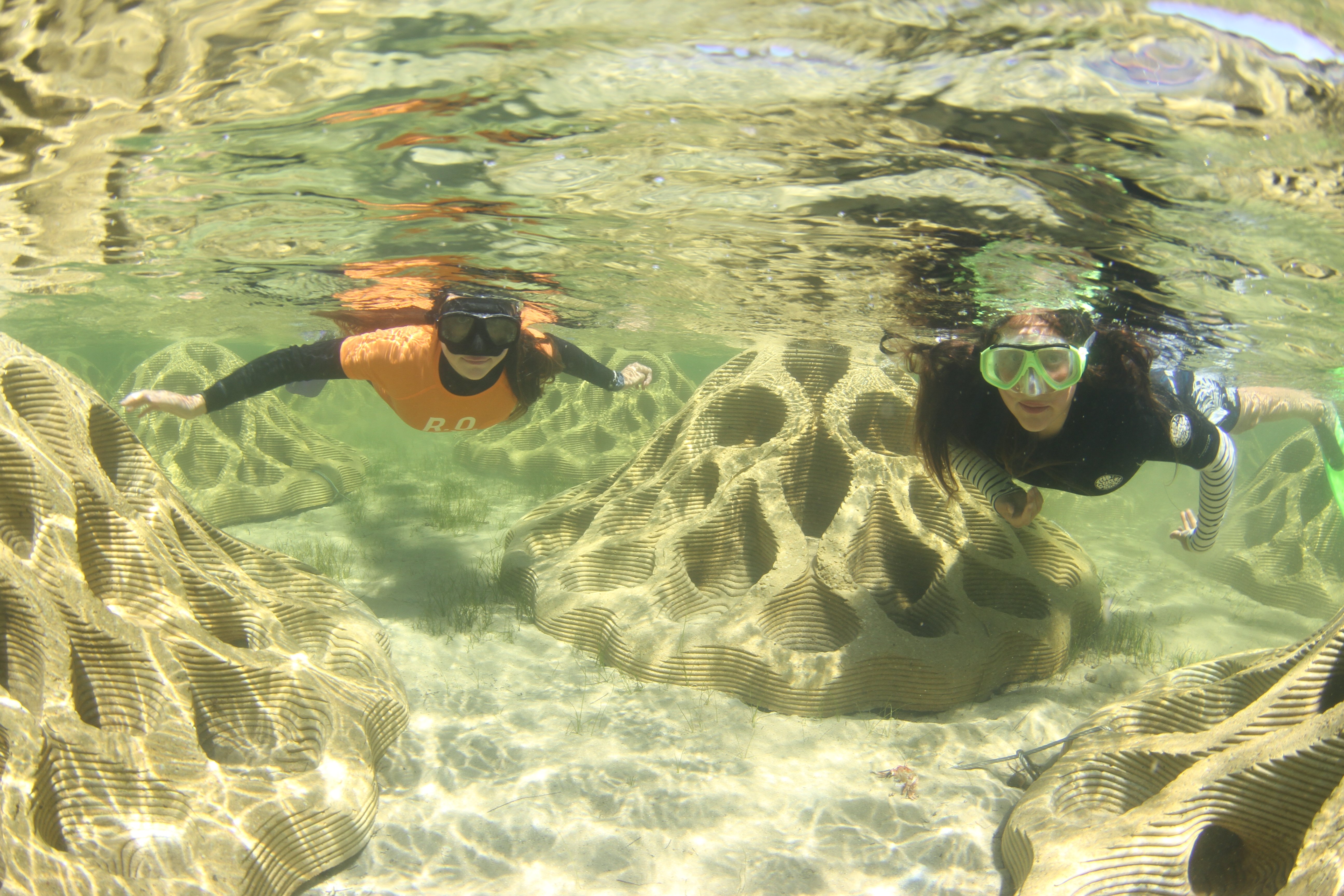
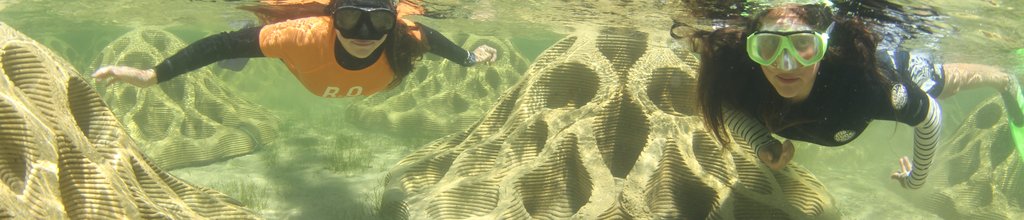
Two snorkellers amongst the 46 'sculptural wave' units
© City of Greater Geelong
Outcomes and lessons learned

Dell Eco Reef Alex and Ralph
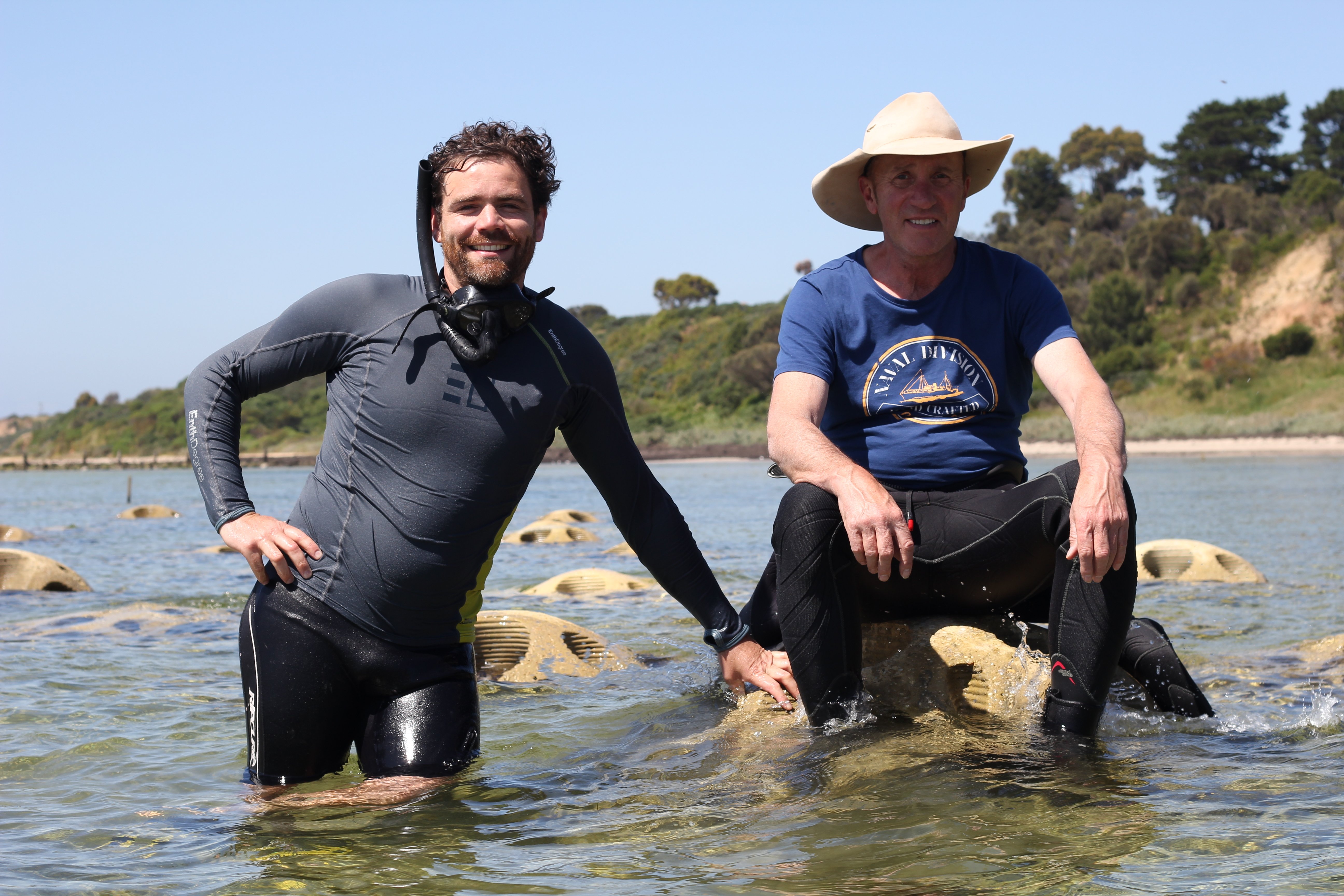
Enjoying the structures finally in place are Alex Goad from the Reef Design lab and Ralph Roob from the City of Greater Geelong
© City of Greater Geelong
Twelve months since its installation, the reef is home to a host of algae and a diverse range of shellfish, such as limpets; and crustaceans, including shore crabs and shrimp. It has created a wave shadow, which provides some protection for seagrass from severe wave action.
The eye-catching sculptural forms are attracting visitors, who wade amongst them at low tide or snorkel around them at high tide. The eco reef modules are also attracting wider attention: they won the 2023 Australian Good Design Award for Sustainability
The council undertakes drone surveys twice a year to monitor the alignment of the coast and calculate sand accumulation. The University of Melbourne will undertake experiments, such as shellfish seeding trials, and is partnering with CoGG to establish a monitoring program that measures the impact on the beach, foreshore and marine environment.
Ralph Roob says there are many aspects to consider if planning similar projects and it is essential that they are designed with a specific site in mind. It is important to understand the marine environment and coastal process associated with the particular site and to apply multiple parameters in the modelling, taking into account variables, such as water depth, wave climate, sediment budget and ecology before deciding on the reef design.
To cite:
This case study was prepared by NCCARF. Please cite as: NCCARF, 2024: The Dell Eco Reef: bringing art and science to tackle coastal erosion. Case study for CoastAdapt, National Climate Change Adaptation Research Facility, Griffith University, Gold Coast.
Further information
Brullo, T., Barnett, J., Boulter, S., Waters, E. and Roob, R. (2024) Enabling Best Practice: Artificial reefs for Coastal Protection in the City of Greater Geelong, Climate Systems Hub. National Environmental Science Program, Australia. Link to case study report (open access)