


This case study is also presented in the Information Manual on Planning Approaches and Instruments. It was prepared by Professor Barbara Norman in consultation with Douglas Shire Council. Case material was provided by Melissa Mitchell, Douglas Shire and Julia Leu, former Mayor.
The Douglas Shire
The Douglas Region is the traditional homeland of Aboriginal Rainforest People (Bama), including the Eastern Kuku Yalanji to the north and Yirrganydji to the south. The coastal landscape has high cultural significance to the Traditional Owners, who value the protection and sustainability of the land and sea (Country) (Douglas Shire Council, 2019, p16).
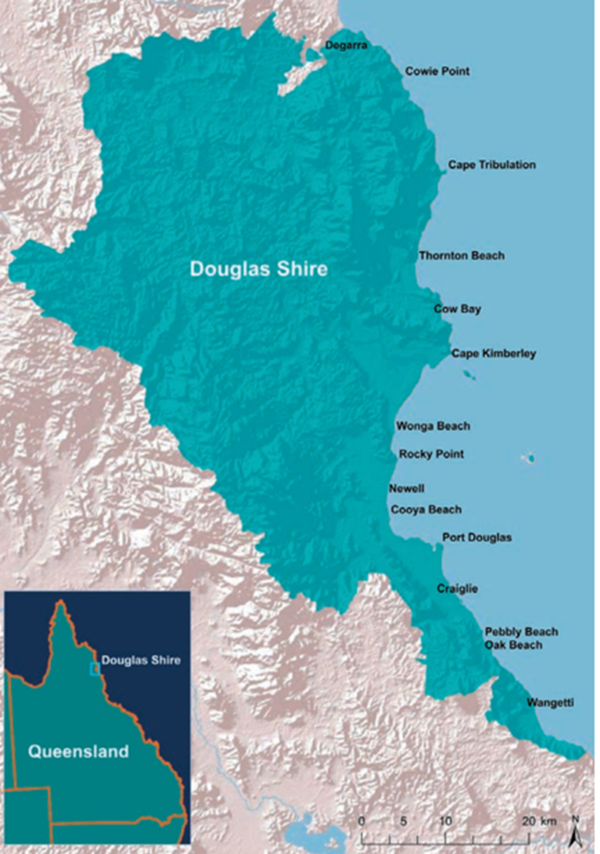
map of DS
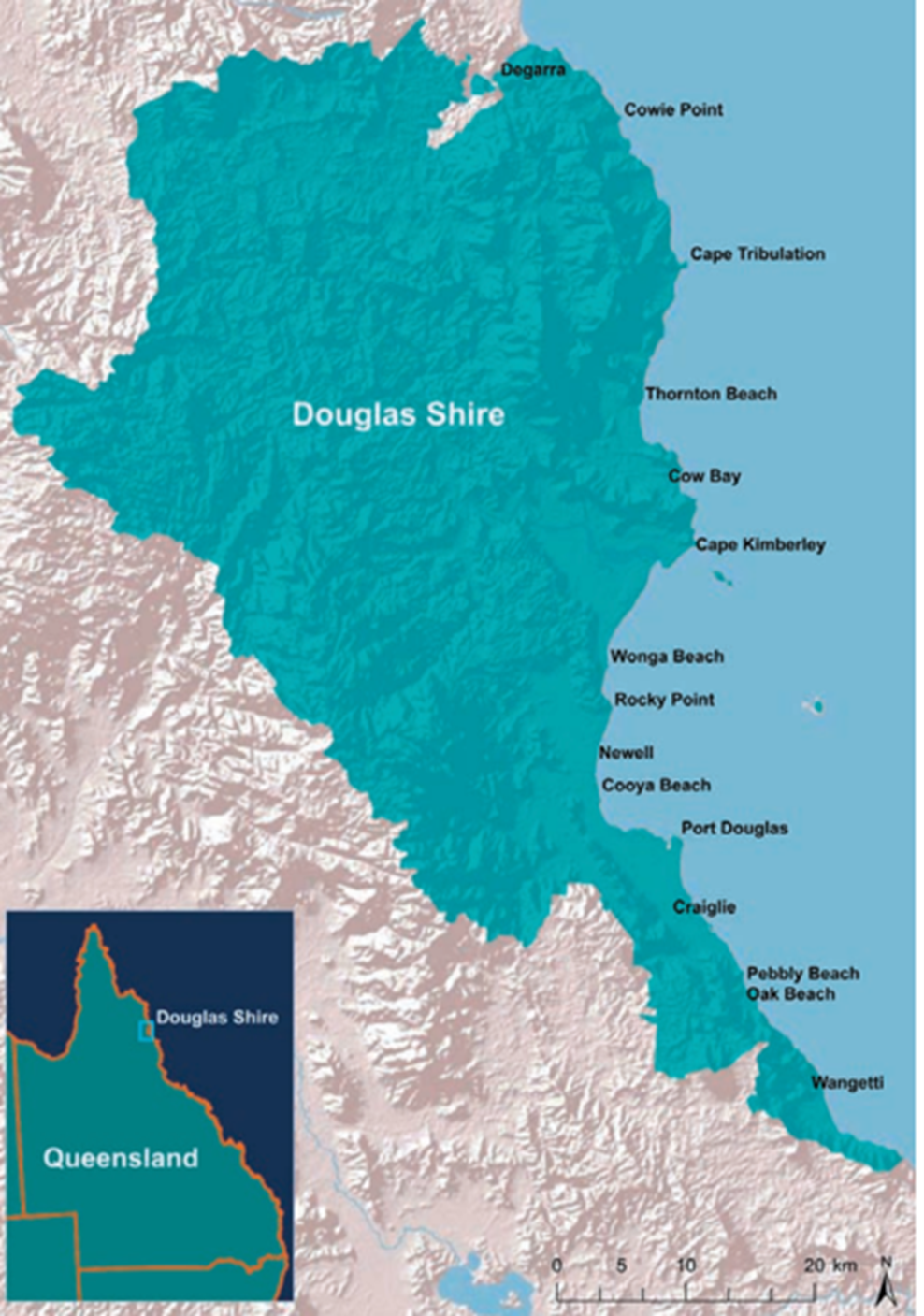
Map of the Douglas Shire
Source: Douglas Shire Council 2019, p1.
The purpose of the Resilient Coast Strategic Plan is to: inform future decisions regarding the protection and management of our coast and foreshore; inform future land use planning; guide the management of public utilities and facilities; guide the management of areas of environmental and cultural significance and foster collaboration and the shared care of our coastline (Douglas Shire Council 2019, p9).
READ: more about the Douglas Shire's Resilient Coast Strategic Plan
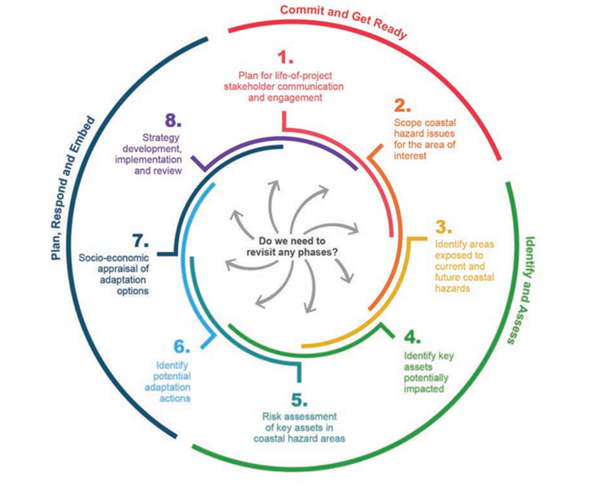
The Resilient Coast Strategic Plan was developed through an eight-phase process as outlined in the QCoast2100 Minimum Standards & Guidelines.
The consultation process involved a range of processes including workshops and online meetings and surveys. The coastal hazard assessment involved multiple event likelihoods, planning horizons and a sea-level rise prediction of 0.8 metres by 2100 with an interim guide of 0.4 m by 2060 (op cit. p27).
The strategy includes steps forward for implementation including triggers for updating the plan such as new climate science on projected sea level rise.
QCoast
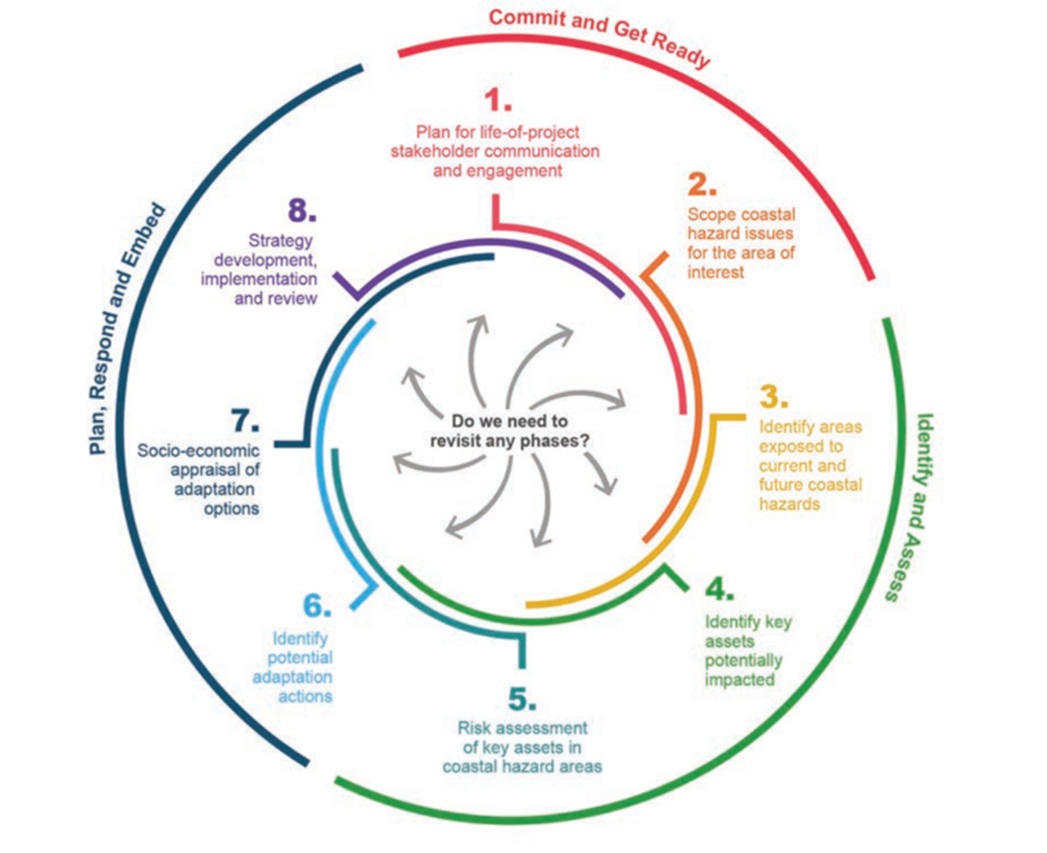
The Resilient Coast Strategic Plan was developed through an eight-phase process as outlined in the QCoast2100 Minimum Standards & Guidelines
Source: QCoast2100 2016.
Table
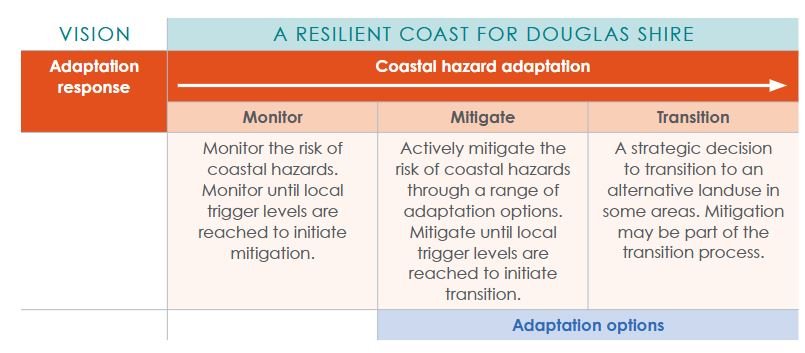
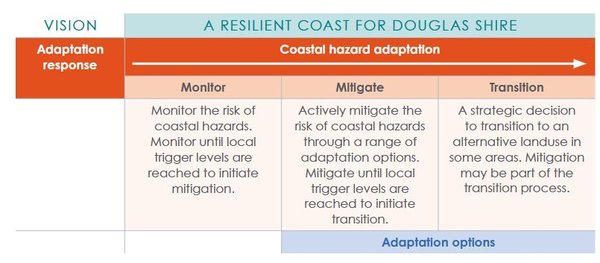
Table from Resilient Coast Adaptation Plan describing the adaptation response for Council owned land and assets.
Source: Douglas Shire Council p43.
Several measures have been undertaken in implementing the plan including prevention, strategic planning, on-ground works, education, and engagement. These methods have focused on dune protection and maintenance, community stewardship, knowledge sharing, monitoring, land use planning, disaster management and building resilience initiatives. Examples include five foreshore management plans, installing citizen science photo point monitoring systems at key coastal locations, revegetation of approximately 70,000 native plants along coastal area, engaging with Traditional Owners on disaster resilience and using the outcomes of the Strategic Plan to inform the current Planning Scheme review.
By being proactive in implementing the Strategic Plan, the Shire is securing its long-term financial, social, and environmental sustainability and is increasing community resilience and transparency.
The Shire’s coastal resilience has been evident with the crossing of Category 2 Tropical Cyclone Jasper 13 December 2023, the first cyclone to impact the Shire since the development of the Strategic Plan with no reported damage to coastal assets by storm surge and tidal inundation and only minor coastal erosion observed.
Overall, it indicates that the Shire is heading in the right direction to proactively manage and mitigate the impacts of coastal hazards and the Plan is assisting planners and infrastructure managers to navigate with the community the complex process of disaster recovery and effective planning for the future.
IMG_3061
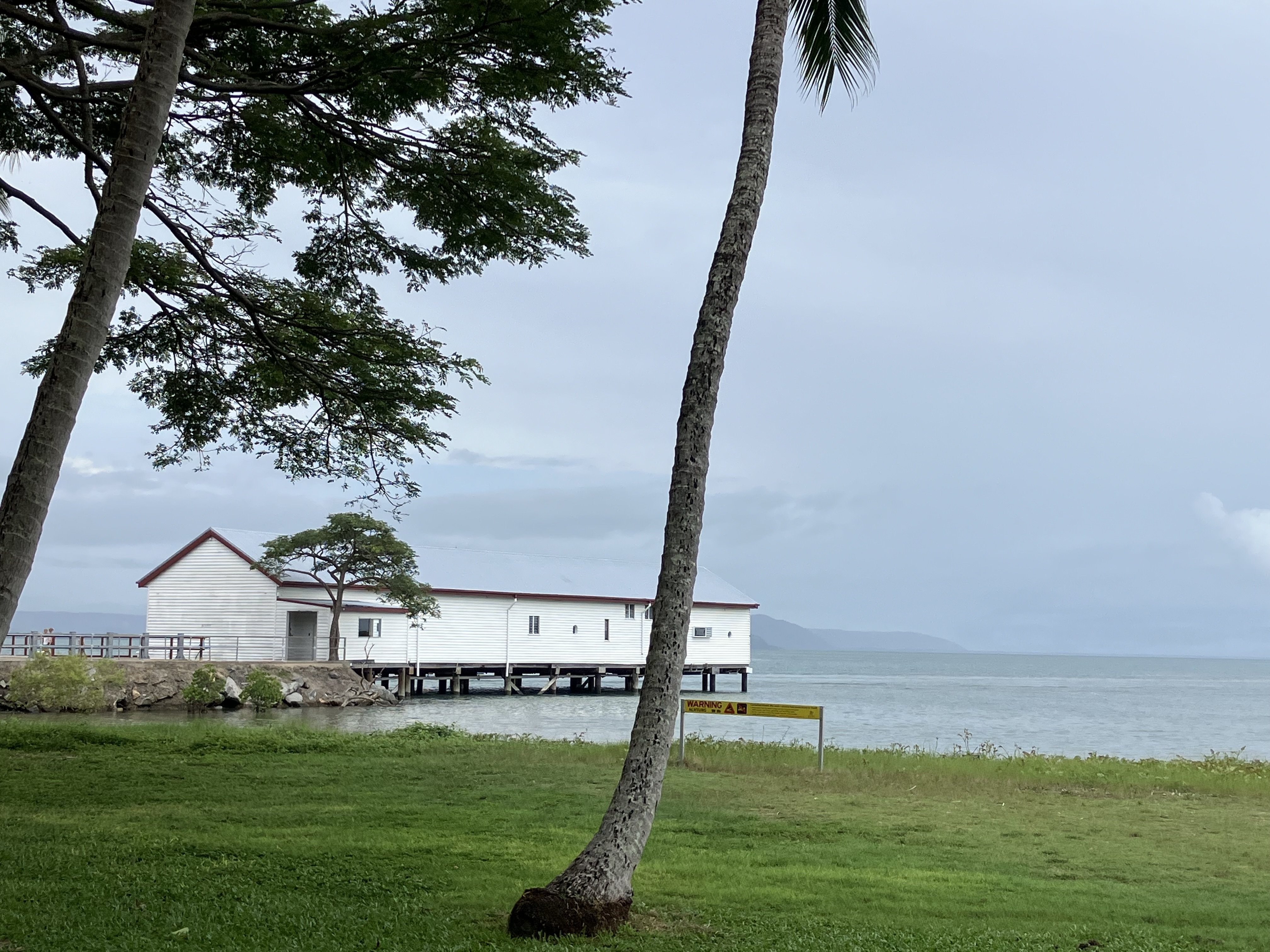
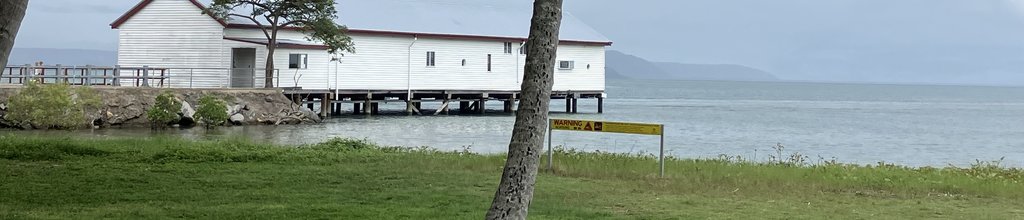
St Mary's by the Sea on the shore in tourist town Port Douglas.
© NCCARF 2024