



At a glance
- Sandy beach ecosystems face growing pressure from marine debris, invasive plants, and projected sea‑level rise, all of which threaten coastal fauna and reduce available beach habitat, while some well‑intentioned clean‑up activities can unintentionally disturb nesting birds.
- Tasmania’s coastline was mapped using long‑term nesting data for six focal shorebird and seabird species, applying a traffic‑light system to indicate the sensitivity of breeding habitats to human disturbance during the breeding season (1 September–31 March).
- Most of Tasmania’s foreshore is sensitive to disturbance, with around 42% classified as high risk (activities should be avoided) and 54% as medium risk (activities minimised), reflecting the widespread importance of coastal habitat for breeding birds.
- The mapping provides a practical management tool, supporting informed decision‑making for coastal activities and will be updated over time as new data become available.

Coastal ecosystems face growing pressure
Sandy beaches are under threat from a range of threats. They can accumulate marine debris (Gacutan et al. 2022) that can adversely affect coastal fauna through entanglement and ingestion (e.g. Costa et al. 2022, Mylius et al. 2023). They also experience the establishment and expansion of invasive plants (Chen 2019), such as Marram Grass Ammophila arenaria and Sea Spurge Euphorbia paralias (Giulio et al, 2022).
Extensive efforts are made to collect the debris and remove invasive plants from beaches and foreshores around Australia by members of the public, community groups, commercial businesses and government agencies. However, despite their best intentions, these efforts also have the potential to disturb nesting shorebirds and seabirds.
Projected sea-level rises will also exacerbate current threats to coastal fauna and flora as associated erosion will reduce the extent of sandy beaches (DPIPWE 2016).
about Tasmania is a global refuge and destination for shorebirds
Adaptation actions
Management of coastal areas to eliminate or minimise the threats to shorebirds and seabirds is critical to maintain their populations. Extensive nest mapping data has been collected since 1992/93 on the six focal species (Hooded Plover Thinornis rubricollis, Red-Capped Plover Charadrius ruficapillus, Australian Pied Oystercatcher Haematopus longirostris, Sooty Oystercatcher H. fuliginosus, Fairy Tern Sternula nereis and Little Tern S. albifrons).
This information was used to map the Tasmanian coastline using a simple 'traffic light' scheme to identify areas of high, medium/unknown and low sensitivity, indicating the risk/vulnerability of the bird breeding/nesting habitat to human-related disturbance during their breeding season (nominally 1 September to 31 March).
Information on migratory shorebirds that utilise foreshore feeding and roosting areas was not included. The incomplete data on the distribution of Little Penguin Eudyptula minor nesting and/or moulting sites around Tasmania prevented their inclusion in the mapping. Information and guidelines for penguin colonies is available in Marker et al. (2024).
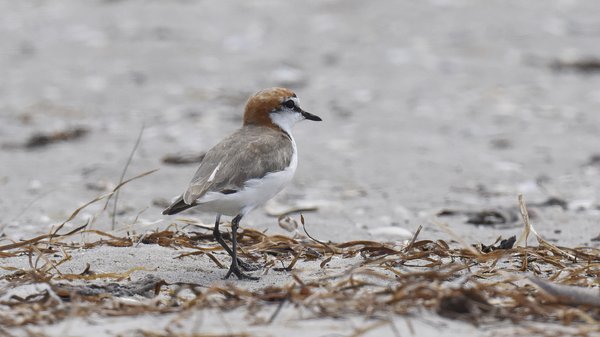
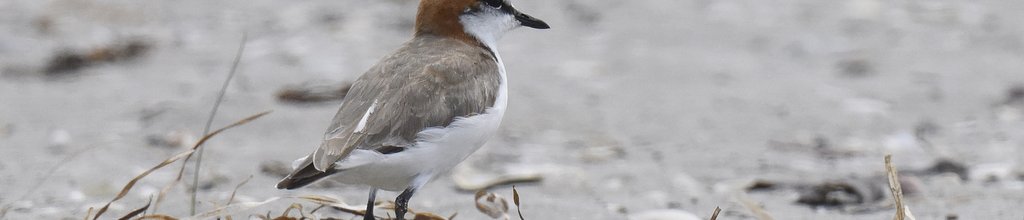
The Red-capped Plover is one of the focal species of the mapping project.
- © E.J. Woehler05. Red-capped Plover 51339
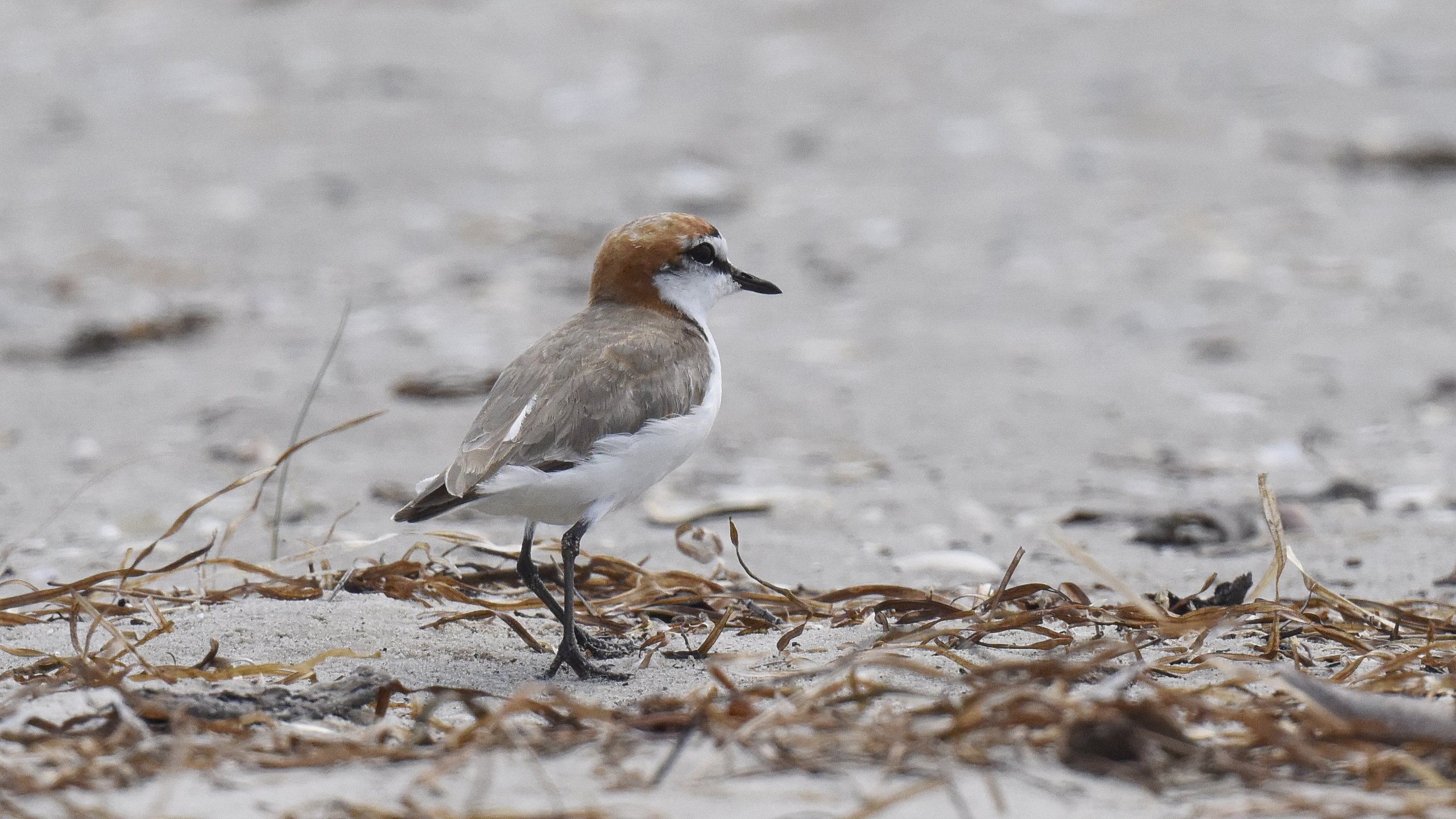
The Red-capped Plover is one of the focal species of the mapping project.
© E.J. Woehler
The mapping and data analysis
The maps identify the significance and sensitivity of foreshore coastal bird breeding habitat in Tasmania. The mapping can be used as a tool to assist managers and stakeholders in the identification of sensitive foreshore bird breeding habitat.
The data interpretation was a semi-quantitative evaluation based on the breeding species present, their conservation status under the Tasmanian Threatened Species Protection Act 1995 and Federal Environment Protection and Biodiversity Conservation Act 1999, and the numbers of breeding pairs.
The mapping classified the Tasmanian coastline as:
- Red: high risk/vulnerability areas where human-related activities are likely to result in disturbance are to be avoided between 1 September to 31 March, inclusive. These foreshores are known to regularly support breeding pairs of one or more species of shorebirds or small terns. Coastal clean-up activities (e.g. marine debris or invasive plant removal) would disturb nesting shorebirds and terns. Approximately 42% of Tasmania’s foreshore was classified as high risk.
- Orange: medium risk/vulnerability areas where human-related activities are likely to result in disturbance are to be minimised between 1 September to 31 March. No surveys have been undertaken in these areas, and it is likely that potential suitable habitat may exist. Approximately 54% of Tasmania’s foreshore was classified as medium risk.
- Green: low risk/vulnerability to shorebirds and terns, therefore there are no current access constraints from 1 September to 31 March. There have been no shorebird or tern values present in recent surveys, or the foreshore are used infrequently for breeding. Coastal clean-up activities can be undertaken year-round without disturbing nesting shorebirds and terns. Approximately 4% of Tasmania’s foreshore was classified as low risk.
the detailed description of the survey methodology in the LISTdata metadata record.
Outcomes and next steps
Ongoing analyses of the mapping and population data will contribute to the regular updating of the maps when sufficient new data are available.
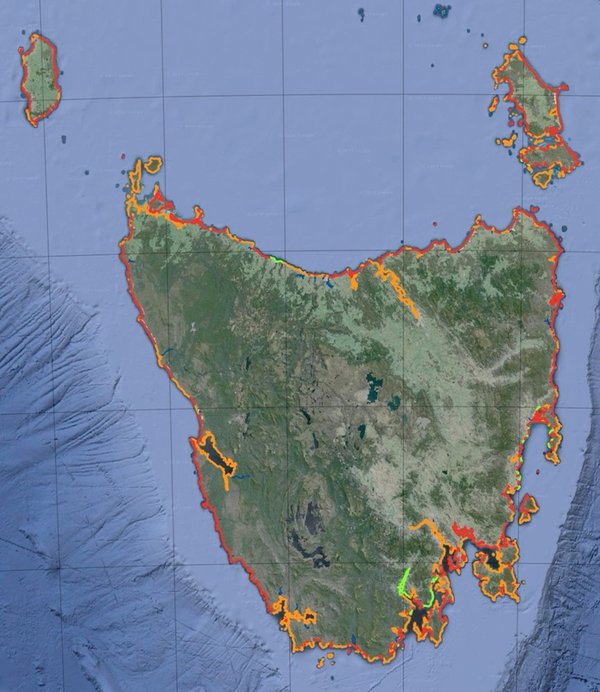
Map of Tasmania showing coastal vulnerability/sensitivity zones.
- Base map Google Earth. Data source: https://data.thelist.tas.gov.au/datagn/srv/eng/main.home;jsessionid=F801A481388AE41F6B875586B69467CE.wombat4o?uuid=fac3666b-c8df-46c3-8f20-c19e4bd31c5fTassie map
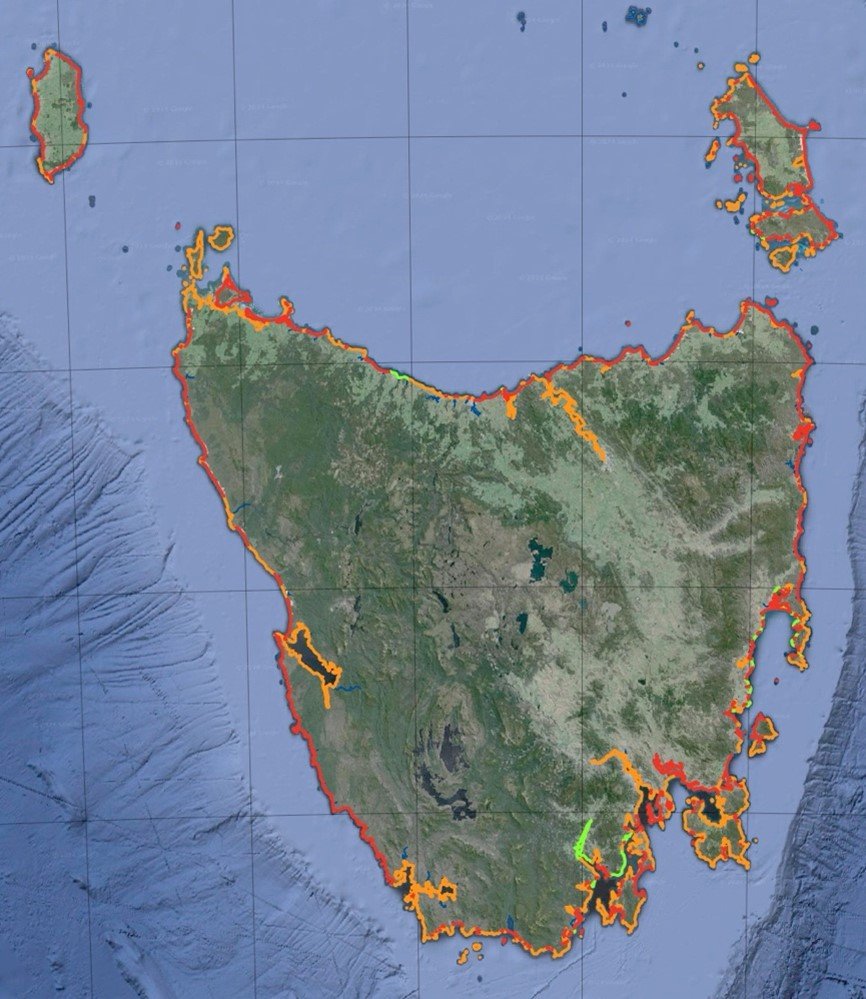
Map of Tasmania showing coastal vulnerability/sensitivity zones.
Base map Google Earth. Data source: https://data.thelist.tas.gov.au/datagn/srv/eng/main.home;jsessionid=F801A481388AE41F6B875586B69467CE.wombat4o?uuid=fac3666b-c8df-46c3-8f20-c19e4bd31c5f
To cite:
This case study was prepared by Dr Eric J. Woehler, OAM.
Please cite as: Woehler, E.J., 2024: Mapping the Tasmanian coast to identify coastal bird breeding spots. Case study for CoastAdapt, National Climate Change Adaptation Research Facility, Griffith University, Gold Coast.
References
Chen L., 2019: Invasive Plants in Coastal Wetlands: Patterns and Mechanisms. In: An S, Verhoeven J (eds) Wetlands: Ecosystem Services, Restoration and Wise Use. Ecological Studies 238. Springer. https://doi.org/10.1007/978-3-030-14861-4_5
Costa L.L., L. Fanini, M. Ben-Haddad, M. Pinna and I.R. Zalmon 2022: Marine litter impact on sandy beach fauna: A review to obtain an indication of where research should contribute more. Microplastics 1, 554-571. https://doi.org/10.3390/microplastics1030039
Department of Primary Industries, Parks, Water and Environment (DPIPWE) 2016. Impact of sea level rise on coastal natural values in Tasmania. Natural and Cultural Heritage Division, Department of Primary Industries, Parks, Water and Environment, Hobart, 144pp. https://nla.gov.au/nla.obj-1382804175/view
Gacutan J., E.L. Johnston, H. Tait, W. Smith and G.F. Clark, 2022: Continental patterns in marine debris revealed by a decade of citizen science. Science of The Total Environment 807, 150742. https://doi.org/10.1016/j.envpol.2023.121731
Giulio S., L. Cao Pinna, M. Carboni, F. Marzialetti, A.T.R. Acosta, E. Garbolino and T. Jucker, 2022: Invasion dynamics and potential future spread of sea spurge across Australia’s coastal dunes. Journal of Biogeography 49, 378-390. https://doi.org/10.1111/jbi.14308
Marker P.F., A.B. Wind and E.J. Woehler, 2024: Guidelines for works in, and management of, Little Penguin habitat. BirdLife Tasmania. 37pp. https://wildcaretas.org.au/wp-content/uploads/2024/05/Marker-et-al-2024-Guidelines-Little-Penguins-27-May-2024.pdf
Mylius K.A., J.L. Lavers, E.J. Woehler, T. Rodemann, B.C. Keys and J. Rivers-Auty, 2023: Foraging strategy influences the quantity of ingested micro- and nanoplastics in shorebirds. Environmental Pollution 319, 120844. https://doi.org/10.1016/j.envpol.2022.120844