


A vulnerable beach
Wamberal Beach, located on the Central Coast of New South Wales, is a highly dynamic and complex coastal environment. Wamberal Beach experiences some of the worst coastal erosion in the state due to a combination of limited natural sand supply, urban development within the dune foreshore, and the increasing impacts of climate change. Emergency coastal erosion events have been recorded here since the 1970s, posing a continual threat to beachfront properties and infrastructure.
A coastal emergency in mid-2020
Between 14-18 July 2020, a severe East Coast Low storm caused extensive coastal erosion along a 1.5km stretch of Wamberal Beach, from Terrigal Lagoon to Wamberal Lagoon. The storm resulted in severe damage to beachfront properties, rendering several homes structurally unstable and at risk of collapse. The emergency forced the evacuation of 18 properties and approximately 54 residents, while hazardous debris and exposed structural pile foundations littered the foreshore.
On 20 July 2020, the NSW Public Works Advisory inspected the site and declared the situation an “ongoing emergency” under the State Emergency and Rescue Management Act 1989 (SERM Act). This designation prompted a rapid and coordinated emergency response led by the Central Coast Council (Council) under the direction of the NSW Government appointed Local Emergency Operations Controller. Royal HaskoningDHV (RHDHV) was engaged by Council to provide coastal engineering expertise and guide the implementation of emergency works.
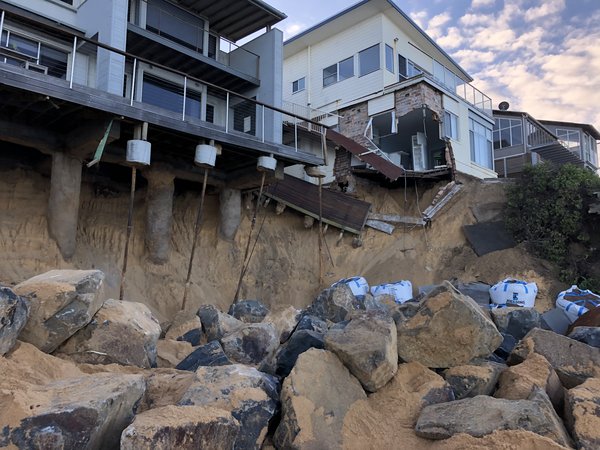
Following a coastal erosion event in July 2020, several homes were made structurally unstable and at risk of collapse.
- © Royal HaskoningDHVpic_wamberal_house
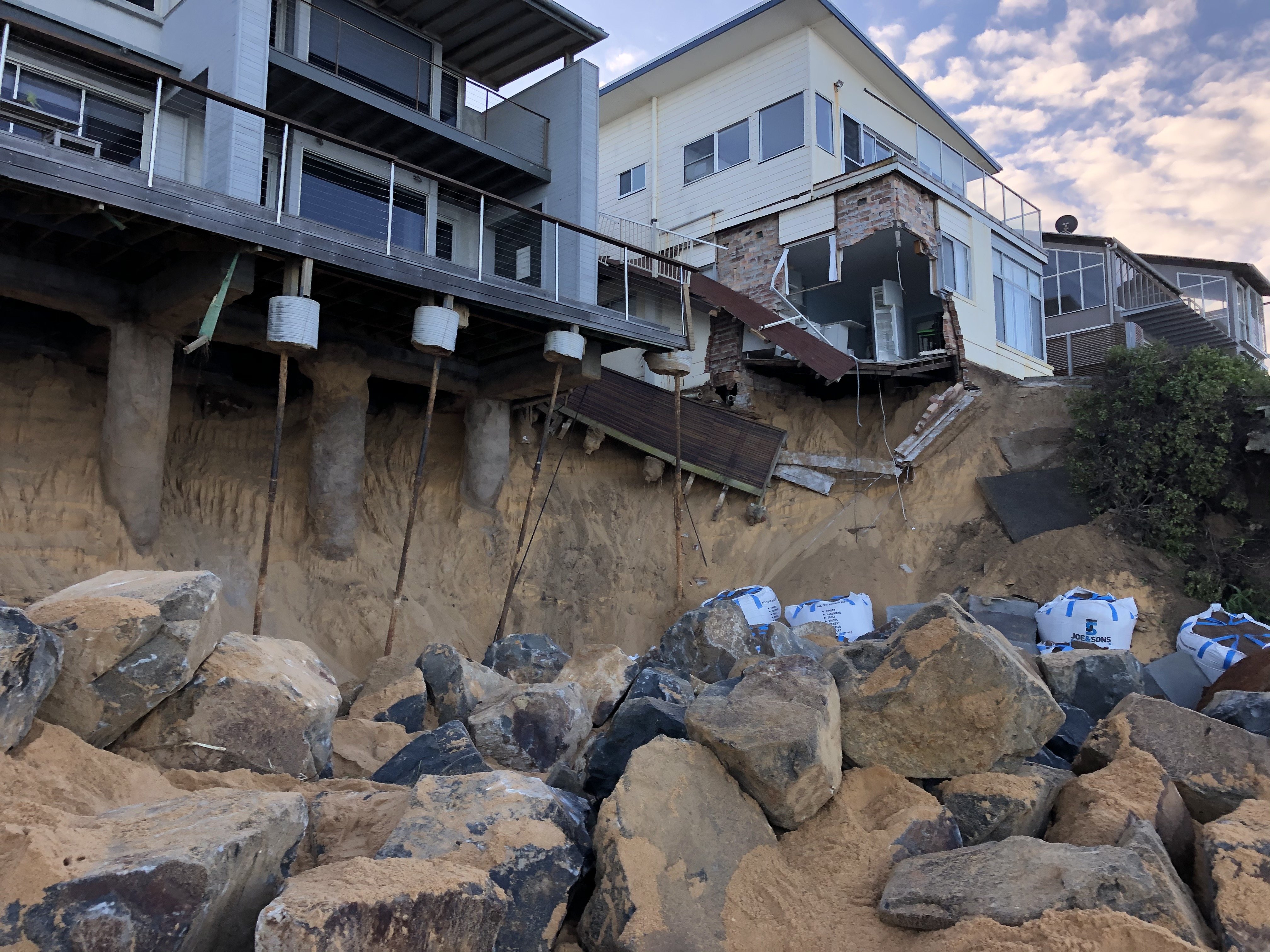
Following a coastal erosion event in July 2020, several homes were made structurally unstable and at risk of collapse.
© Royal HaskoningDHV
Emergency response and challenges
Swift and effective action was necessary to stabilise the toe of the erosion escarpment in the most vulnerable areas and fill in gaps between existing ad hoc defences to mitigate further damage.
Prior to the Council-led emergency response, several homeowners begun a series of ad hoc measures such as installing concrete armour units in situ along the eroded escarpment. These measures, although well-intentioned, tend to encroach onto the public beach, pose safety risks to the public, and risk exacerbating coastal erosion while adding pressure to adjacent properties.
However, the emergency works faced significant challenges, including limited site access, scarce available construction materials and equipment, hazardous swell conditions, and reduced daylight hours during winter.
These constraints meant traditional emergency coastal protection measures – such as sand scraping and sand-filled geotextile containers – were deemed inappropriate. A more adaptable and innovative solution was necessary.
An innovative solution to rapid emergency coastal protection
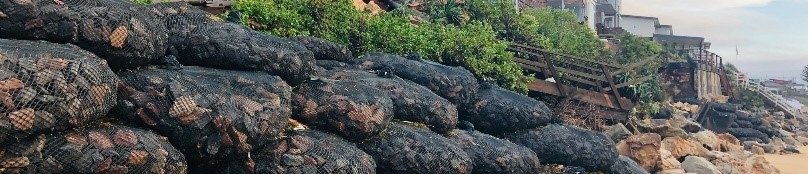
To overcome these obstacles, RHDHV and Council employed an innovative approach for coastal protection: a combination of rock armour and Kyowa rock bags supplied by Bluemont Pty Ltd. These 2-tonne and 4-tonne rock bags, filled with gabion-sized rock and encased in recycled polyester mesh, were equipped with lifting rings that facilitated precise placement by crane.
Importantly, this method allowed for efficient and rapid deployment, but did not require direct access to the foreshore.
A 250-tonne crane, positioned on Ocean View Drive behind the properties, lifted and placed the rock bags along the toe of the erosion escarpment. Rock armour was placed by excavators on the beach once access was available.
In total, 4,400 tonnes of rock were placed in accordance with indicative designs provided by RHDHV. The temporary rock structure, designed with an approximate batter slope of 1 in 1.5, successfully prevented further wave-induced damage to the coastal infrastructure during the emergency event.
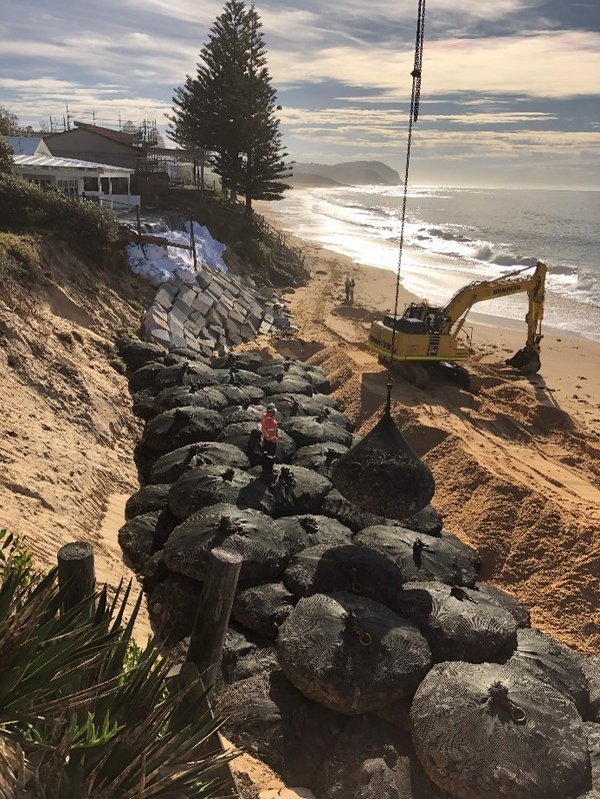
Placing the rock bags via crane enabled emergency protection during the extreme event. (Just north of the rock bags are the concrete armour units placed by residents)
- © Royal HaskoningDHVWamberal_24
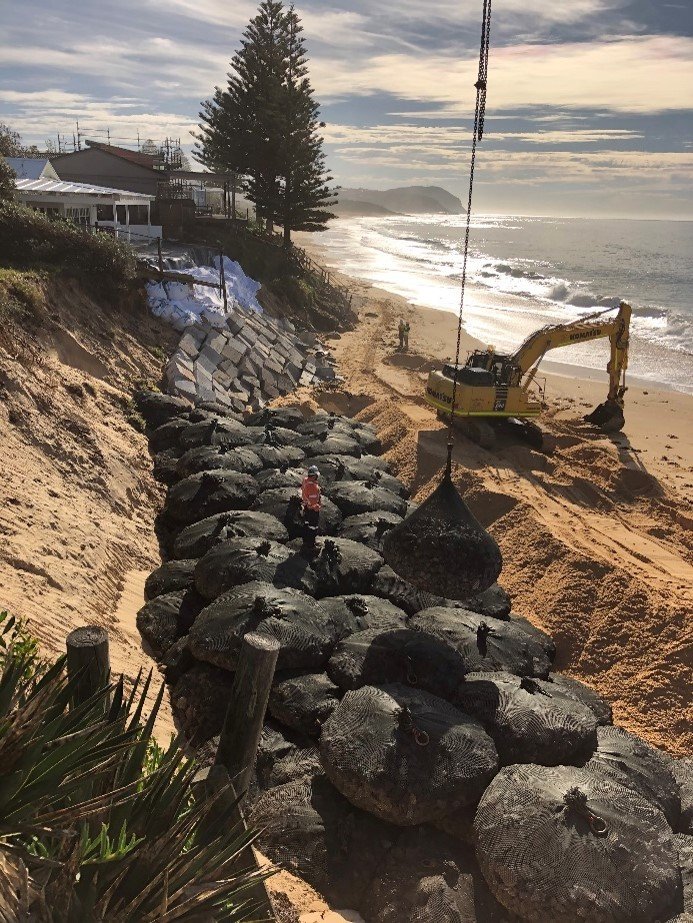
Placing the rock bags via crane enabled emergency protection during the extreme event. (Just north of the rock bags are the concrete armour units placed by residents)
© Royal HaskoningDHV
Outcomes and lessons learned
This emergency response marked the first time Kyowa rock bags were deployed on Australia’s open coast. The approach demonstrated key advantages in:
- hydraulic stability to ensure protection against further wave action.
- constructability, which allows for rapid deployment in challenging conditions.
- safety to minimise the need for personnel and machinery to access hazardous foreshore areas.
Although not intended as a permanent solution, the emergency works effectively stabilised the erosion escarpment, ultimately contributing to the lifting of evacuation orders. The success of this approach highlighted the need for innovative, site-specific coastal protection strategies in emergency scenarios.
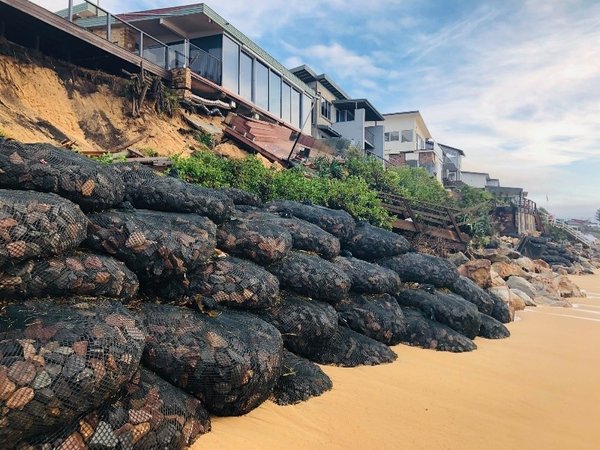
Not intended as a permanent solution, the rock bags can buy time during an extreme erosion event.
- © Royal HaskoningDHVWamberal_23
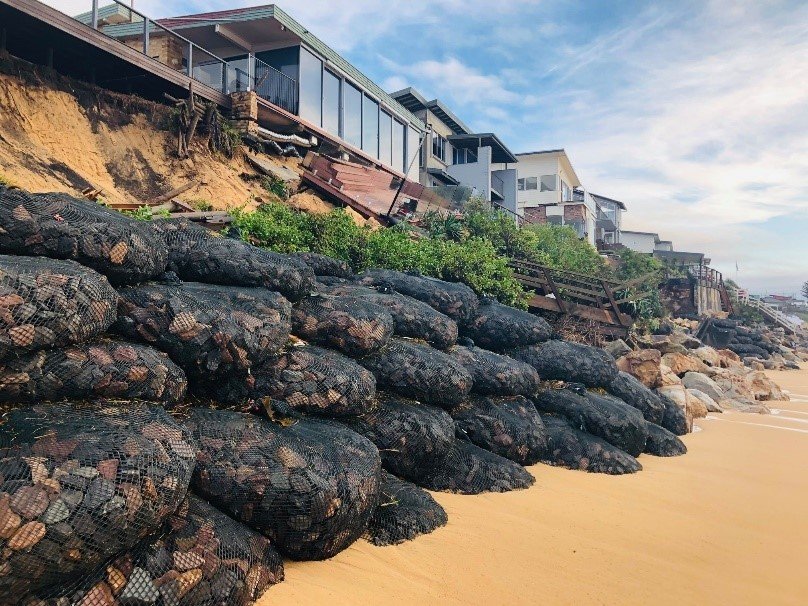
Not intended as a permanent solution, the rock bags can buy time during an extreme erosion event.
© Royal HaskoningDHV
New protection guidelines for Wamberal
In the wake of this coastal emergency, Council, in collaboration with Manly Hydraulics Laboratory (MHL), developed the Wamberal Beach Terminal Protection Structure Engineering Design Requirements in 2022. This document establishes guidelines for long-term coastal protection measures at Wamberal Beach. Following its adoption, three development applications for permanent coastal protection works are now under assessment.
Conclusion
The 2020 emergency coastal erosion crisis at Wamberal Beach underscored the urgent need for proactive and adaptive coastal management strategies.
The successful emergency response demonstrated the effectiveness of innovative engineering solutions under extreme constraints. Lessons from this event should inform future coastal protection policies, to ensure that vulnerable communities are better prepared to mitigate the increasing risks posed by coastal erosion and climate change.
To cite:
This case study was prepared by Thomas Wright, Royal HaskoningDHV. Please cite as: Wright, T. 2025: Shielding the shore: a rapid response to coastal erosion at Wamberal Beach, NSW. Case study for CoastAdapt, National Climate Change Adaptation Research Facility, Griffith University, Gold Coast.