


At a glance
- In late 2020 and early 2021, Main and Clarkes Beach experienced a significant erosion event, when high tides and storms washed away the beach and much of the dune system.
- Given the local importance of the beach to Byron Bay as an international tourist destination, Byron Shire Council decided to undertake a dune recovery program to assist the natural onshore migration of sand through beach scraping, rather than wait many years for natural recovery.
- A key aspect of the project was the high priority placed on initiating early, detailed, ongoing stakeholder engagement and consultation, particularly with local Indigenous groups, Cape Byron Marine Park, other state agencies and local coastal community groups.
- It was also important to work with local contractors experienced in beach scraping activities and intensive consultation with project staff to continually adjust the scraping methodology to suit the local conditions along the work area.
Background and context
The region
Byron Bay in northern New South Wales is a coastal area encompassing estuaries, long sandy beaches, a marine park and a rocky headland that forms mainland Australia’s most easterly point.
Aboriginal people have lived in the Byron Bay area for at least 22,000 years. Byron Shire currently has a population of approximately 30,000, and receives large numbers of domestic and international tourists. In 2019, BSC estimates were that 2.41 million visitors to Byron Shire stayed for 5.42 million visitor nights, contributing $883 million to the local economy. Byron’s beaches are a significant attraction for residents and tourists alike.
Byron’s Main and Clarkes Beach have a long history of sudden erosion events followed by gradual beach and dune recovery. In late 2020 and early 2021, Main and Clarkes Beach experienced a significant erosion event, when high tides and storms washed away the beach and much of the dune system.
Beach erosion
Sandy coastlines in Australia may be at an increased risk of substantial erosion due to climate change and its impacts on sea level, the intensity and frequency of storms, and on shifting patterns of climate phenomena such as the El Niño/Southern Oscillation.
Dune systems can offer important habitat, and also serve as a buffer protecting adjacent land and infrastructure from storm and high tide damage. Projects undertaken to accelerate dune recovery following erosion events may become increasingly important in a changing climate.
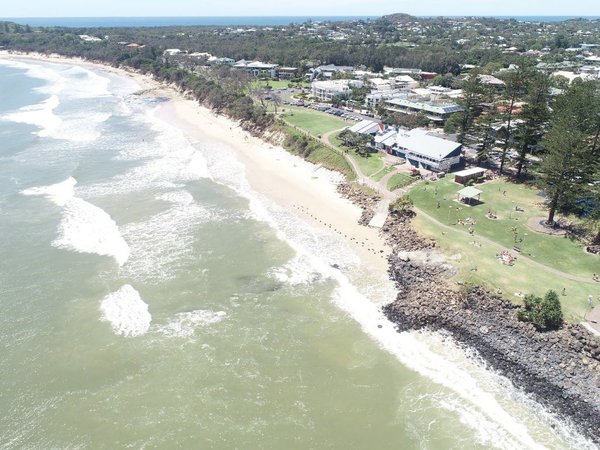
Aerial drone imagery of an eroded Main and Clarkes Beach, taken after the coastal erosion event (23 December 2020).
- © Byron Shire CouncilByron Dune_aerial view
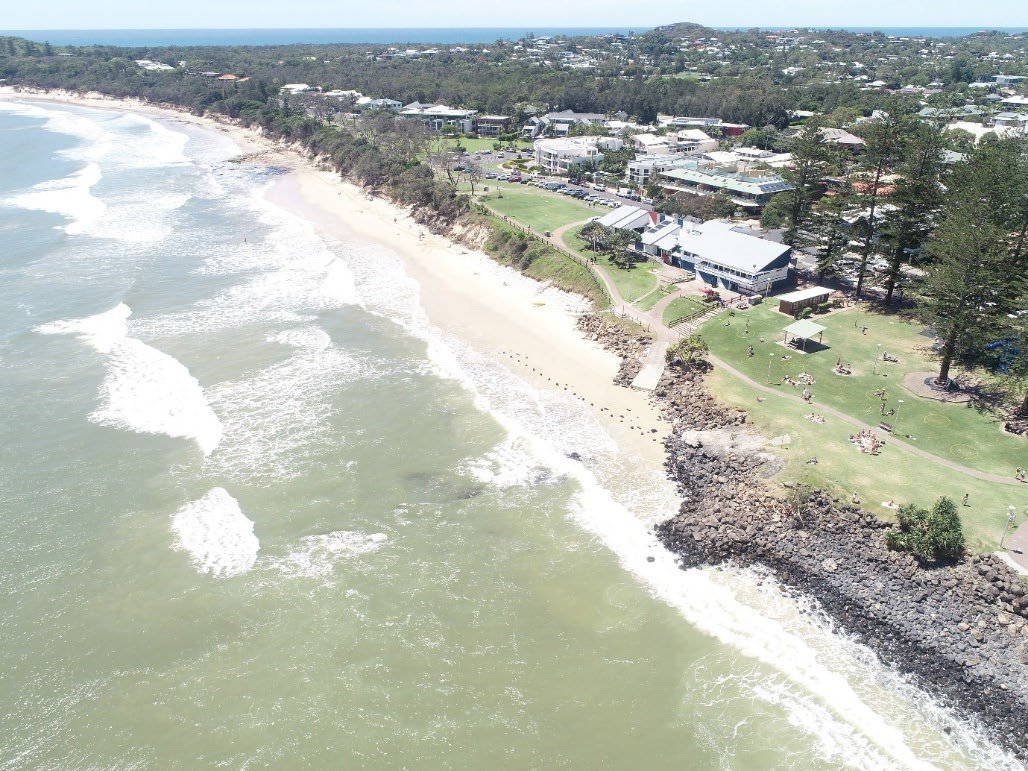
Aerial drone imagery of an eroded Main and Clarkes Beach, taken after the coastal erosion event (23 December 2020).
© Byron Shire Council
Erosion events in Byron Bay
Byron’s Main and Clarkes Beach are noted for their calm, sheltered waters, protected from southerly waves by the Cape Byron headland, mainland Australia’s most easterly point. The cape also acts as an impediment to the steady transport of sand into the bay through longshore drift around the headland. Depending on prevailing wave patterns, sand can accumulate on the updrift side of the headland, starving Main and Clarkes Beaches of sand inflow. During periods of low sand transport, Main and Clarkes Beach are vulnerable to significant erosion during high tides and storms.
The Byron embayment has experienced a number of beach erosion events over the past century. Erosion is followed by gradual sand accumulation and dune recovery during subsequent episodes of high sand transport around Cape Byron.
The rising numbers of domestic and international visitors puts pressure on the natural process of beach and dune erosion recovery at Byron Bay. Following the loss of the beach, large numbers of people walking across and sitting on the dune can hamper dune recovery. The revegetation of the recovering dune, which is important to stabilise the sand and re-establish valuable coastal habitat, can be particularly impacted.
In late 2020 and early 2021, following a period of low sand transport, the dunes of Main and Clarkes Beach were significantly eroded following high tides and storms. Following the event, Byron Shire Council undertook a period of planning, consultation and monitoring to consider potential dune recovery options.
Accelerated dune recovery in Byron Bay – the approach
Between April 2020 and July 2021, the dune eroded up to 45m landward. In September 2021, a large volume of sand naturally began to return to Main and Clarkes Beach. However, due to the volume of sand that had been lost, it was predicted to take years for full recovery of the dunes to their pre-storm state. Byron Shire Council decided to undertake a dune recovery program, to assist the natural onshore migration of sand through beach scraping.
Byron Shire had previously used beach scraping further north, at New Brighton Beach, resulting in successful dune restoration. However, the new project was more complicated as Main and Clarkes Beach have many more (and diverse groups of) users, and are situated within a marine protected area (Cape Byron Marine Park) and so required more informal and formal approval processes.
To obtain a Marine Parks permit to undertake the proposed works, BSC undertook a review of environmental factors (REF). The REF considered potential project impacts to flora, fauna and cultural heritage within the project area.
To fund the works, the Council successfully applied for 50% of funding for the project to be paid by the State government, under the New South Wales Coast and Estuary Grants programme.
Stakeholder and community engagement
A key aspect of the project was the high priority placed on initiating early, detailed, ongoing stakeholder engagement and consultation. A Community and Stakeholder Engagement Plan was prepared, a broad range of stakeholders were identified, and a year-long process of active engagement, consultation and project modification was undertaken.
- NSW Marine Parks (Cape Byron) was involved in the co-design of the project, with the goal of minimising impacts on the marine park values including water quality, infauna, marine fauna, shorebirds and coffee rock.
- Arakwal traditional owners represented by the Bundjalung of Byron Bay Aboriginal Corporation RNTBC (Arakwal) and the Tweed Byron Local Aboriginal Land Council (TBLALC) were involved in the preparation of a Cultural Heritage Report and pre-works Cultural Heritage Induction. On-site walk-overs were performed, and the Arakwal were involved for daily pre-works fauna inspections and Cultural Heritage Monitoring during works.
- The NSW Soil Conservation Services and the project contractor were involved for project co-design. An adaptive management approach to the project was used throughout the scraping campaign, through daily pre-works meetings and ongoing discussions to finesse sand placement, protect existing vegetation and reinstate accessways.
- Landcare’s Green and Clean Awareness Team and ecological consultants Bushland Restoration Services collaborated with council on dune revegetation planning and implementation, including a pre-works dune inspection to maximise survival of surviving vegetation, and ongoing management on completion of the scaping works.
- Byron Bird Buddies were consulted regarding potential impacts to shorebirds and dune-dwelling fauna.
- The broader community was informed through presentations, a dedicated website, social media, media releases, radio interviews, signage and on-site discussions.
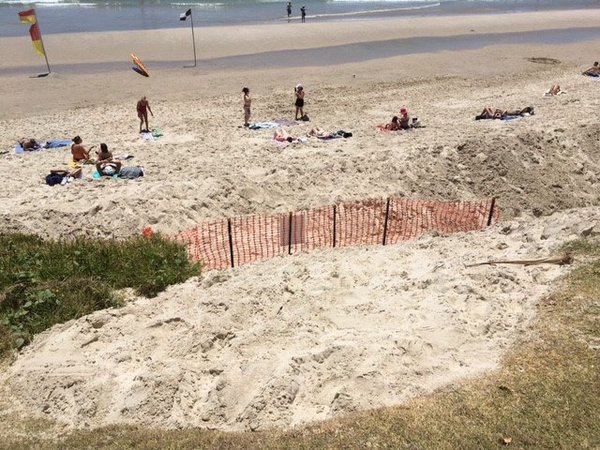
The now filled-in eroded area in front of the Byron Surf Club.
- © Byron Shire CouncilByron dunes_fenced off
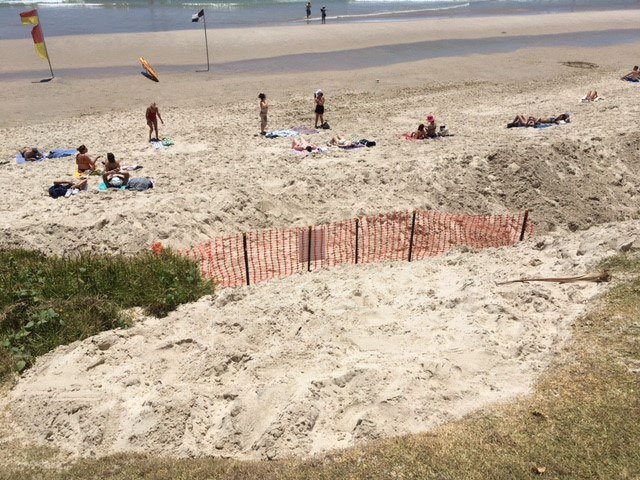
The now filled-in eroded area in front of the Byron Surf Club.
© Byron Shire Council
Surveys and monitoring
The REF and associated surveys on potential impacts to Aboriginal cultural heritage in the area of works highlighted that dune restoration was likely to have a positive impact, by protecting any heritage objects that may be present within the dunes. No cultural heritage objects were expected to be present in the freshly deposited sand in the intertidal zone to be scraped. An Arakwal Cultural Site Monitor was present to oversee the five day scraping works. No cultural objects were found during the campaign.
A number of potential impacts to threatened species were noted in the REF, and a range of surveys were conducted to inform the works during planning and implementation phases of the project.
The works were scheduled for November to avoid potential disruption to nesting activities of sea turtles and shorebirds. Project staff worked with Byron Bird Buddies to survey the site for birds, large reptiles and other native fauna. Potential nesting sites were marked with flagging tape, and avoided. During the campaign, pre-works fauna inspections were conducted along the beach and dune each day.
The potential effect of works on benthic intertidal infauna living in the area was also assessed. To minimise impact, scraping was limited to a sand depth of 20-30 cm. Before works began, a marine scientist from the National Marine Science Centre of Southern Cross University surveyed the intertidal zone to determine if any rare or unusual species, or unusual densities of specific taxa, were present in the area. No rare species or unusual assemblages were identified. During the works, sand windrows were inspected daily and any fauna found were returned to the intertidal zone.
Pre and post works drone surveys were completed to capture information about the state of the beach before and after works, to ensure that an adequate depth of sand was overlying geomorphic features and to measure the amount of sand gained during the program of works and the form/profile of the newly built dune.
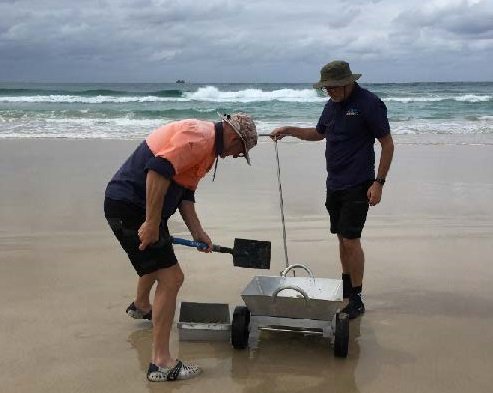
Scientists collected sand samples from the intertidal zone for sieving and assessment
- © Byron Shire CouncilByron Dune _scientists sieving sand

Scientists collected sand samples from the intertidal zone for sieving and assessment
© Byron Shire Council
Outcomes and next steps
The project was planned and delivered within expected costs and timeframes, with resulting sand volumes gained - up to 18m3/m sand – well surpassing the 10m3/m target.
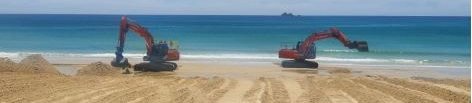
Once the scraped sand had been pushed roughly into place by a bulldozer, excavators were then used to establish walkways and sculpt the reinstated dune. The dune profile design included a swale to capture blown sand and promote ongoing dune accretion.
Alongside the beach scraping itself, dune revegetation and the installation of pathways, fencing and signage were identified as essential additional works to help ensure the long-term success of the dune recovery project.
At completion, the cost of the project was $164,520, shared equally by Byron Shire Council and the New South Wales Department of Planning and Environment, through it’s Coast and Estuary Grants Program. The beach scraping works cost $91,159. The balance of funds were allocated to associated surveying, monitoring and reporting; revegetation; fencing and signage; and consultation activities.
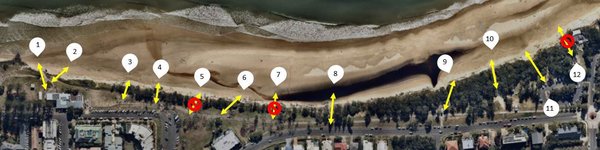
Map of Main and Clarkes Beach access pathways - red symbol shows where the pathway is permanently decommissioned.
- © Byron Shire CouncilByron dune_pathway
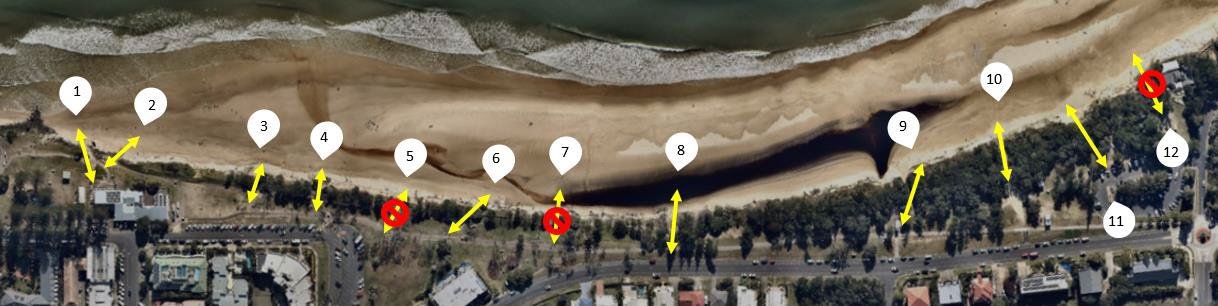
Map of Main and Clarkes Beach access pathways - red symbol shows where the pathway is permanently decommissioned.
© Byron Shire Council
READ: about the project at Main and Clarkes Beach Dune Recovery Project Summary Report (PDF, 29MB)
Lessons learnt
The overall success of the project was attributed to several key factors.
- Extensive consultation, planning and involvement with experts, the local community and other stakeholders. The extensive community and stakeholder consultation undertaken prior to and during the works program resulted in minimal queries and questions to the project team during the campaign.
- Establishing an adequate budget to cover the broad range of activities required to support the beach scraping works itself, including pre-work surveying and post-work revegetation and fencing, to ensure a successful dune restoration outcome.
- Working with local contractors experienced in beach scraping activities and intensive consultation with project staff through an adaptive management approach, to continually adjust the scraping methodology to suit the local conditions along the work area.
A lesson from the project was the limited success of the dune revegetation process, with the loss of a high proportion of plants despite follow up maintenance and watering. Better survival rates might be achieved by use of hardened plant stock, and delaying planting until more favourable weather conditions during the autumn.
To cite:
This case study was prepared by Chloe Dowsett, Byron Shire Council. Please cite as: Dowsett, C, 2024. Byron Bay dune recovery project following a significant beach erosion event. Case study for CoastAdapt, National Climate Change Adaptation Research Facility, Griffith University, Gold Coast.