


The New South Wales Government is pursuing the potential carbon abatement opportunities of blue carbon habitat restoration, launching a five-year blue carbon strategy in 2022.
The strategy identifies five priority areas for NSW Government action:
- conserving blue carbon ecosystems and supporting their adaptation and migration
- delivering blue carbon projects on public, private and First Nations peoples-owned and managed land
- embedding blue carbon in coastal and marine policy planning and management
- progressing blue carbon research
- promoting blue carbon investment.
With delivering new blue carbon projects as a priority, the NSW Government aims to remove barriers, and provide support, for blue carbon habitat restoration work. The Government will also progress two blue carbon demonstration projects both in northern NSW: one at Duck Creek Agricultural Research Station in Ballina and the Everlasting Swamp wetland complex on the Clarence River near Maclean.
The strategy also targets a streamlined approvals process for blue carbon restoration projects in NSW, exploring opportunities for a kelp forest restoration pilot project in the state, and increasing investment in blue carbon markets including piloting the first NSW Government-endorsed Blue Carbon financial instrument by 2025.
Duck Creek project
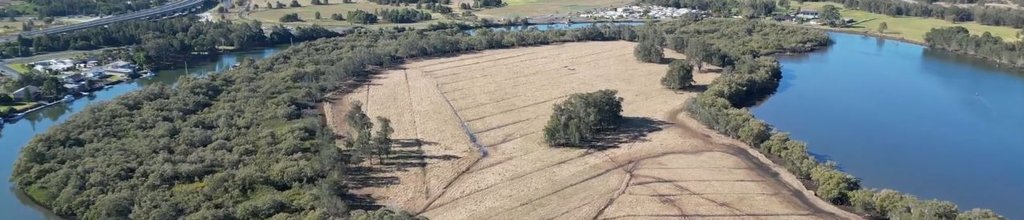
The Duck Creek project will remove the perimeter levee on a 13-ha paddock currently used for cattle grazing. Restoring tidal flows will allow the native mangrove and saltmarsh ecosystems to regenerate. The project will be registered under the blue carbon ecosystems method of the Australian carbon credit units scheme, and is designed to demonstrate how land owners of low-lying property can adapt to sea level rise by incorporating blue carbon farming into their agricultural business. The project received Federal funding in 2023 to deliver the project by 2026.
READ: more about the details of the Duck Creek blue carbon project
WATCH: a video about the Duck Creek blue carbon project
Everlasting Swamp project
At Everlasting Swamp, feasibility studies are underway to restore tidal flows and blue carbon habitat to a 556ha area of drained land that had become a degraded acid sulfate soil hotspot. Everlasting Swamp has been identified as one of the sites of highest blue carbon potential in NSW, containing up to 1,289ha of suitable blue carbon habitat where tidal flow could be restored. Full restoration of the site could potentially abate 136,000 tonnes over 25 years.
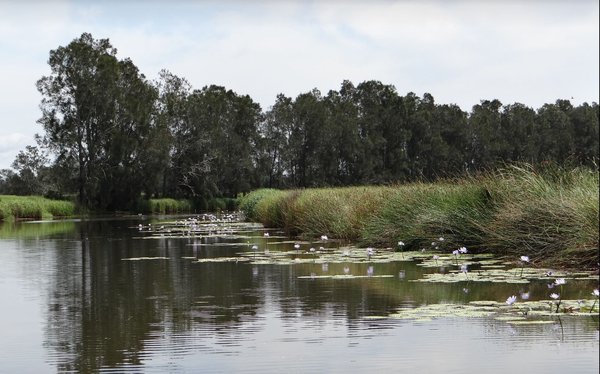
Everlasting Swamp in northern NSW is a site with high potential for blue carbon.
- © OEHever swamp

Everlasting Swamp in northern NSW is a site with high potential for blue carbon.
© OEH
To cite:
This case study was prepared by NCCARF.
Please cite as: NCCARF, 2024: Building a blue carbon project runway in New South Wales. Case study for CoastAdapt, National Climate Change Adaptation Research Facility, Griffith University, Gold Coast.