


At a glance
- Professional fishers provide crucial, experience-based insights into where and when Sawfish and River Sharks are encountered, helping fill major data gaps for these threatened species.
- Their observations, gathered through interviews and mapping, highlight patterns of interactions and potential mitigation options, strengthening future management strategies and fostering stronger collaboration between fishers, researchers and coastal managers.
Professional fishers observe the ecology and environment daily
Professional fishers, some for decades, have worked daily in environments that scientists can access only intermittently. Their accumulated observations, built from years at sea, provide a rare window into the behaviour, movement, and relative abundance of both target species and those caught incidentally.
Researchers say this knowledge is increasingly important as managers seek more complete information to guide conservation decisions.
The Northern Territory river systems and coastal zones are recognised as biodiversity hotspots, home to several threatened, endangered and protected species, including Sawfish (Pristis spp.) and River Sharks (Glyphis spp.).
Despite their conservation status, little is known about their population sizes or distribution. This lack of data has long hampered the development of robust management plans.
To help fill that gap, a 2024 study has documented the experiences of professional fishers who regularly encounter these species during commercial operations. Sixteen fishers took part in semi‑structured interviews and mapping exercises, recounting both historical and recent interactions with Sawfish and River Sharks across multiple fisheries.
Their accounts reveal patterns in where and when these species are most often encountered, the fishing practices associated with interactions, and practical ideas for reducing incidental capture.
a video of the project and how the professional fishers and researchers overcame concerns about working together to have a productive relationship that brings together the knowledge of both to better support management of endangered species in the NT.
Interviews informed field work
Insights from the professional fishers directly shaped two targeted field trips in October 2022 and 2023, that aimed to improve monitoring of sawfish and river sharks in NT coastal waters.
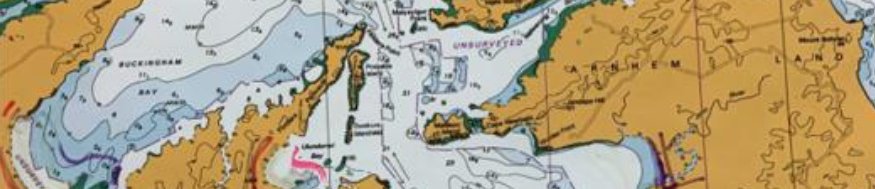
Researchers trialled eDNA sampling alongside fishing surveys to identify key hotspots and document bycatch interactions. Six satellite tags were also deployed on adult Sawfish, with four returning data showing the animals stayed within Buckingham, Arnhem and Anson bays for the full 96‑day tracking period.
While no broader movements through the North Marine Parks Network were detected, offshore fishers in the NT Offshore Net and Line Fishery reported encounters with narrow sawfish, wedgefish and guitarfish, which points to potentially important areas for future monitoring.
In balancing conservation priorities with economic activity, the voices of those who have decades of experiential knowledge can become an indispensable part of the conversation.
Insights support more industry cooperation
The interviews also highlight a shift in attitudes within the industry. Many fishers expressed a growing interest in contributing to conservation efforts and a willingness to collaborate with researchers and managers. This evolving relationship, the study suggests, could strengthen future management strategies and improve outcomes for threatened species.
Coastal managers increasingly recognise that involving fishers in decision‑making is not only beneficial for species protection but also essential for the long‑term sustainability of commercial fishing livelihoods.
To cite:
This case study was prepared by NCCARF. Please cite as: NCCARF, 2025: Professional fisher knowledge can help support endangered sawfish. Case study for CoastAdapt, National Climate Change Adaptation Research Facility, Griffith University, Gold Coast.