



At a glance
- Several Tasmanian shorebird species are listed as Threatened and are vulnerable to disturbance from commercial kelp harvesting activities.
- Because kelp collection often occurs during shorebird breeding seasons, the Tasmanian Government produced a brochure (2021) to guide harvesters in minimising disturbance, including identifying at‑risk species and recognising disturbance behaviours.
- The brochure outlines safe harvesting practices, explains Threatened/ Endangered/ Protected Species (TEPS) categories, and requires harvesters to log and report all interactions annually as part of licensing conditions.
- Feedback indicates the guidance has improved harvester awareness of nesting birds, helping reduce disturbance risks and support conservation outcomes.

Climate risks and impacts
Several of the species of shorebirds that breed on Tasmania’s (and Australia’s) coasts are listed under State and Federal legislation. In Tasmania, Hooded Plovers and Fairy Terns are listed as Vulnerable, and Little Terns are listed as Endangered. Listed as Threatened Species, these birds are protected from all anthropogenic threats throughout their lives, including from human disturbance.
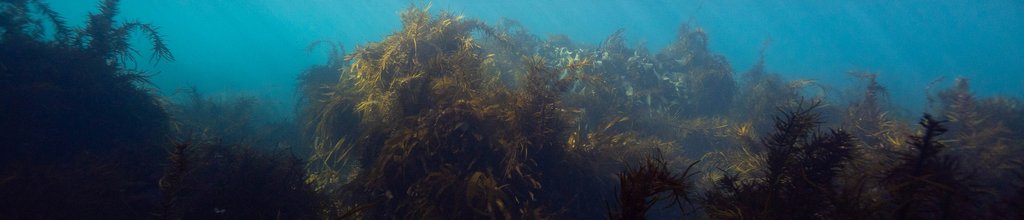
There is a small commercial marine alga (primarily Southern Bull Kelp (Durvillaea potatorum) industry in Tasmania, with most of the annual collection occurring on King Island in western Bass Strait, and around Marrawah on the northwest Tasmanian mainland.
Beach-washed kelp is collected from the foreshore, typically following storms. These collections occur throughout the year, including the shorebird breeding season, so there is a real potential for disturbance to nesting birds that could result in breeding failure. The kelp is dried then pelletised for export as alginate.
Adaptation actions
In response to this potential threat to breeding shorebirds, the Tasmanian Government produced a brochure for kelp harvesters throughout the state in 2021. The brochure was distributed as hard copy to the companies and individuals involved, and made available electronically for members of the community who can collect beach-washed kelps and sea-grasses for private use as garden mulch without permits.
the Kelp Harvesters Guide to Tasmanian Coastal Birds. Access the Guide.
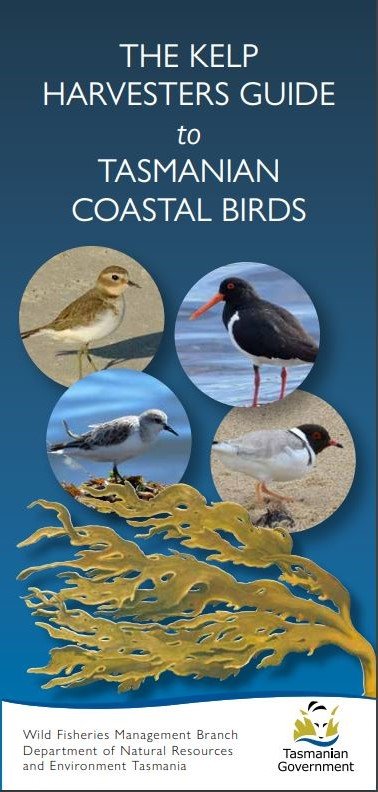
Front page of the Kelp Harvesters Guide to Tasmanian Coastal Birds.
- ©Tasmanian Government. All photos courtesy of © EJ Woehler; Illustration by P Goulthorpe.kelp guide front
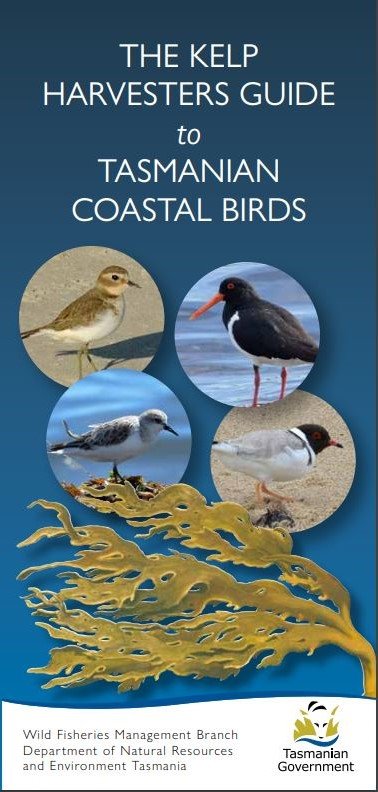
Front page of the Kelp Harvesters Guide to Tasmanian Coastal Birds.
©Tasmanian Government. All photos courtesy of © EJ Woehler; Illustration by P Goulthorpe.
how kelp is harvested by licensed operators
.
The illustrated brochure introduces the concept of Threatened, Endangered or Protected species (TEPS), which applies to many species of shorebirds, seabirds or seals on beaches, and defines any interaction that modifies the natural behaviour of that species. The brochure details the types of interactions that are of potential risk to the shorebirds and seabirds, such as vehicular movements on the foreshore associated with kelp collection.
The brochure describes the behavioural responses by the birds that indicate disturbance, and provides guidelines to minimise or eliminate the disturbance. The brochure has images of five resident and three migratory species most commonly found on foreshores where kelp is collected in Tasmania, with a few species-specific facts to assist the harvesters to minimise their potential disturbance to nesting birds.
The details of all interactions are to be recorded on a standard log sheet that must be submitted to the Tasmanian Government annually as specified in the licencing and permit conditions for all commercial harvesting operations. Export of the processed alginate is regulated under the EPBC Act, and the Tasmanian reporting requirements meet those of the Federal Government.

Page 2 of the Kelp Harvesters Guide to Tasmanian Coastal Birds
- Tasmanian Government. All photos courtesy of © EJ Woehler; Illustration by P Goulthorpe.Kelp Harvesters Guide to Tasmanian Coastal Birds_Page_2

Page 2 of the Kelp Harvesters Guide to Tasmanian Coastal Birds
Tasmanian Government. All photos courtesy of © EJ Woehler; Illustration by P Goulthorpe.
Outcomes and next steps
Feedback from the industry and from individual harvesters has been positive, with harvesters reporting that they had become much more aware of the presence of nesting shorebirds and seabirds on the foreshores.
To cite:
This case study was prepared by E. J. Woehler. Please cite as: Woehler, E. J. 2024: Kelp help: a guide to harvesting to minimise disturbance to shorebirds. Case study for CoastAdapt, National Climate Change Adaptation Research Facility, Griffith University, Gold Coast.