


At a glance
- Underwater noise pollution is a growing problem as many marine animals including whales, dolphins, fish, and invertebrates depend on sound for essential life functions.
- The maritime industry generates underwater noise primarily through shipping (engines and propellers), seismic surveys, and pile driving for offshore construction. These activities disrupt marine life by interfering with animal communication, navigation, and survival behaviors.
- Practical solutions include reducing ship speeds, adopting quieter technologies, and limiting noisy operations during sensitive periods.
- Australia’s marine environment still remains relatively quiet compared to other noise hotspots are more significant in other major ports and shipping lanes. This gives coastal managers and regulators time to plan and act.

Sounding the alarm on underwater noise
Underwater noise pollution is emerging as a significant yet under-recognised environmental pollutant. Anthropogenic (human-made) noise from shipping, port activities, construction, and resource extraction is now widely acknowledged as a major threat to marine ecosystems. For Australian policymakers tasked with managing coastal environments, it is important to factor underwater noise into environmental planning and regulation frameworks.
Effects of noise pollution on marine species and ecosystems
Many marine organisms rely on sound for communication, foraging, mating, and avoiding predators. More anthropogenic-noise underwater can mask these crucial sounds, add stressors and disrupt behaviour that can compromise important function or survival.
More than 150 species of animals so far have been identified as vulnerable to the effects of noise. including species of whales, dolphins, fish and invertebrates. There remain major gaps in understanding of how noise impacts many species, especially those lower on the food chain or in less-studied regions.
Whales and dolphins
Cetaceans (including whales and dolphins) depend on echolocation – they locate objects using reflected sound. These animals can be significantly affected by noise from shipping and construction activities. This can lead to habitat displacement, changes in feeding behaviours, and disruptions to mating patterns. For example, in Fremantle Inner Harbour in Western Australia, noise from two different types of pile driving significantly reduced the presence of Indo-Pacific bottlenose dolphins (Tursiops aduncus) (Guimarães Paiva 2015).
Invertebrates
Marine invertebrates can be affected by anthropogenic noise, which can cause physiological changes, organ damage, and alter behaviour and communication.
Invertebrates like shrimp, crabs, and lobsters can rely on sound for mating or to avoid predators. Anthropogenic noise can mask these sounds, disrupting normal behaviour and making these animals more susceptible to predation or less likely to mate. For example, ship noise affects the shore crab (Carcinus maenas, a common pest in some European harbours): it reduces the foraging and predator-avoidance behaviour and also elevates oxygen consumption a likely indicator of stress.
Boat noise can disrupt the settling phase (‘recruitment’) of coral and barnacle larvae and affects juvenile crab orientation. Seismic air gun noise used by the oil and gas industry to map the sea floor, can lead to developmental issues in bivalve larvae. However, effects are complicated, for example vessel noise can also increase recruitment in mussel larvae.
The implications of reducing recruitment of oysters can be significant. The increase in oyster reef restoration often takes place near urban coastlines, where there is increasing levels noise from shipping, machinery, and construction. This is problematic, as the noise generated by these activities may interfere with the natural soundscapes that animals, such as bivalves, depend on for settlement.
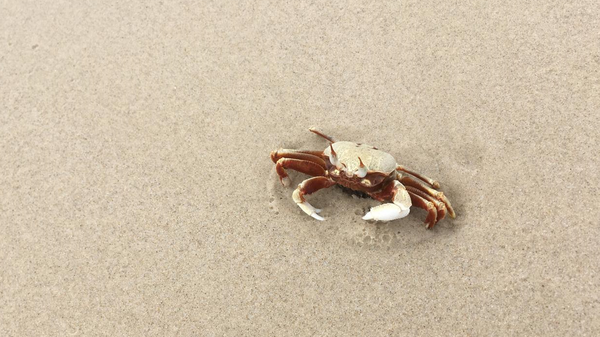
Invertebrates like shrimp, crabs, and lobsters can rely on sound for mating or to avoid predators. and so noise pollution can disrupt these behaviours
- © NCCARFcrab _NSW beach
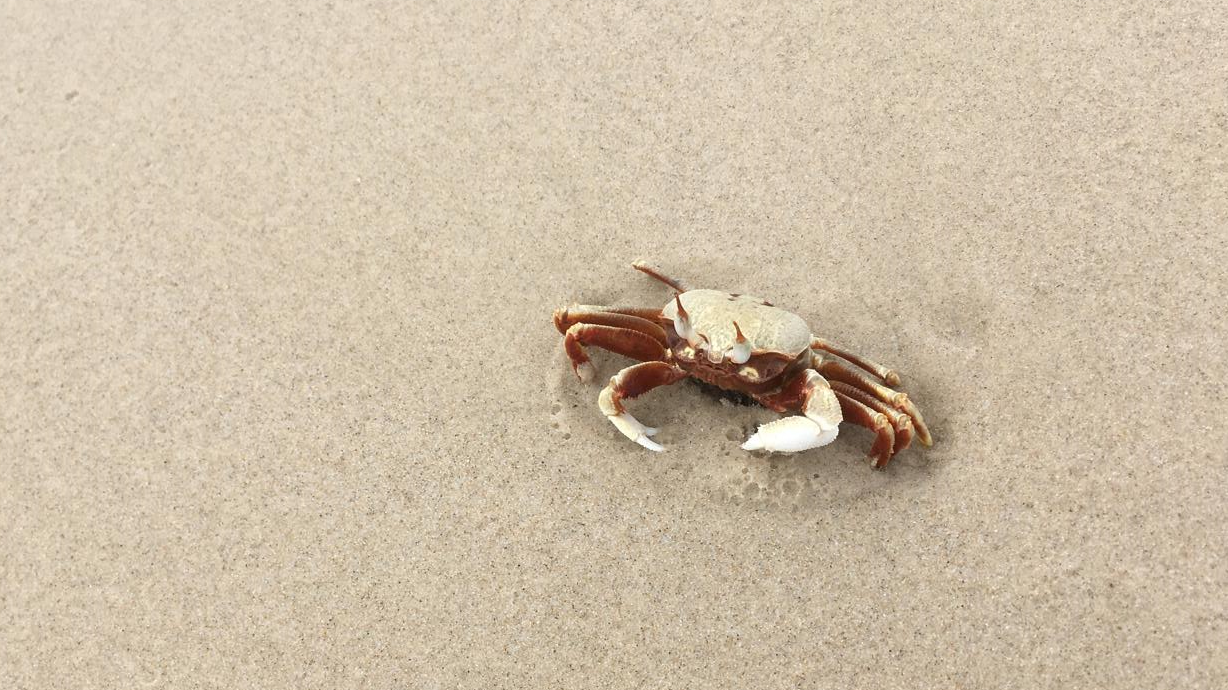
Invertebrates like shrimp, crabs, and lobsters can rely on sound for mating or to avoid predators. and so noise pollution can disrupt these behaviours
© NCCARF
Ecosystems
Ecosystems more broadly can be modified by noise pollution particularly when it affects key species, such as habitat-forming organisms or keystone predators. Chronic exposure to underwater noise can disrupt ecosystem dynamics, altering predator-prey relationships and influencing species distribution, potentially leading to widespread ecological consequences.
a CoastAdapt case study on Reducing noise for nature un building a wharf in New Zealand
Sources of noise
Globally, key sources of underwater noise pollution are ship traffic (specifically from engines and propellers), seismic surveys conducted by the oil and gas sector using airguns, and pile driving associated with the construction of offshore infrastructure like wind farms and drilling platforms. Most of these are more of a problem in northern oceans than in Australia.
- Shipping, such as large cargo ships emit low-frequency sounds that can travel underwater for hundreds of kilometres. In large port areas, these noises form a persistent noisy background that masks natural sounds used by marine life for communication and navigation.
- Industrial activities such as offshore infrastructure projects like oil rigs and wind farms contribute significantly to underwater noise. Activities such as pile driving and machinery operations generate loud, localized sounds that can travel long distances underwater and disrupt marine environments.
- Naval operations often use mid- and high-frequency sonar to detect submarines and map the ocean floor. These sonar pulses are incredibly loud and can penetrate deep into the ocean, causing confusion and distress in marine animals, particularly whales.
- Seismic surveys used in oil and gas exploration involve blasting sound waves into the seabed to detect resources. These sound pulses are extremely intense and can last for days or weeks, creating long-term disturbances for marine life.
- Other activities also contribute to the acoustic footprint such as dredging, port expansion, commercial fishing.
a report on three key sources of noise pollution from the maritime industry and recommended strategies for reducing their impact.
A study of three New South Wales' estuaries that found increased urbanisation and recreational activities, particularly boating, were locally directly linked to higher and more variable underwater noise levels.
Specifically:
- Lake Macquarie: The most urbanised estuary had the highest boat activity (68%) and loudest noise levels, especially in low frequencies essential for fish communication.
- Tuggerah Lakes: Despite moderate boat presence (31%), it recorded the highest average noise levels, likely due to other urban sounds like traffic and shoreline activity.
- Burrill Lake: The least developed estuary had the lowest noise levels, but boating still caused noticeable spikes, especially in summer and on weekends.
Valenzia et al. 2021
Strategies for reducing noise
Coastal decision makers can consider options for reducing underwater noise.
Some Australian coastal areas, particularly near reefs and islands, are monitored for underwater noise levels to distinguish between natural and anthropogenic sources (Erbe et al., 2021). In these regions shipping lanes, seismic surveys, and other human activities are key contributors to noise pollution.
Slowing down ships down can decrease the noise footprint but also reduce ship collisions with whales.
Measures such as reducing ship speeds, improving propeller and hull design, using quieter technologies (e.g. marine vibrators), and scheduling loud activities outside sensitive periods can significantly cut noise pollution.
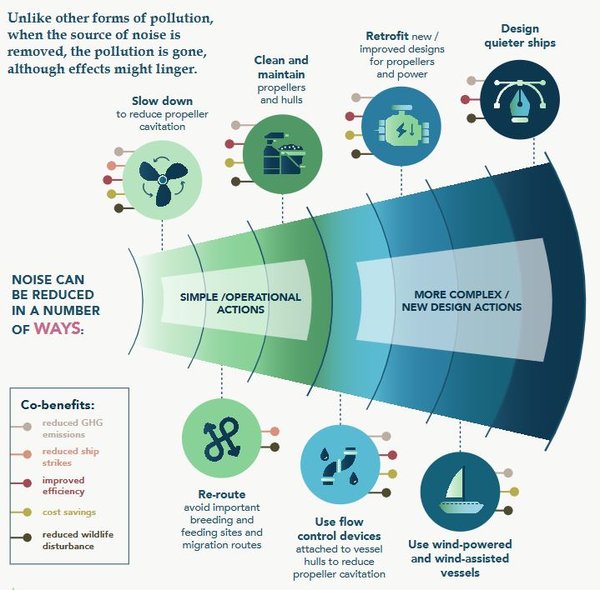
Underwater noise from ships and potential solutions to reduce its impacts.
- © Clean Arctic Alliancenoise pollution solutions
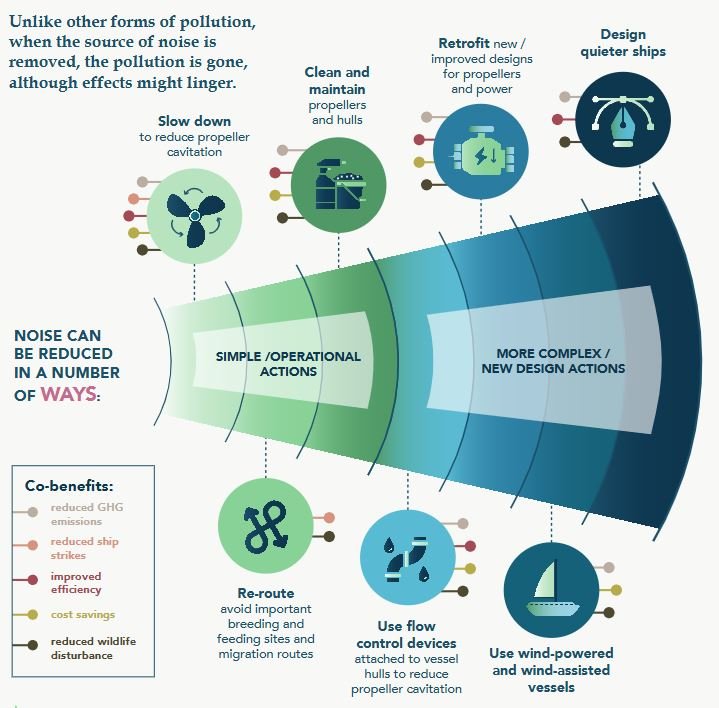
Underwater noise from ships and potential solutions to reduce its impacts.
© Clean Arctic Alliance