



At a glance
- Dogs on beaches disturb beach-nesting birds, cause nest abandonment, and contribute to dune degradation and nutrient loading from waste, threatening coastal biodiversity
- Dog owners frequently frame beach access as a personal right, creating tension when restrictions are introduced, especially in areas with sensitive habitats or seasonal bans
- Adherence to leash laws and exclusion zones is low; many owners believe their dogs are under control and underestimate wildlife impacts
- Owners behavior is strongly influenced by what others do; visible non-compliance reduces rule-following
- Enforcement is resource-intensive, requiring rangers and signage, which smaller councils often struggle to fund.
Dogs on beaches
Dogs on beaches has sparked ongoing debate among conservationists, local councils, and dog owners. Councils face a complex challenge: balancing the recreational needs of dog owners with the ecological protection of sensitive coastal environments. Beaches are among the most popular spaces for dog walking, yet they are also critical habitats for wildlife, including threatened beach-nesting birds and fragile dune ecosystems.

dog running on beach-resized-to-medium
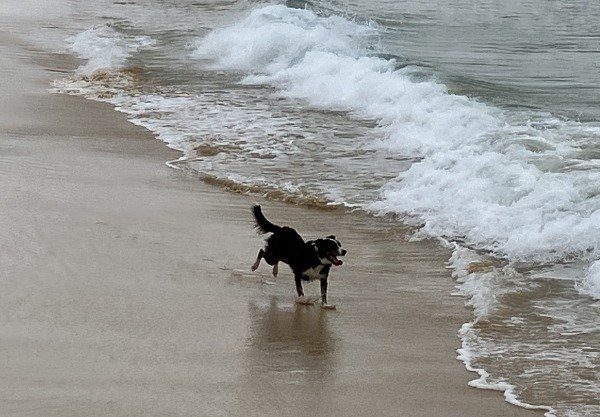
impacts of dogs on beaches
Domestic dogs (Canis familiaris) can significantly impact Australian beaches by disturbing wildlife, degrading habitats, and reducing conservation outcomes. Beach-nesting birds such as Hooded Plovers (Thinornis cucullatus) are particularly vulnerable because dogs, even when leashed, are perceived as predators, causing adults to abandon nests and increasing egg and chick mortality.
These disturbances, combined with nutrient input from dog waste and trampling or digging of dune vegetation, create cumulative pressures on coastal ecosystems, making effective management essential.
Perceptions and actions of dog owners
Understanding perceptions and attitudes of dog owners is important for designing effective management strategies that balance recreation with biodiversity protection.
Dog owners highly value access to beaches for their dogs. Research in Victoria and New South Wales indicates that beaches are viewed as essential spaces for dog exercise, socialisation with other dogs, and wellbeing of their owners owner well-being. This strong attachment means dogs owners can resist to restrictions.
A study of dog owners on Victorian beaches found they generally support dog regulations and claim to comply, but actual compliance is low, which highlights the disconnect between their attitudes and their behavior. Most owners valued off-leash exercise highly, believe their dogs are under effective control, and show limited concern for wildlife impacts: however, there was low agreement that wildlife is more important than dogs Demographic differences were subtle: residents and middle-aged groups were less supportive of restrictions, younger owners favoured leashing, and males were more likely to prioritise dogs over wildlife.
A linked study in Victoria found a very low compliance with regulations around leashing, recording almost 70% of dogs off-leash in an on-leash zone.
Management approaches
Many councils use management approaches that involve integrate community consultation, education campaigns, zoning and enforcement.
- Education campaigns include social media campaigns and signage (e.g. Tweed Council, Byron Shire Council), inlcuding QR codes on signage linking to interactive maps of dog zones.
- A zoning strategy typically includes a mix of approaches:
- dog-friendly zones: areas usually away from sensitive habitats. here dogs can be off-leash
- leash-only zones: popular beaches with moderate wildlife presence and where dogs have to be on a leash
- exclusion zones: critical habitats, such as nesting sites, where dogs are excluded at least during breeding season (e.g. Barwon Coast).
a case study Take the Lead, to learn how Tweed Shire Council is working with dog owners to reduce the impact of their pets
the risks of allowing dogs on or off-leash in council areas through the Multi-Criteria Risk Assessment (MCRA) undertaken by the Sunshine Coast Council to guide decision making in their planning for dog exercise areas.
Barwon Coast's Dog Controls information for maps and guidance on where and when dogs are welcome. Some beaches are off limits for dogs during breeding seasons.
Barwon-Coast-Dog-Control-Zone-Map-2023_Dec23
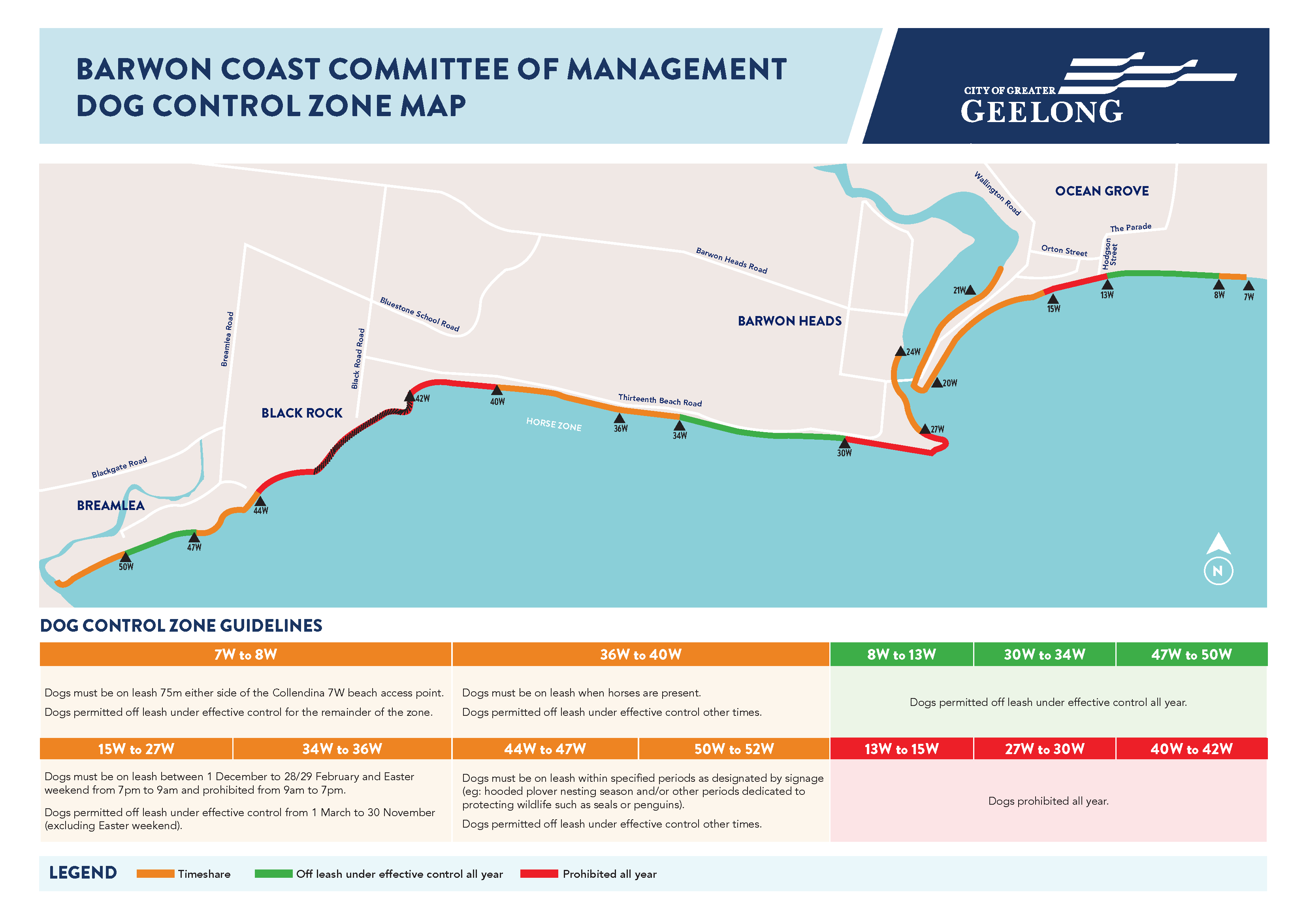
© Barwon Coast
Barwon-Coast-Dog-Control-Zone-Map-2023_Dec23
© Barwon Coast
Byron Shire's information on responsibilities of dog owners which includes local information about dog exercise areas. (It also includes a postcard that can be used by neighbours to notify dog owners about their dogs at home behavior.)
WATCH:
this short video, part of Byron Shire Council's Bow Wow Leash Me Now campaign to reduce impacts on koalas, an important animal prevalent in coastal areas.
Challenges remain
The issue of dogs on beaches remains contentious – and this is also reported in other countries such as the UK and USA.
Despite clear local government policies, there is often low compliance with regulations. Many dog owners underestimate their pet’s impact or assume that leashing is enough. Enforcement is resource-intensive, requiring rangers and signage, which smaller councils struggle to fund. Social norms further influence behavior: if owners see others ignoring rules, they are more likely to do the same. Surveys show that dog owners often frame beach access as a personal right, creating tension when restrictions are introduced.